How to work out simple interest
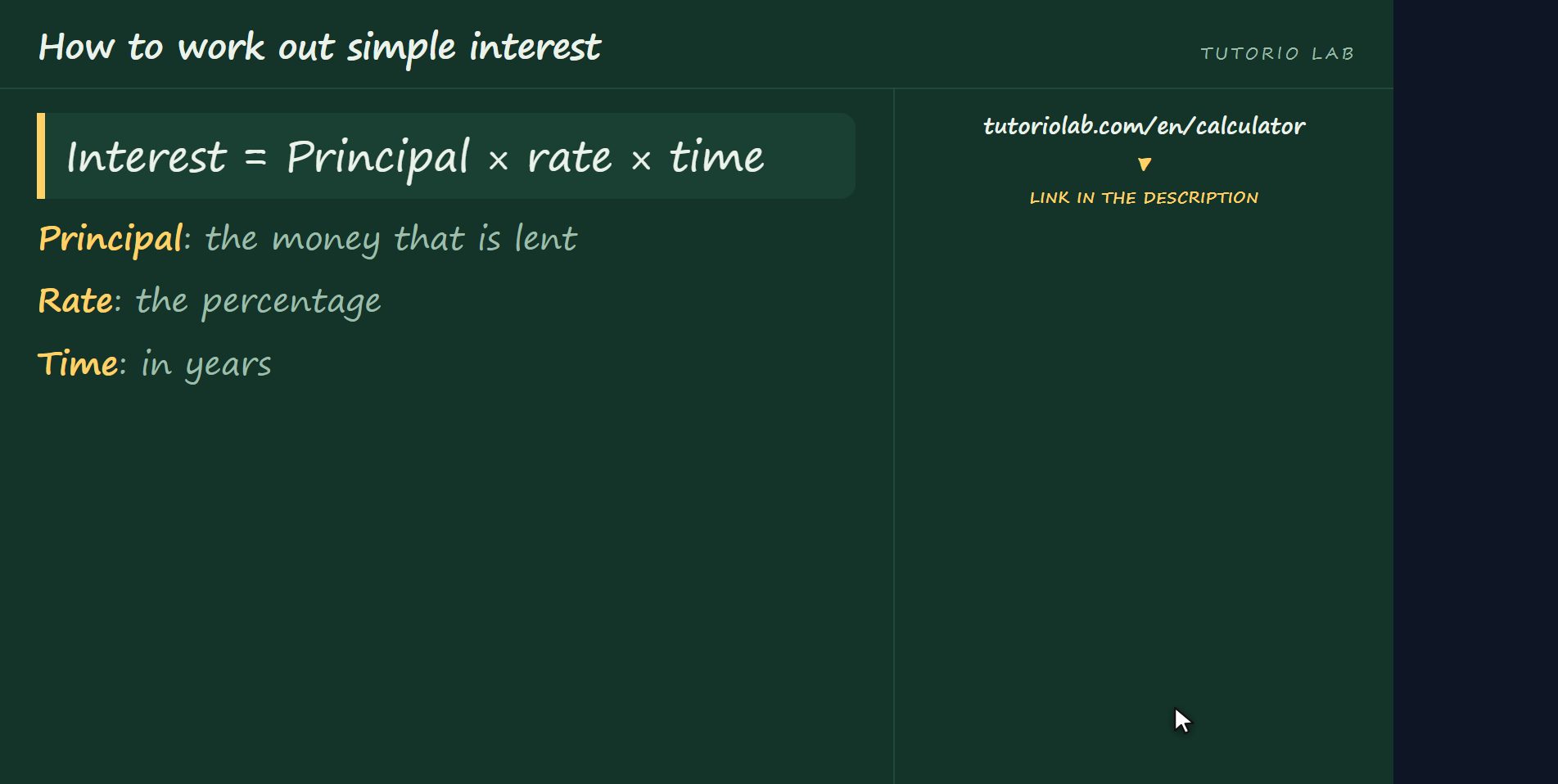
Simple interest is worked out with I = P × r × t: principal times rate times time. The rate goes in as a decimal (4% is 0.04) and the time in years (6 months is 0.5). Example: £5,000 at 4% for 3 years gives £600 of interest, and you pay back £5,600.
Someone lends you money, or you lend it, and you need to know what it costs. That is the interest. In three minutes I will show you how to work out simple interest: the formula, an example with real numbers, and the two mistakes almost everybody makes. And you will see it with the calculator right there, key by key.
What simple interest is
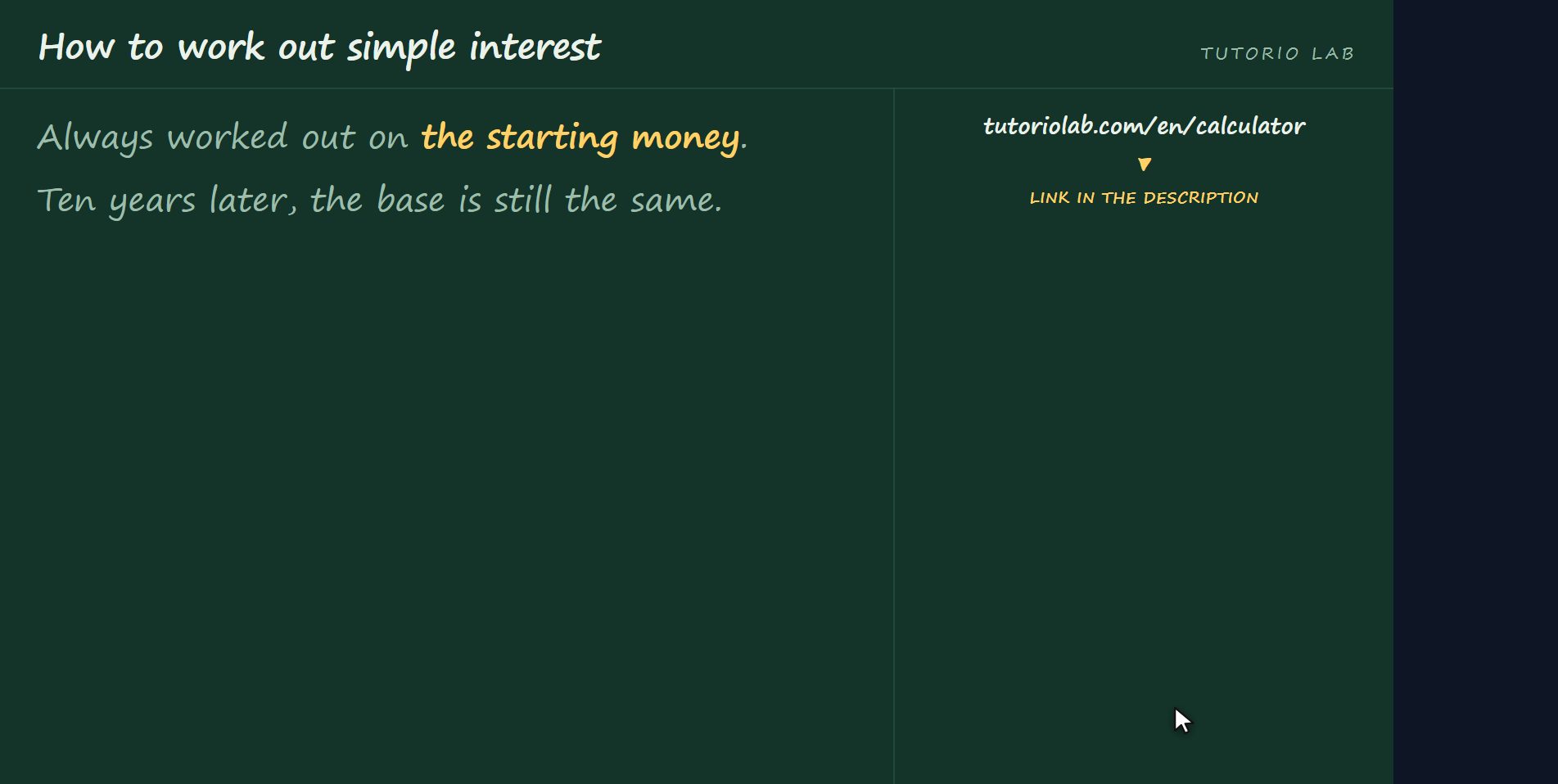
Simple interest is the kind that is always worked out on the same amount: on the money that was lent at the start, and nothing else. Even ten years later, that last year of interest still comes off that same starting amount. That is why it is called simple. It turns up in loans between people, in promissory notes, and in classroom problems, which is probably why you are here.
The formula
The formula is three things multiplied together. Interest equals principal times rate times time. The principal is the money that is lent. The rate is the percentage, and watch out with that one because we will come back to it. And the time is in years. That is all: three numbers multiplied.
The example
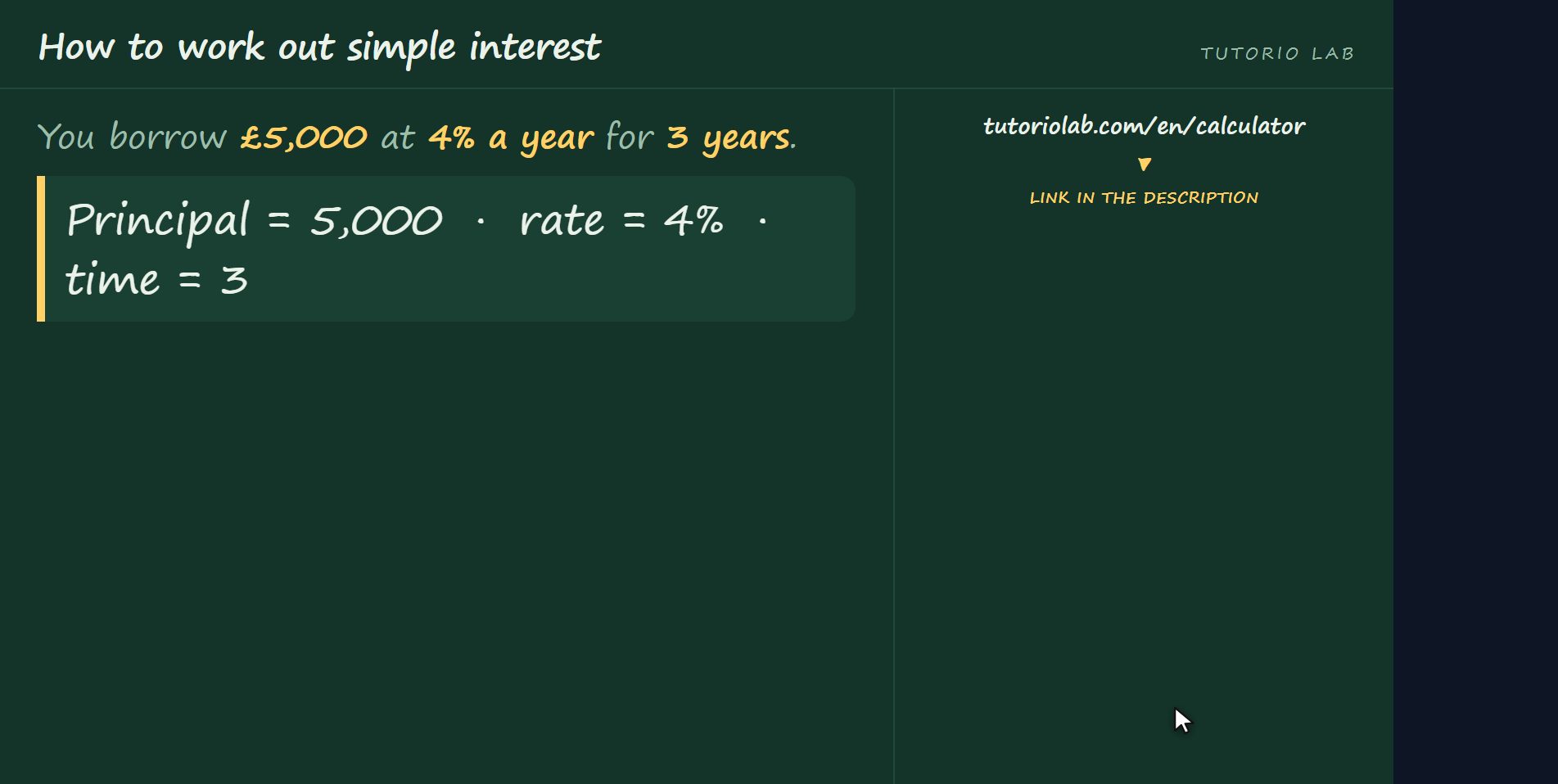
Let us do it with numbers. You borrow five thousand pounds at four per cent a year, and you pay it back over three years. The principal is five thousand. The rate is four per cent. And the time is three years. That is the three pieces of the formula, so all that is left is to multiply.
The percentage gets converted
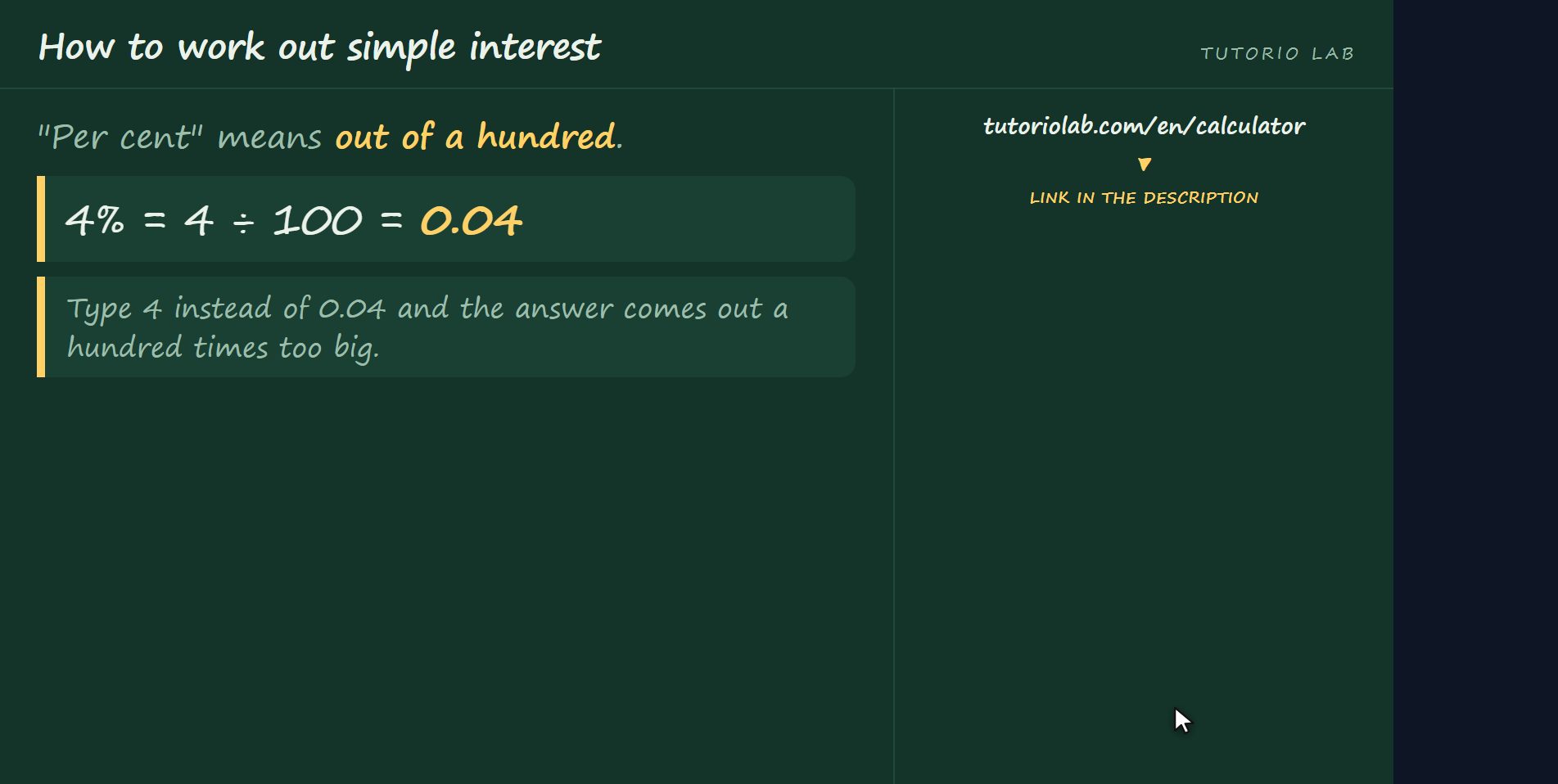
And here is the first mistake, the one that makes answers come out ridiculous. Four per cent does not go in as four. Per cent means out of a hundred, so four per cent is four divided by a hundred, that is, zero point zero four. If you type a four, your answer comes out a hundred times too big and it will not even look odd to you. Always divide by a hundred before you multiply.
The sum
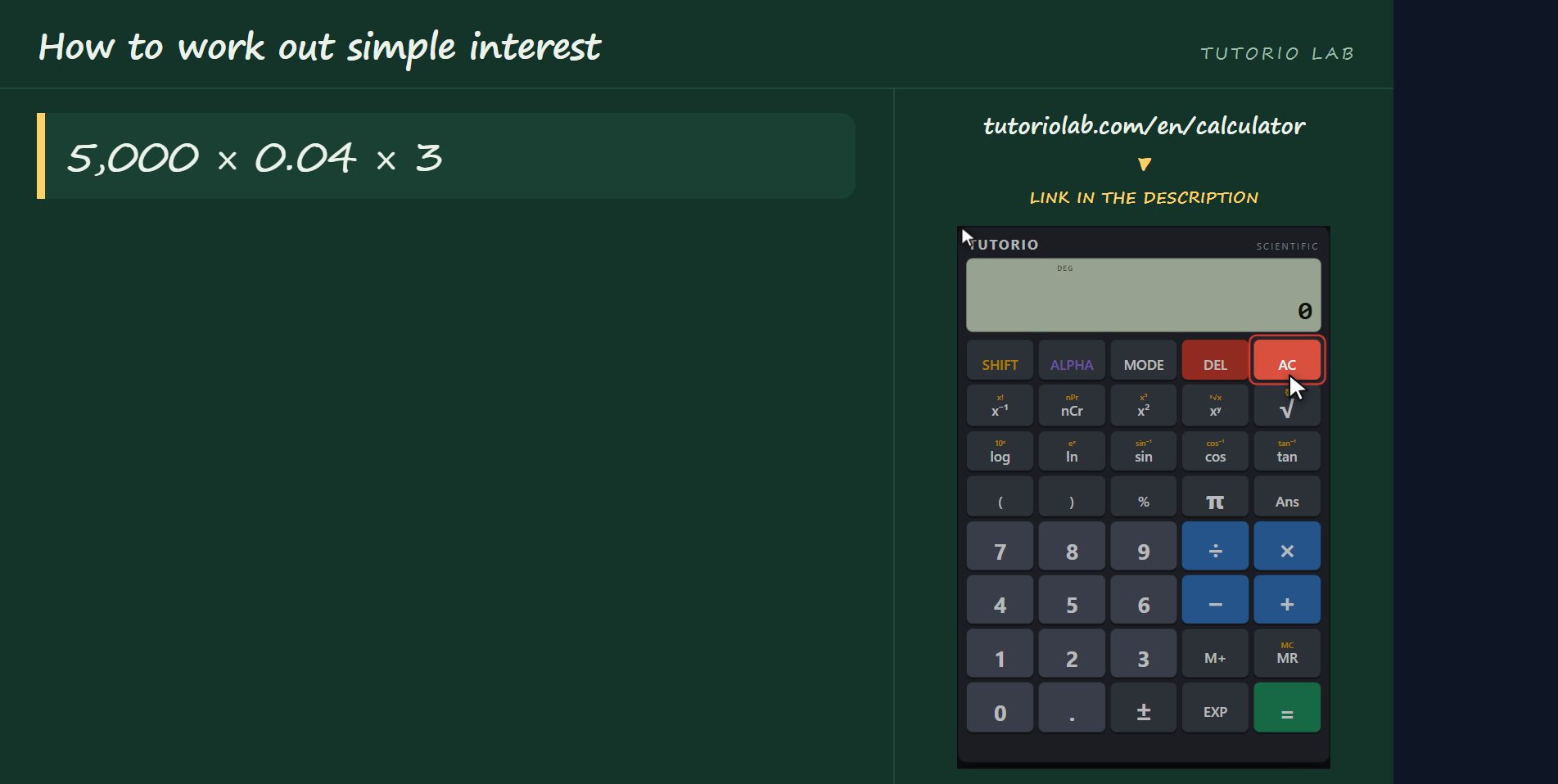
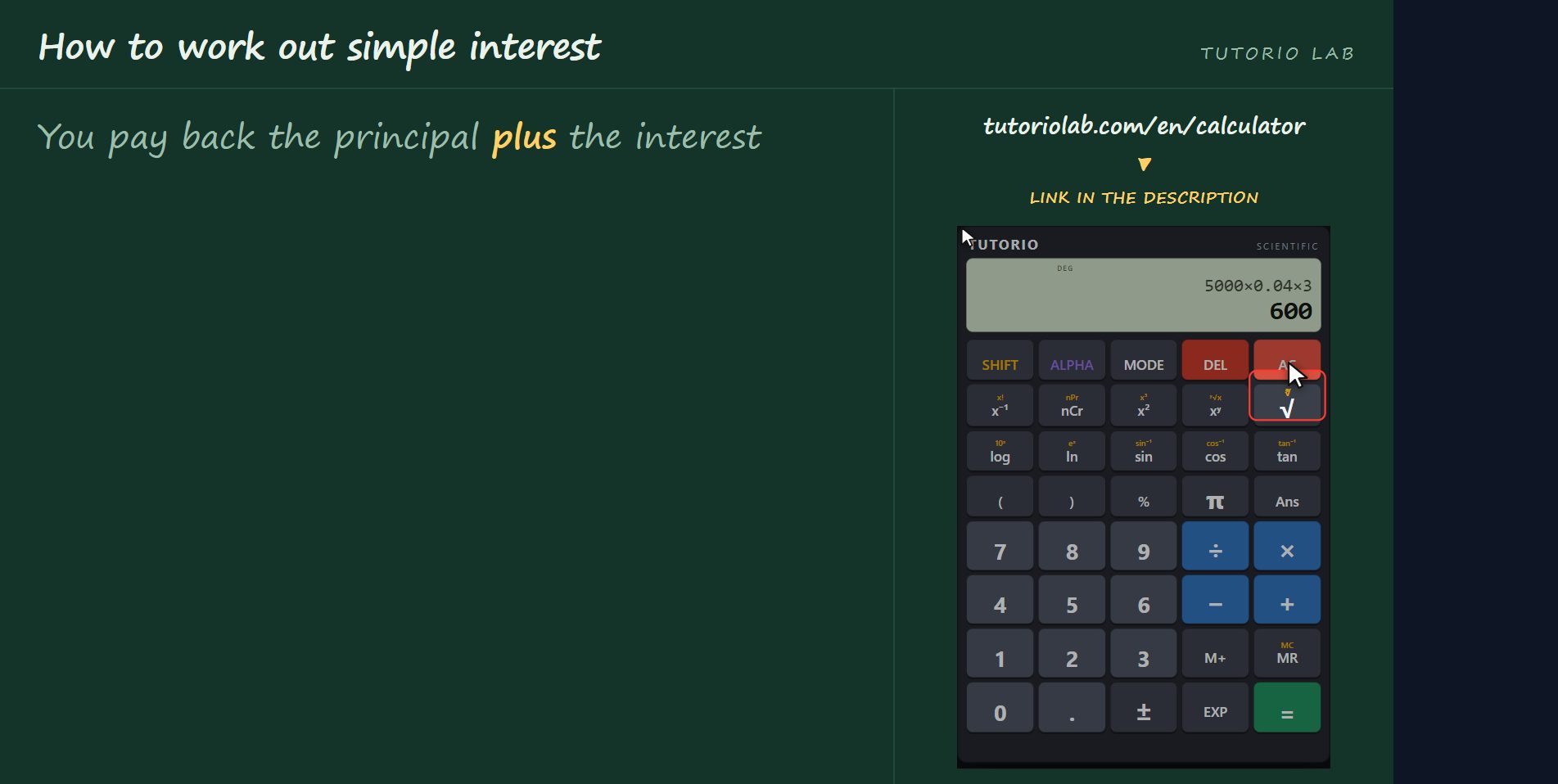
Now the sum, on the calculator. This one is ours, and you can use it free: the link is down there. Five thousand, times zero point zero four, times three. And the answer is six hundred. Six hundred pounds of interest over the three years. Notice that it is two hundred pounds every year, always the same, because simple interest does not change from one year to the next.
What you pay back
But careful, because six hundred is not what you pay back. That is only the interest. What you pay back is the principal plus the interest: five thousand plus six hundred, five thousand six hundred pounds. This slip is more common than you would think, especially in exams: they ask for the total to repay and you answer with the interest alone.
The months mistake
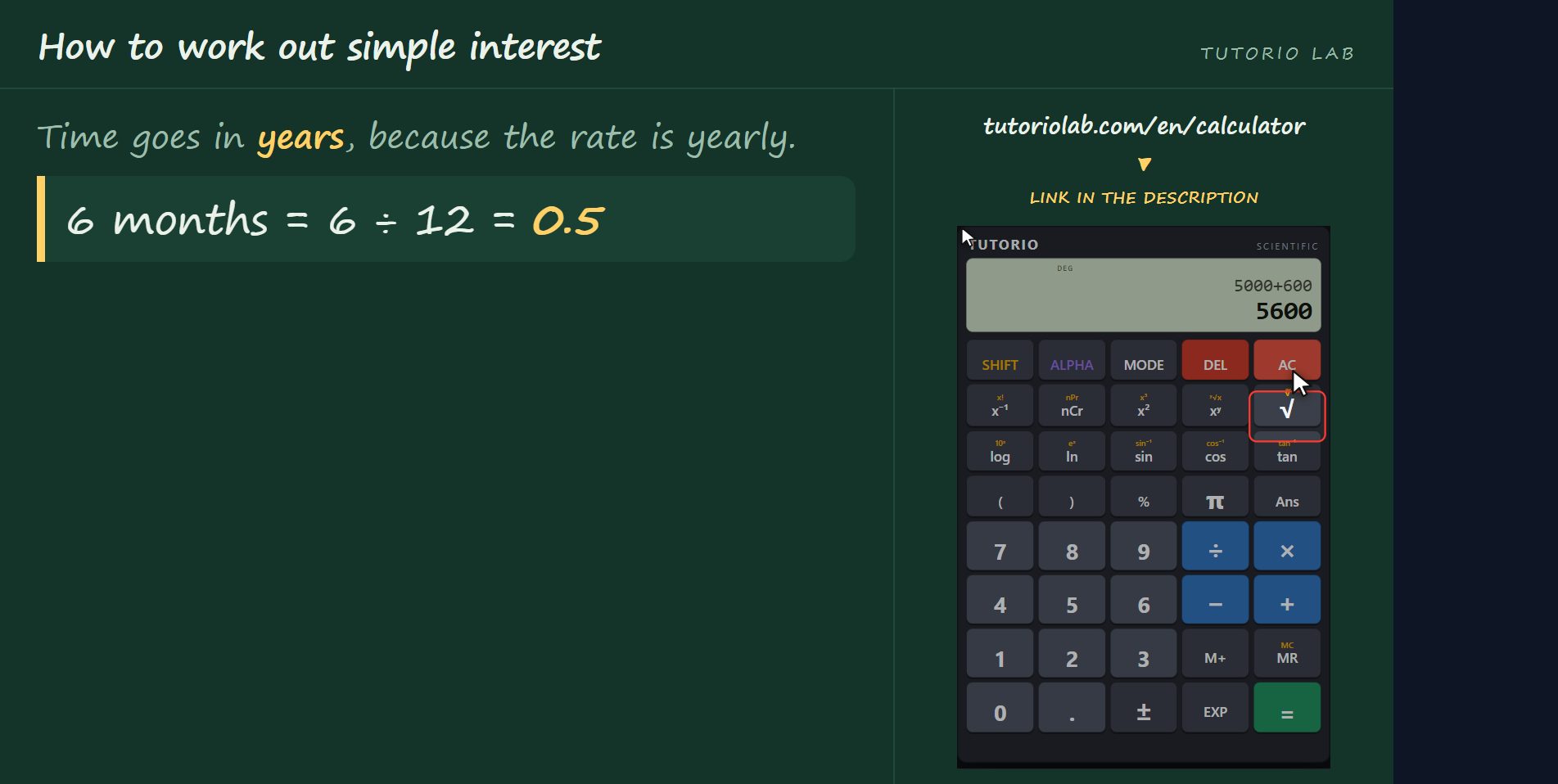
And the second mistake, the one that costs the most marks. Time goes in years, because the rate is yearly. If the loan runs for six months, you do not put six: you put zero point five, which is half a year. Six months of that same five thousand pounds gives a hundred pounds of interest, not six hundred. The rule is easy: months get divided by twelve before they go in.
Simple is not compound
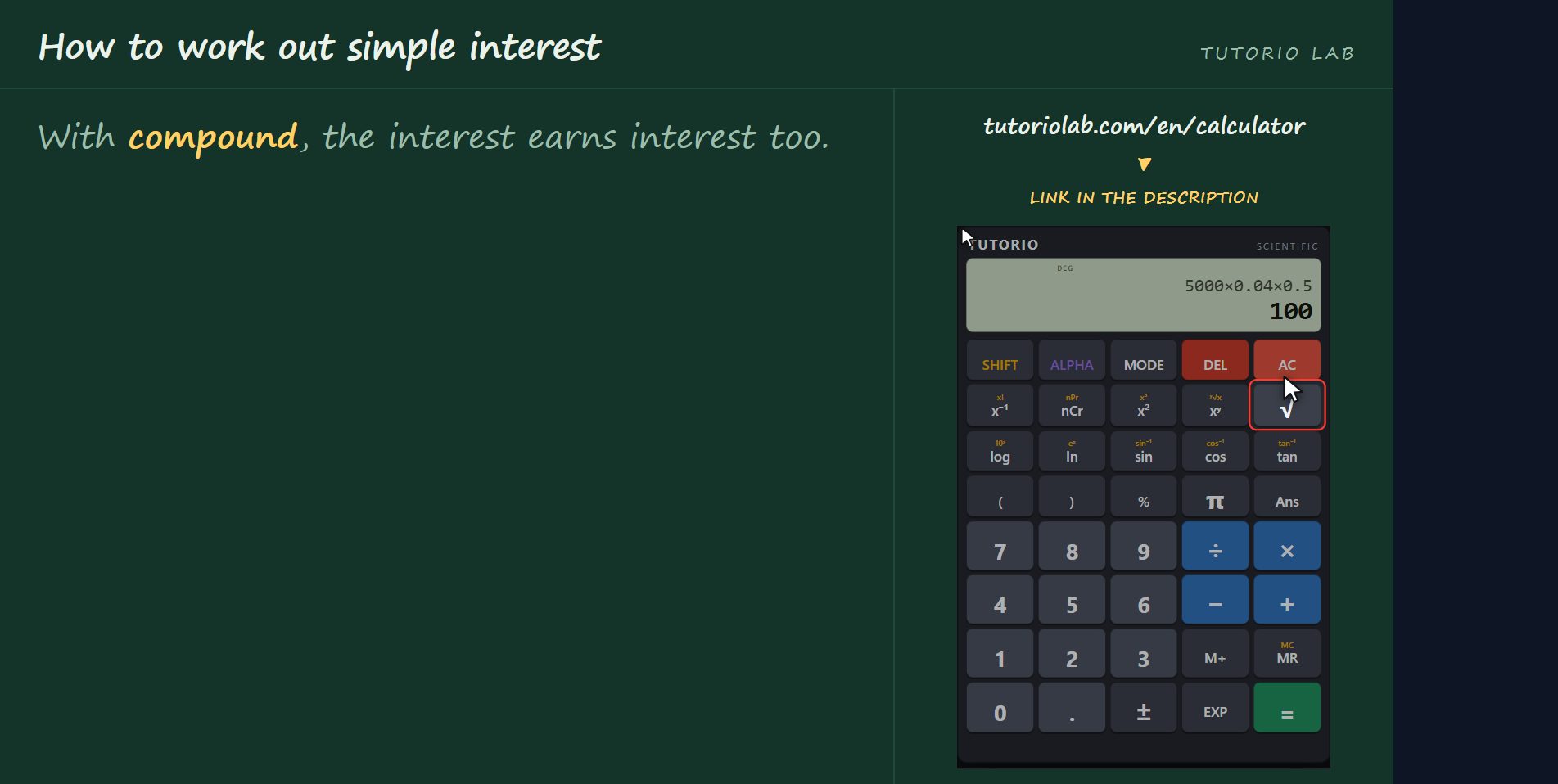
One last thing so nobody catches you out. Simple interest is not the same as compound. With compound, one year of interest is added to the principal and the year after it earns interest as well. With the same numbers, five thousand at four per cent over three years, compound would give five thousand six hundred and twenty-four pounds thirty-two, instead of five thousand six hundred. Not much over three years; over twenty, an enormous difference.
The website does it
And if you would rather not do the sum by hand, we will do it for you. At tutoriolab.com, slash e-n, slash simple interest calculator, you have got this one: you put in the numbers you have, leave blank the one you want to find, and out it comes. It works just the same if what you are missing is the rate or the time. It is free, it asks for no sign-up, and you can download it as a PDF.
And that is it. Take three things away: the formula is principal times rate times time, the percentage gets divided by a hundred, and the time goes in years. Both links are in the description. If this helped, do subscribe.
Common questions
Do I type the rate as 4 or as 0.04?
As 0.04. Per cent means out of a hundred, so 4% is 4 ÷ 100 = 0.04. Type a 4 and the answer comes out a hundred times too big.
The loan runs for 6 months. What do I put for the time?
0.5. The rate is yearly, so the time goes in years: months get divided by 12. Six months is 6 ÷ 12 = 0.5.
Is the interest what I have to pay back?
No. The interest is what the loan costs; what you pay back is the principal plus the interest. In the example, 5,000 + 600 = £5,600.
How is it different from compound interest?
With simple interest it is always worked out on the starting principal. With compound, the interest is added to the principal and starts earning interest itself. With £5,000 at 4% over three years: £5,600 simple, £5,624.32 compound.
Is there a calculator that does it for me?
Yes, and it is free: tutoriolab.com/en/simple-interest. Put in the numbers you have and leave blank the one you want to find — the interest, the principal, the rate or the time. It takes a yearly or monthly rate, time in years, months or days, shows the formula with your numbers and downloads as a PDF.