How to work out VAT
To add VAT you multiply by 1 plus the rate: at 20%, 1,000 × 1.2 = 1,200. To take it out of a price that already includes it you do NOT subtract the percentage, you divide: 1,200 ÷ 1.2 = 1,000. Taking 20% off 1,200 would give 960, which is wrong.
VAT gets paid every day and worked out wrong just as often. Adding it is easy; what almost everyone gets wrong is the opposite: taking VAT out of a price that already includes it. In three minutes I will show you both, and above all why taking the percentage off gives you the wrong number.
What VAT is
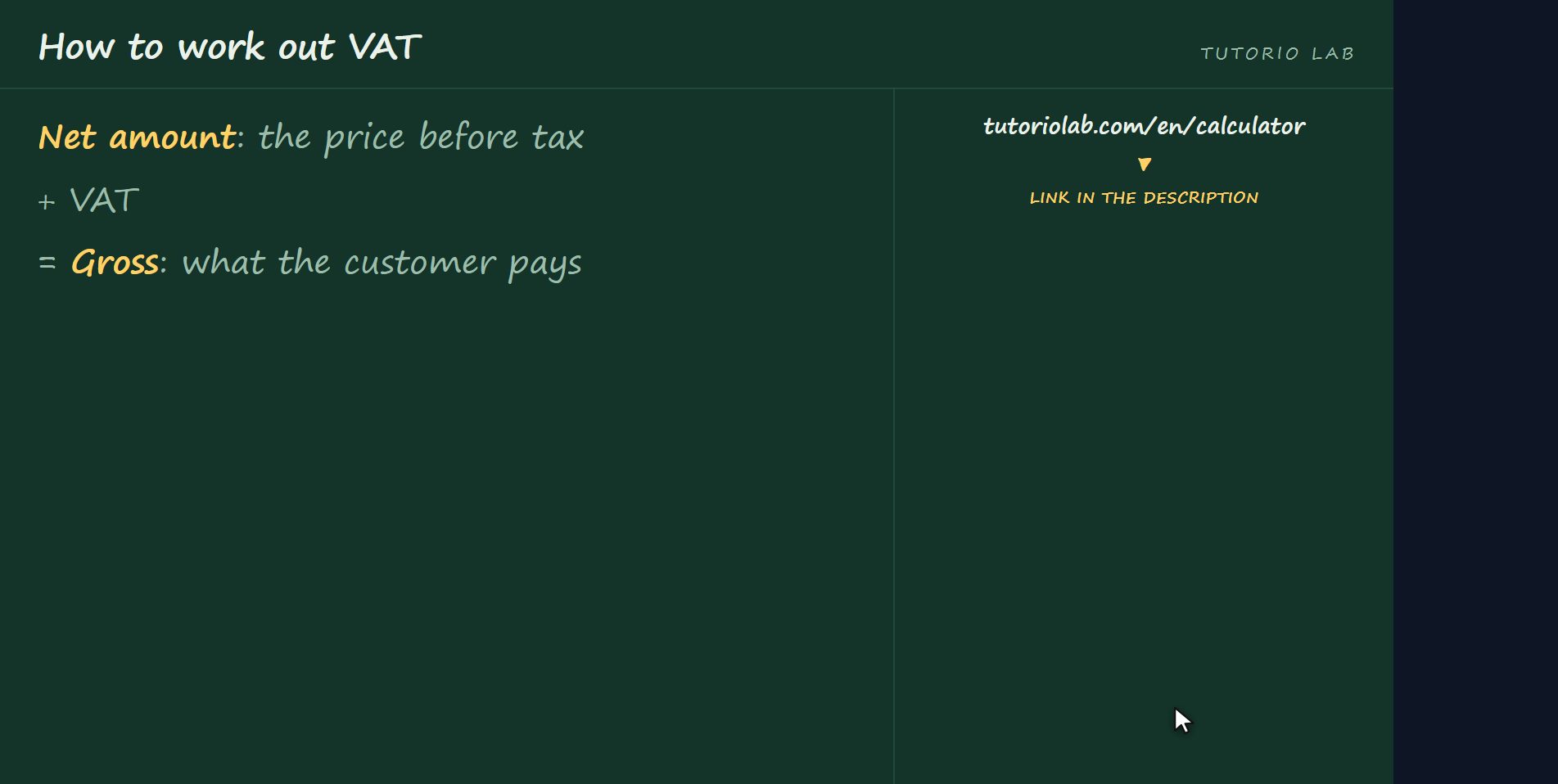
VAT is a tax added on top of the price of what you sell. The clean price, before the tax, is called the net amount. On top of that you add the VAT, and what the customer pays is the two added together. Keep those two words, net and gross, because the whole mess comes from mixing them up.
Adding it is multiplying
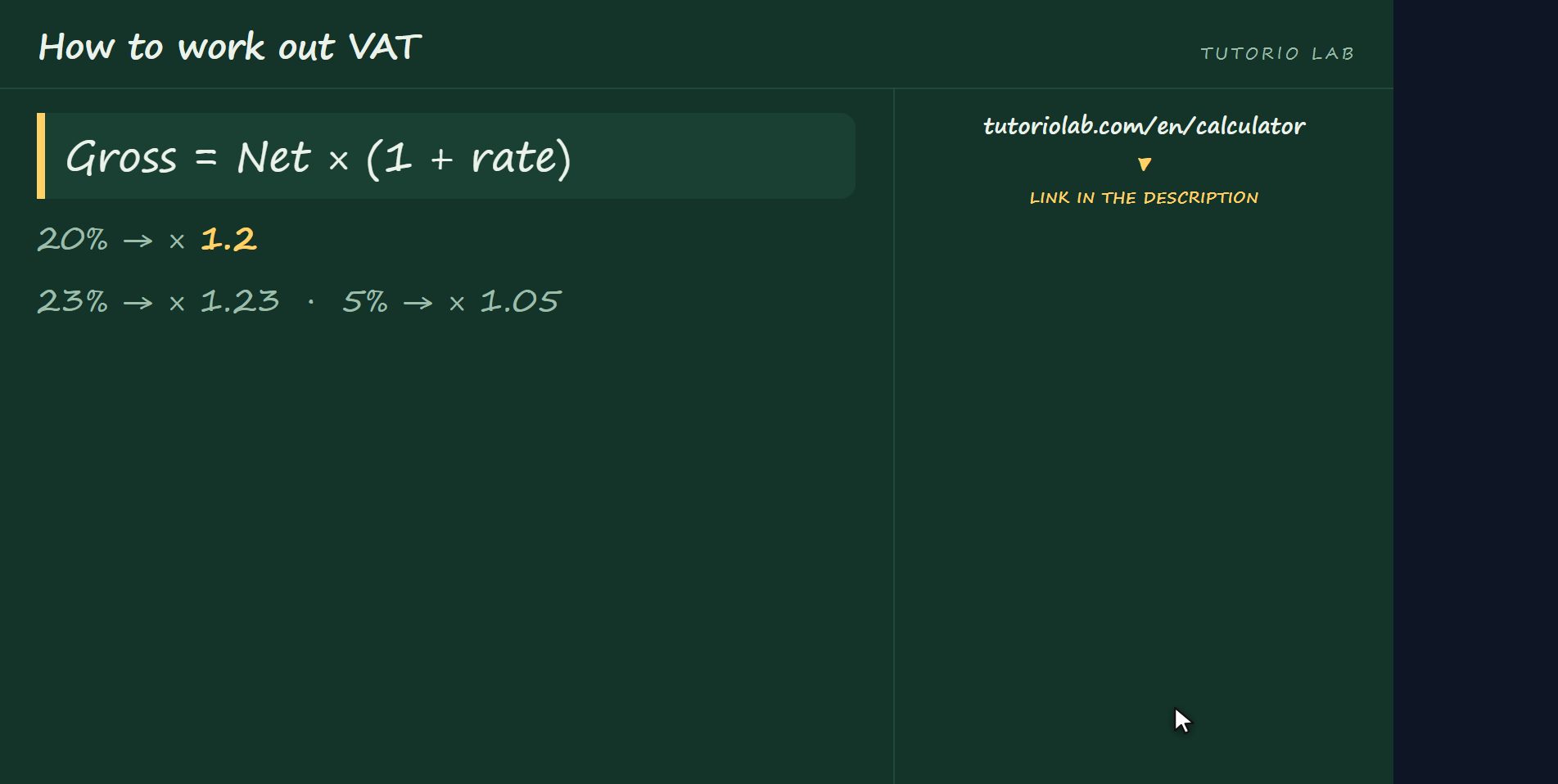
To add it you do not need to work the tax out separately and then add it on. You multiply straight away. If your rate is twenty per cent, you multiply by one point two. That one is the price you already had, and the zero point two is the tax you are putting on top. With twenty-three per cent, by one point two three. With five per cent, by one point zero five.
With real numbers
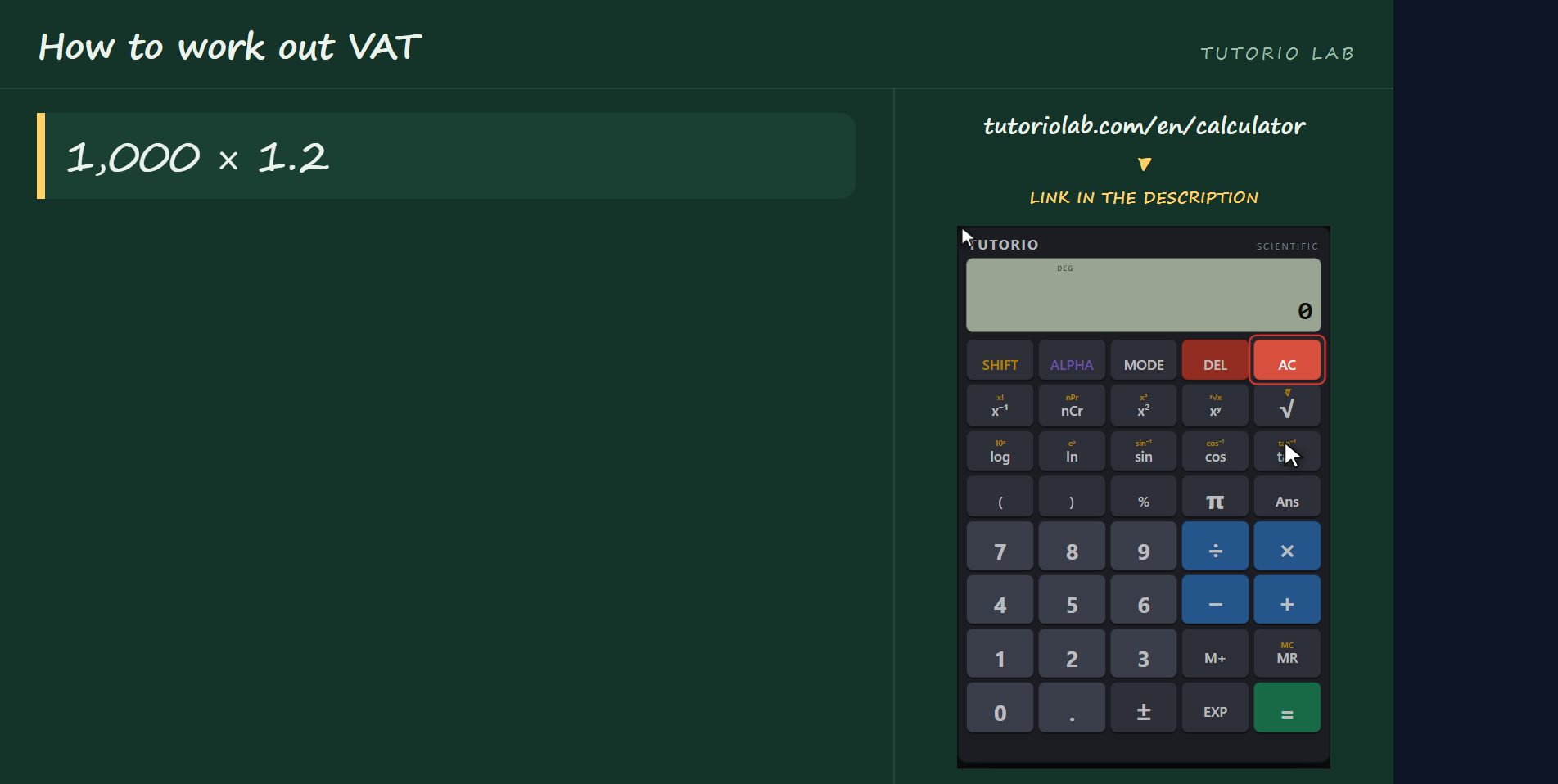
Let us do it with real numbers. A product at one thousand, with twenty per cent. One thousand times one point two: one thousand two hundred. The tax is two hundred and the gross price is one thousand two hundred. That is the easy half, and the half almost nobody gets wrong.
Now the other way round
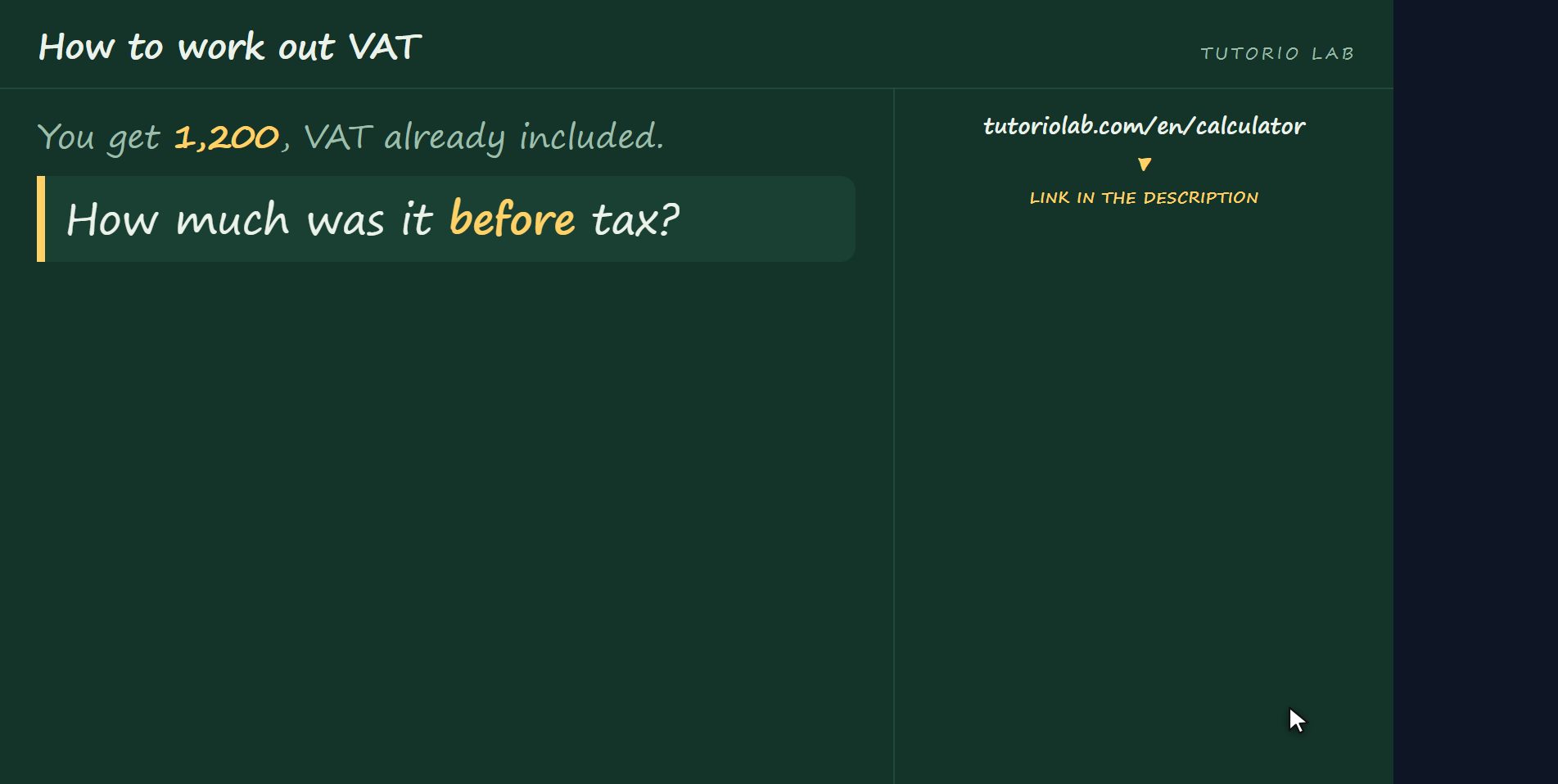
Now the real thing. You are handed a price that already has the VAT in it — an invoice, a price tag — and you need to know what it was before the tax. It is what anybody who invoices has to do, and it is exactly where the trouble starts.
The subtracting mistake
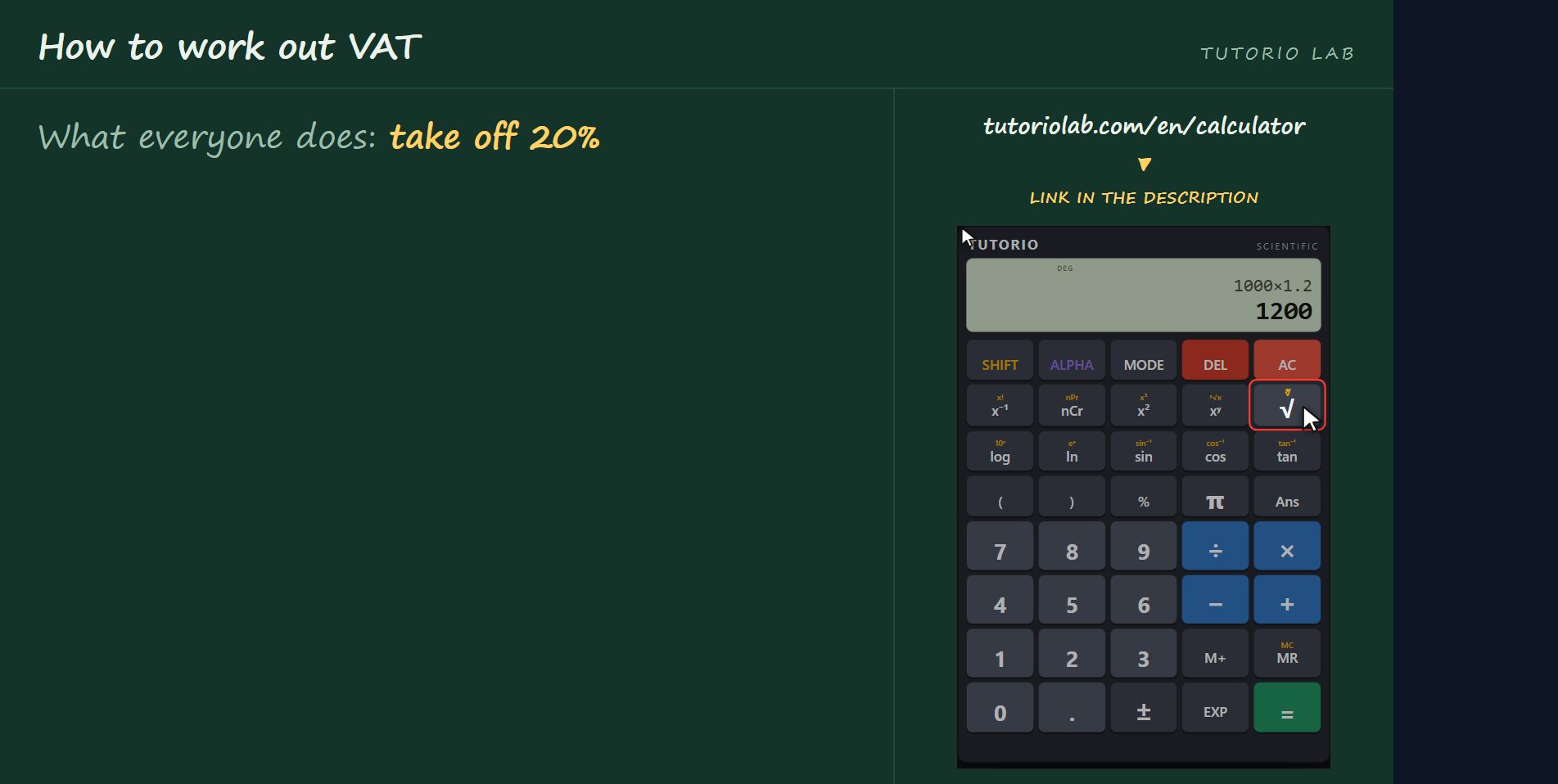
Because the first thing everybody does is knock the percentage off the total. I take the one thousand two hundred, and from that I am going to subtract its twenty per cent. And look what comes out: nine hundred and sixty. But the price before tax was one thousand, not nine hundred and sixty. Forty pounds have gone missing out of nowhere.
You divide, you do not subtract
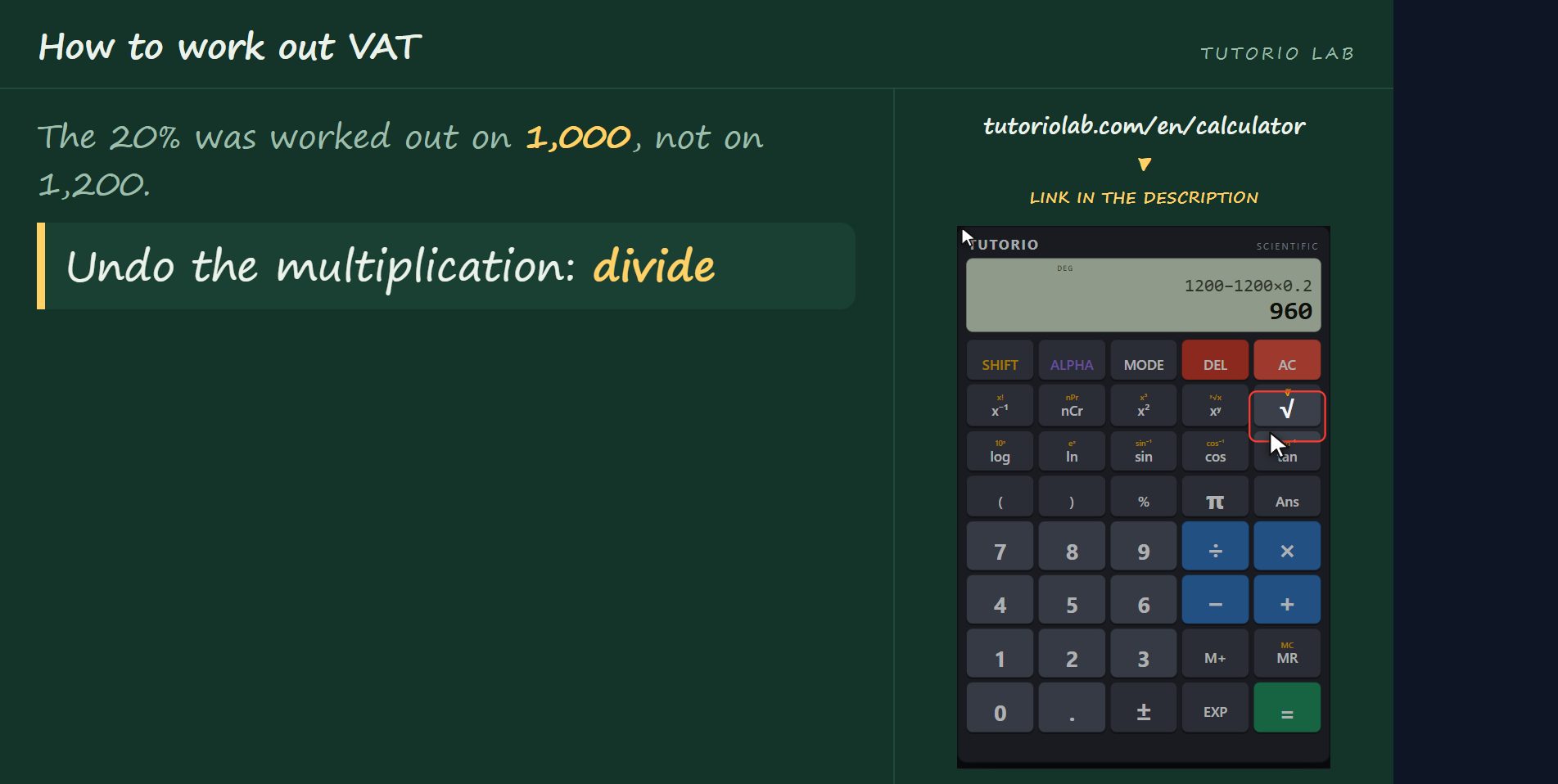
The reason is simple once you see it: that twenty per cent was worked out on one thousand, not on one thousand two hundred. The right thing to do is divide, because a multiplication is only undone by dividing. One thousand two hundred, divided by one point two. And there it is: exactly one thousand, which is the price before tax we started from.
Always check it
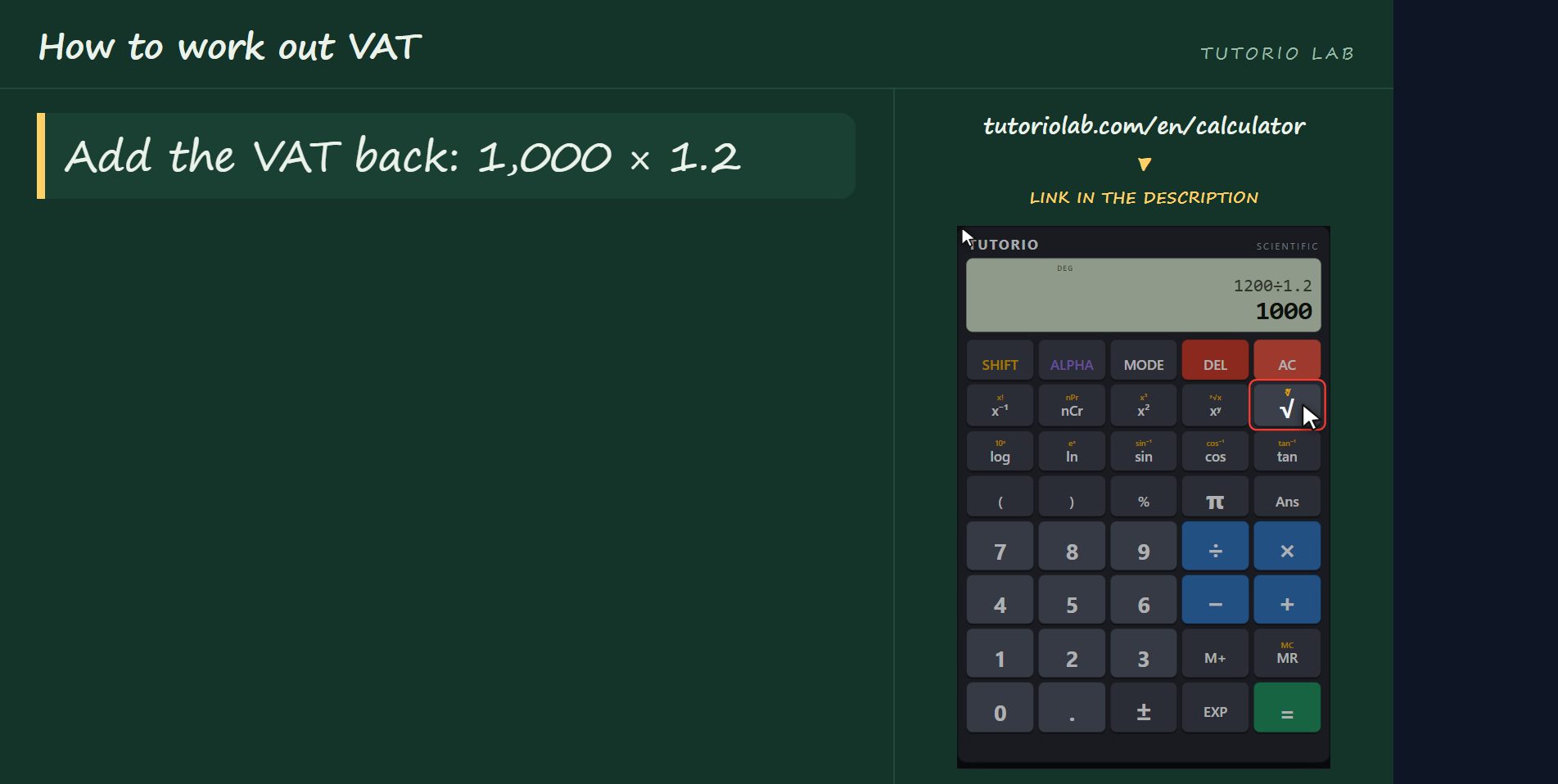
And there is a check that never fails. Take your answer and add the VAT back on. If it gives you the price you started from, it is right. One thousand times one point two is one thousand two hundred, which is exactly where we came from. If it does not match, you took the percentage off instead of dividing.
Your own rate
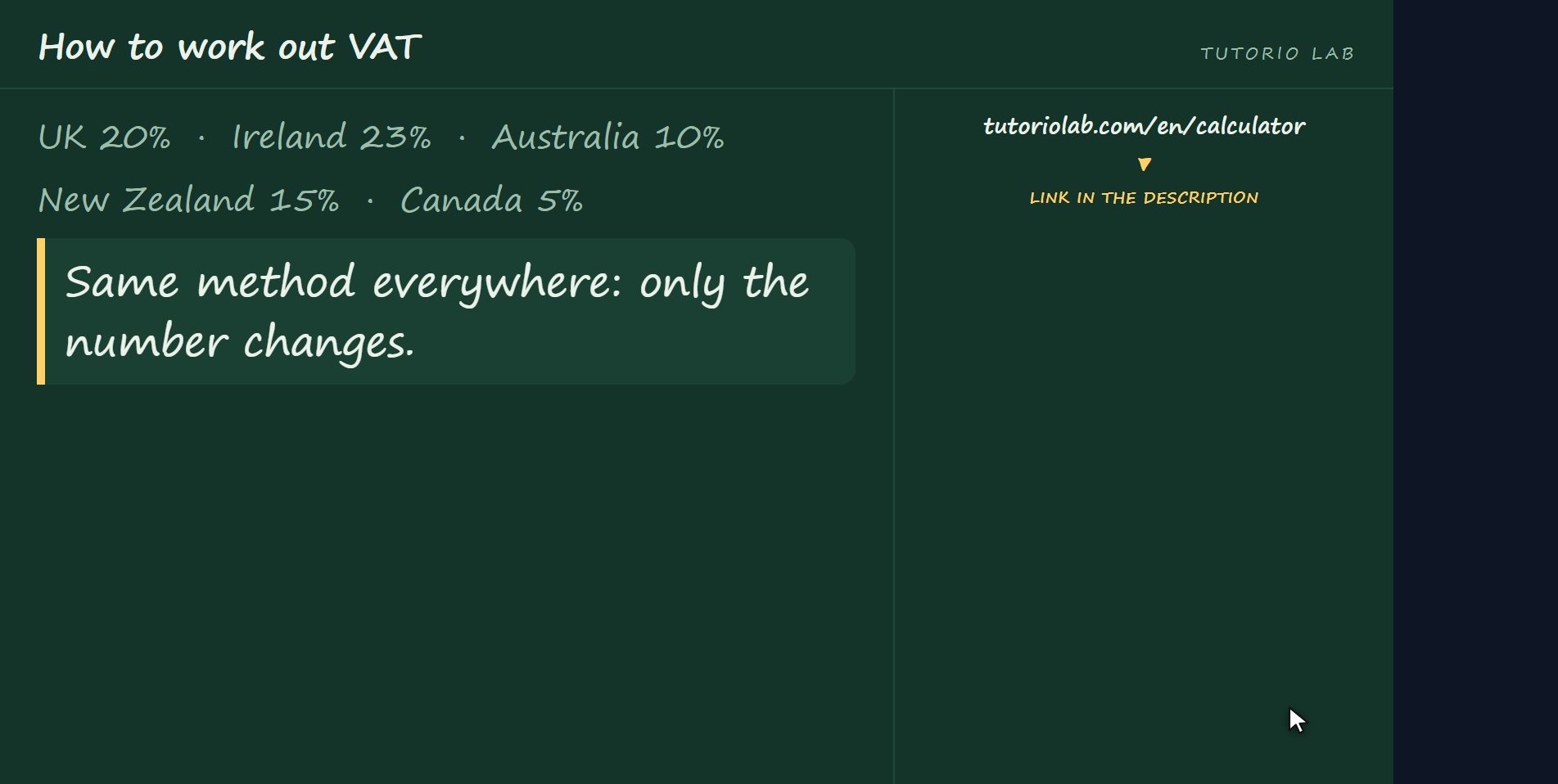
One important thing: the rate is not the same everywhere. In the United Kingdom it is twenty per cent, in Ireland twenty-three, in Australia the goods and services tax is ten, in New Zealand fifteen, in Canada five. And inside each country some products have reduced rates. The method is the same for all of them: the only thing that changes is the number you multiply or divide by.
The website does it
And if you would rather not do the sums, we will do them for you. At tutoriolab.com, slash e-n, slash vat calculator, you have got this one: you choose whether to add the VAT or take it out, you type your own rate, and it breaks it down for you. It is free, it asks for no sign-up, and you can download it as a PDF to attach to an invoice.
So, to sum up: to add VAT you multiply by one point your rate; to take it out you divide by the same thing, and you never take the percentage off; and you check by adding it back on. The links are in the description. If this helped, do subscribe.
Common questions
How do I take VAT off a price?
You divide by 1 plus the rate, you do not subtract the percentage. At 20%: 1,200 ÷ 1.2 = 1,000. Taking 20% off 1,200 gives 960, which is not the net amount.
Why does subtracting the percentage give the wrong answer?
Because the tax was worked out on the net price, which is smaller. Taking that percentage off the gross price means taking it off a bigger number, so you take off too much.
How do I check I got it right?
Add the VAT back on to your answer. If it gives you the price you started from, it is right. 1,000 × 1.2 = 1,200.
Which rate applies to me?
It depends on the country and the product: United Kingdom 20%, Ireland 23%, Australia 10% GST, New Zealand 15% GST, Canada 5% GST. Some products have reduced rates, so check your own.
Is there a calculator that does it?
Yes, and it is free: tutoriolab.com/en/vat-calculator. It adds VAT or breaks it down with your own rate, shows the working and downloads as a PDF.