How to work out a loan payment
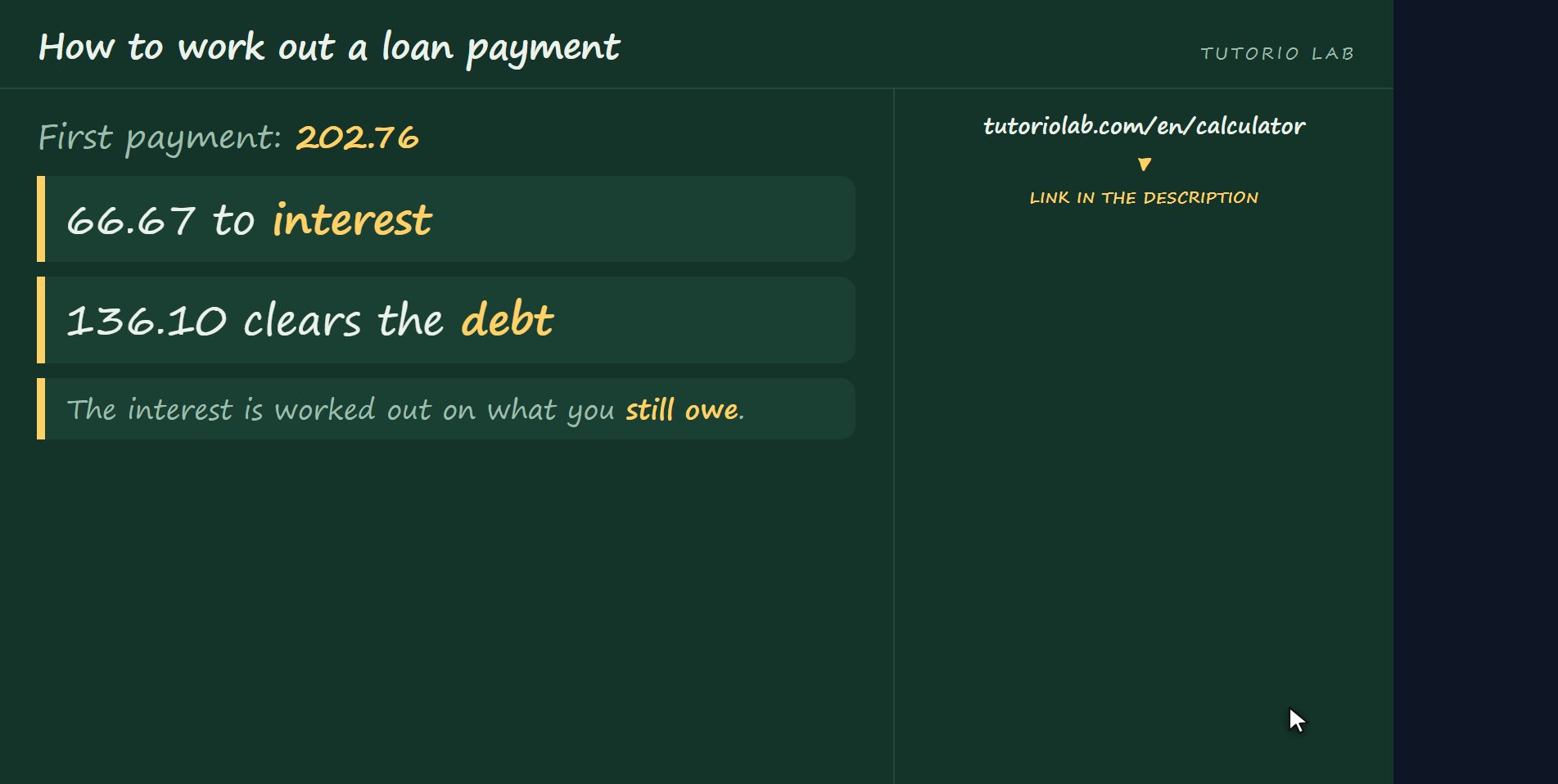
A loan payment comes from P · i / (1 − (1+i)^−n), where i is the monthly interest (the yearly rate divided by 12) and n is the number of months. With 10,000 at 8% a year over 5 years: 202.76 a month, 12,165.84 in total and 2,165.84 of interest. In the first payment, 66.67 is interest and only 136.10 clears the debt.
Somebody is going to lend you money and they quote you a monthly payment. It sounds small, and that is exactly why it works. In three minutes I will show you where that payment comes from, how much you really end up paying, and one thing almost nobody looks at: where each payment actually goes.
What a payment is
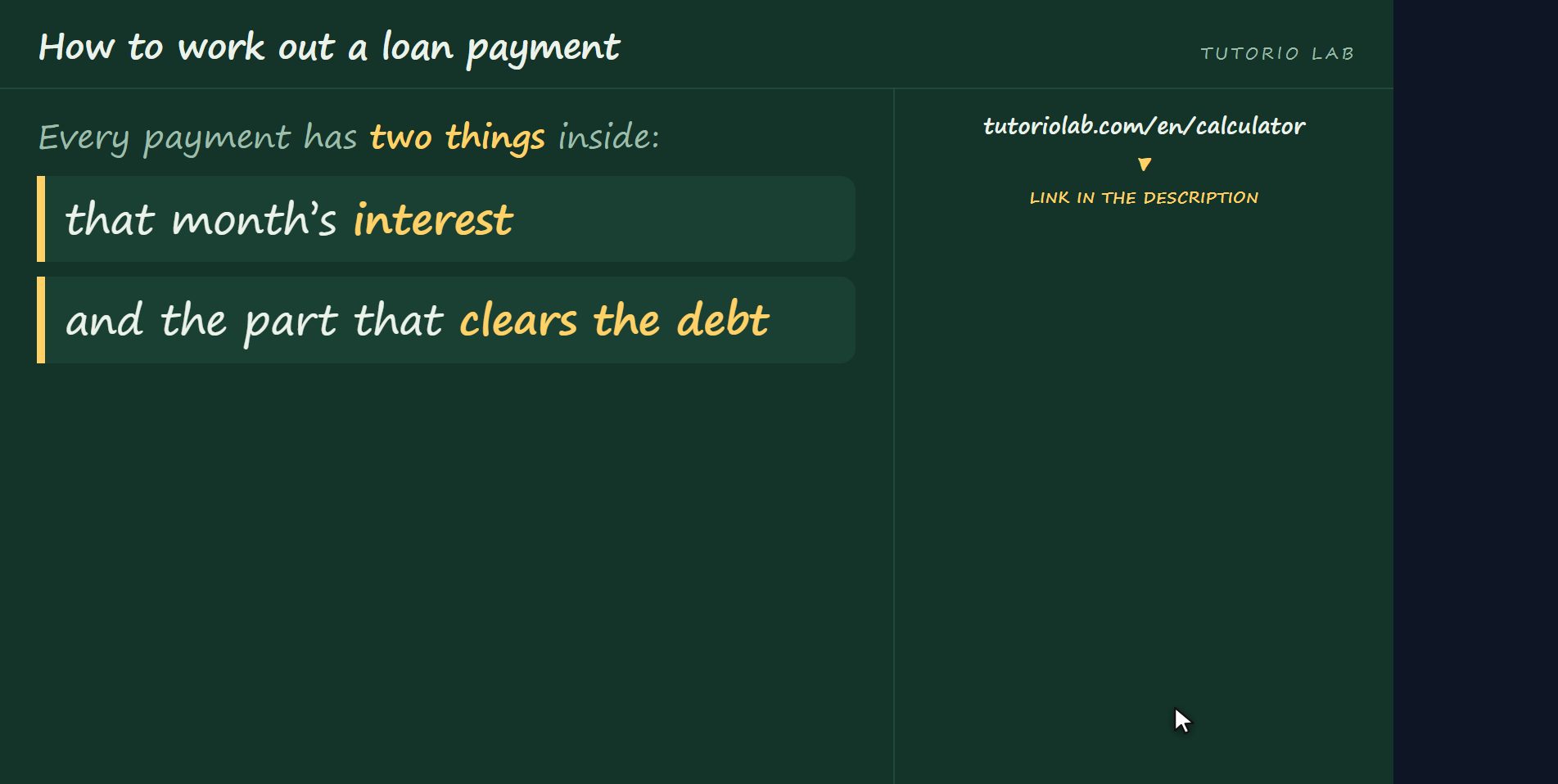
A payment is the same amount every month, and inside it there are two things mixed together: that month’s interest, and a part that clears the debt. The payment does not change, but what is inside it changes month by month. That is where everything interesting is.
Where it comes from
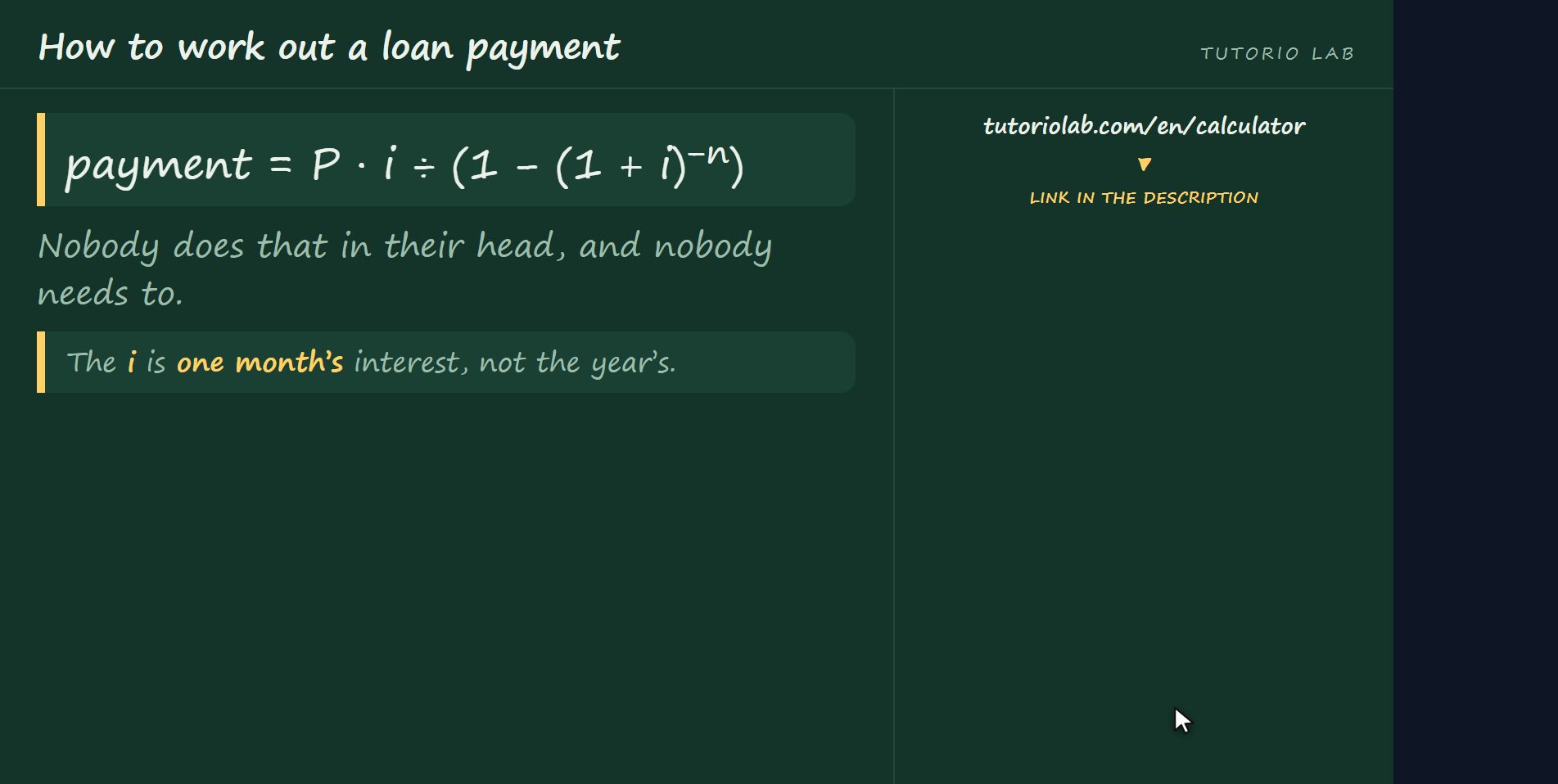
The formula is the only ugly one on this channel, and I am not going to hide it from you: principal times the monthly interest, divided by one minus one plus that interest raised to minus the number of months. Nobody does that in their head, and nobody needs to. What you do need is to understand that it comes from there, and that the interest inside it is one month’s, not the year’s.
The example
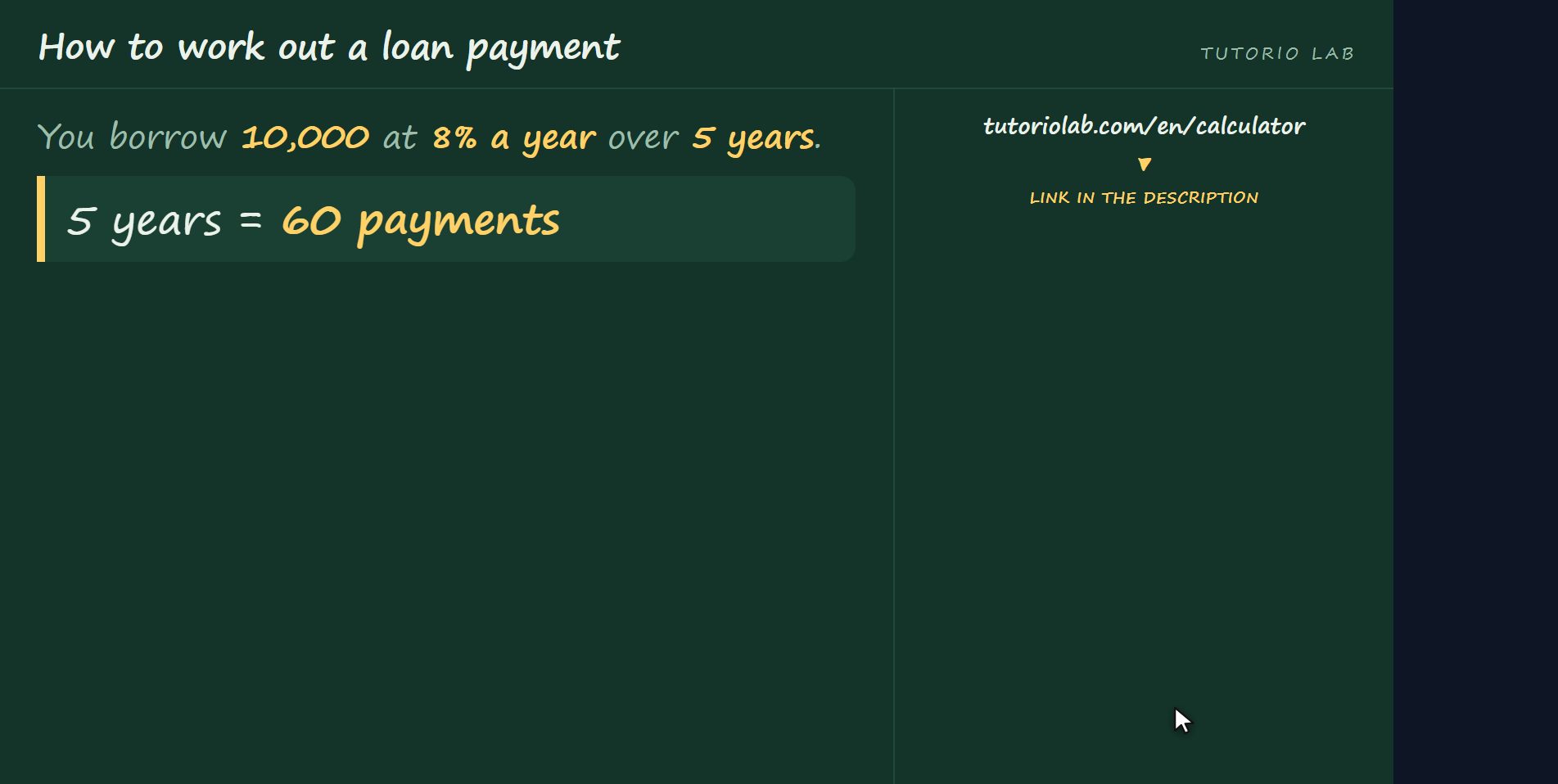
Let us take a case. You borrow ten thousand, at eight per cent a year, over five years. Five years is sixty months, so you are going to make sixty payments. Those three numbers are all it takes.
One month of interest
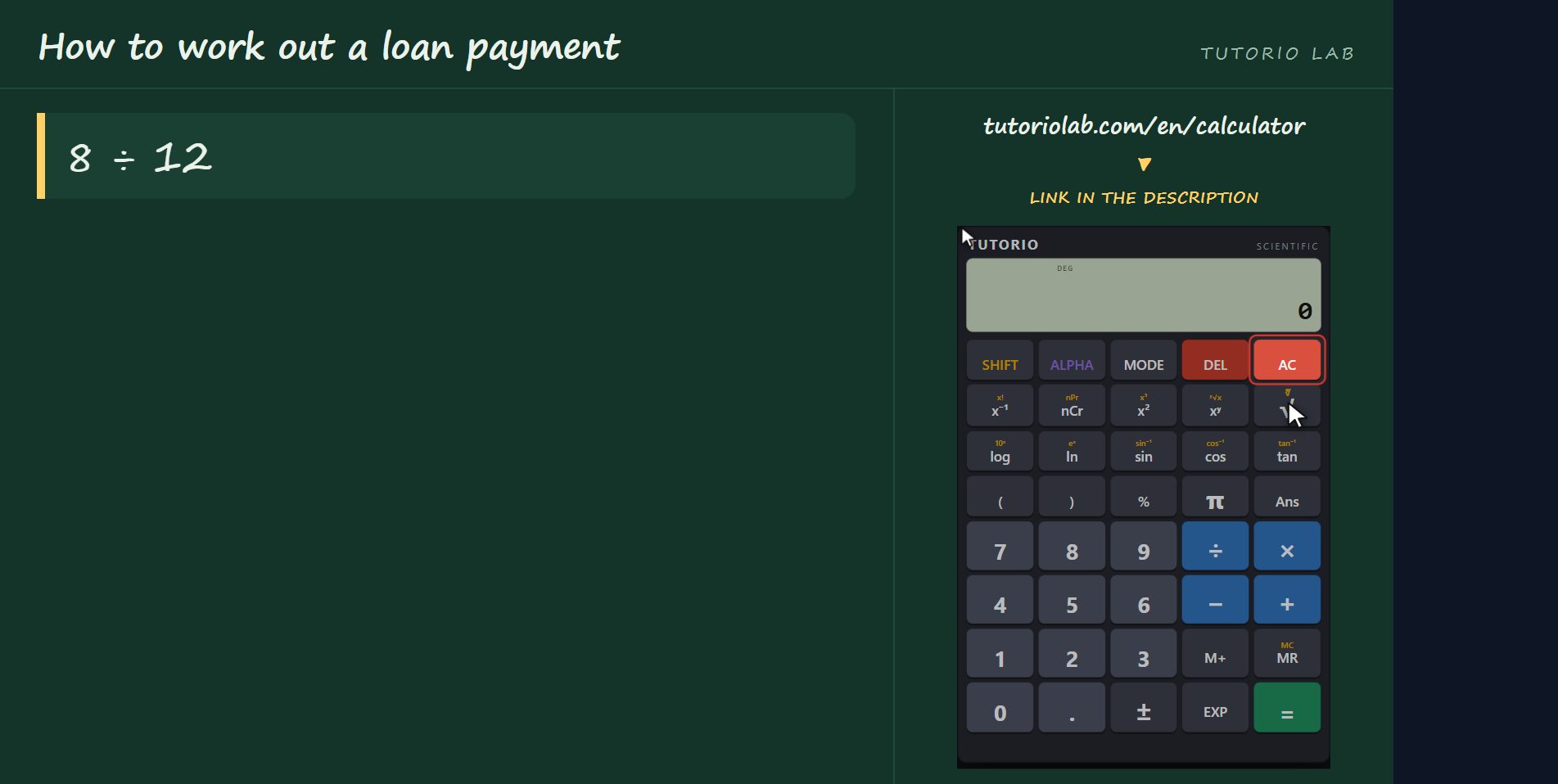
First, the eight per cent is yearly and the payments are monthly. So it gets divided by twelve. Eight divided by twelve gives zero point sixty-six per cent every month. That is the number that goes into the formula, and mixing it up with the eight is the most common mistake of all.
The payment
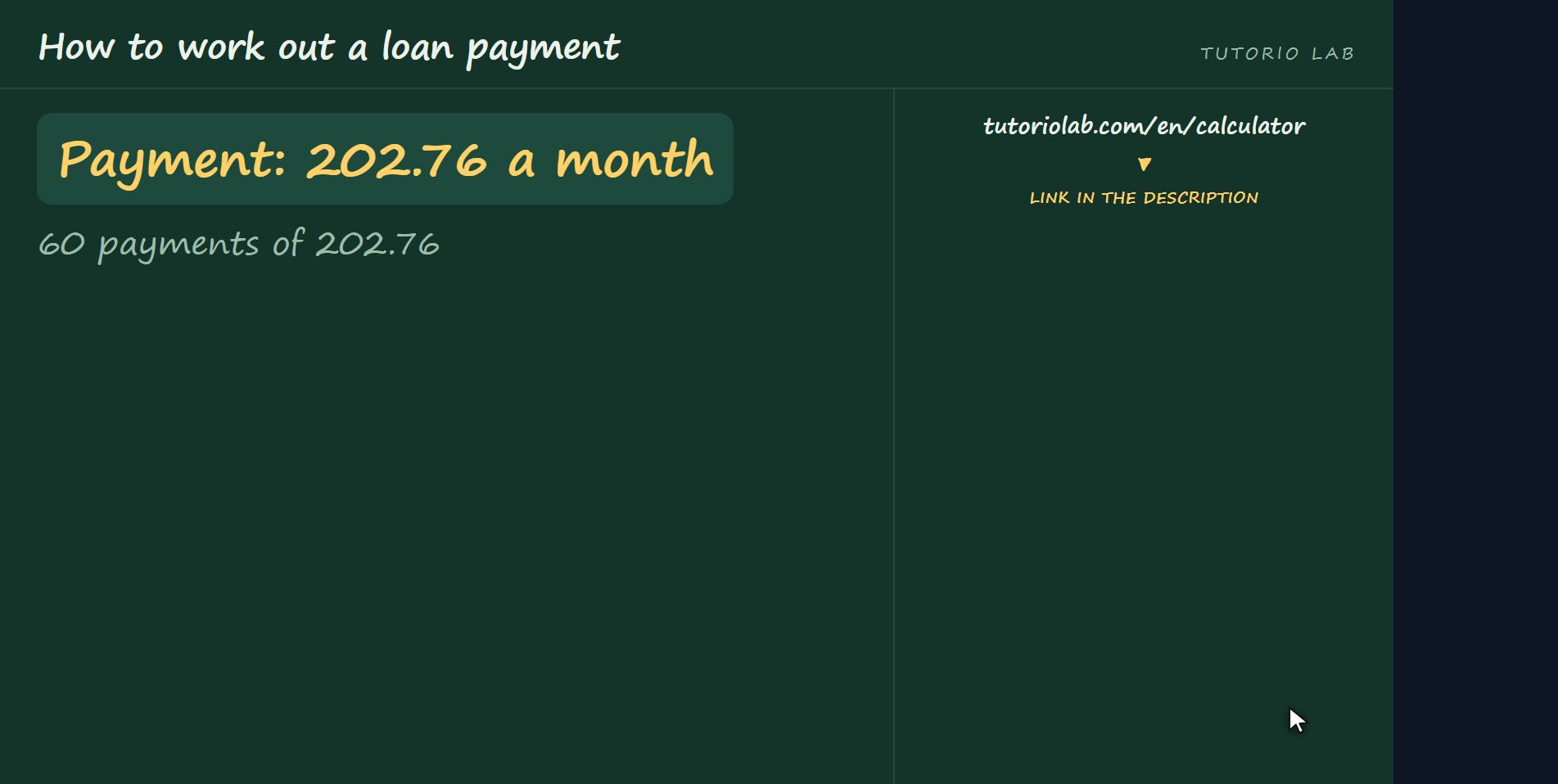
With that, the payment comes out at two hundred and two seventy-six a month. Sixty payments of two hundred and two seventy-six. And this is where most people relax, because two hundred a month sounds manageable.
What you end up paying
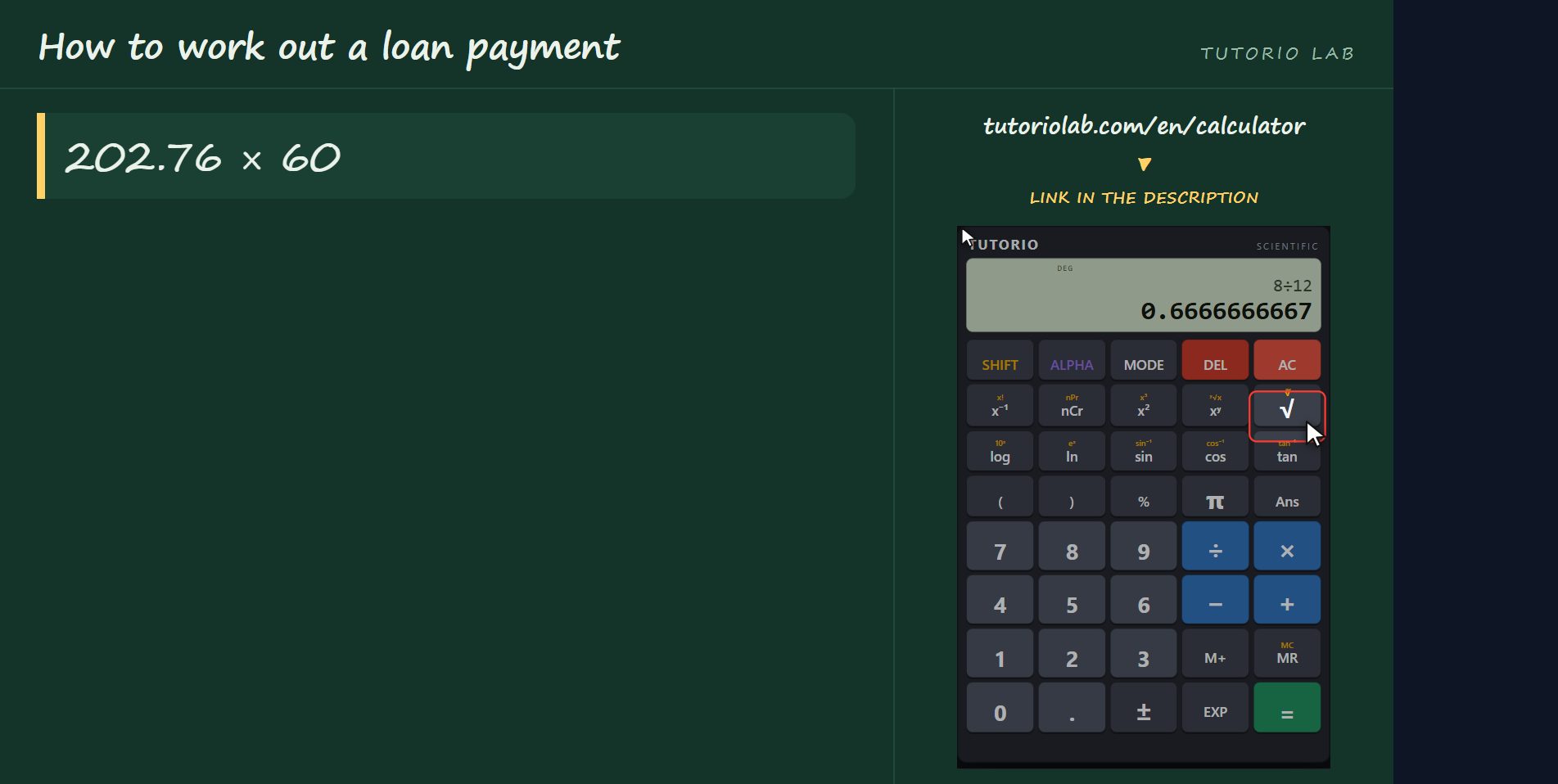
But look what happens when you add them all up. Two hundred and two seventy-six multiplied by sixty months: twelve thousand one hundred and sixty-five. You borrowed ten thousand and you pay back twelve thousand one hundred and sixty-five. Two thousand one hundred and sixty-five of interest. The payment is small; the loan is not.
Where each payment goes
And now the part almost nobody looks at. Out of that first payment of two hundred and two, sixty-six sixty-seven is interest, and only a hundred and thirty-six clears the debt. The interest is worked out on what you still owe, and at the start you owe nearly all of it. As the debt comes down, so does the interest, and each payment pushes harder.
That is why paying early helps
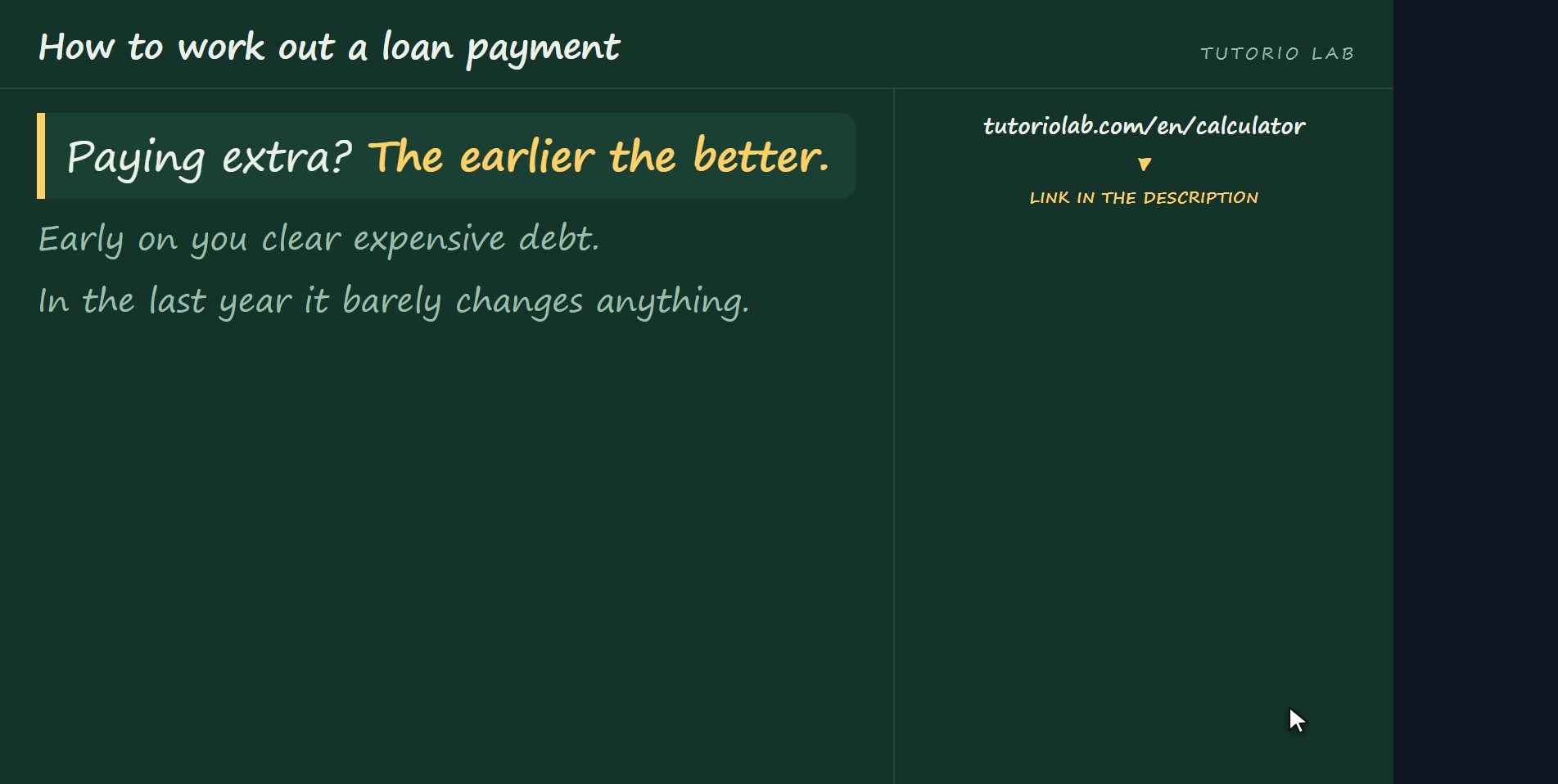
That is where the one piece of advice that actually works comes from: if you are going to pay extra, the earlier the better. An extra payment at the start clears debt while the interest is at its highest, and that saves you interest on every month that follows. The same extra payment in the final year barely changes anything.
The website does it
And so you do not have to fight with the formula, we will do it for you. At tutoriolab.com, slash e-n, slash loan calculator, you put in the amount, the rate and the term, and out comes the payment, what you end up paying, and the table for every month: how much goes to interest and how much clears the debt. It is free, no sign-up, and you can download it as a PDF.
Take three things away: the interest in the formula is the month’s, not the year’s; the payment is not what you pay, add them all up; and if you pay extra, do it early. The links are in the description. If this helped, do subscribe.
Common questions
Do I put the yearly rate into the formula?
No. The formula takes one month’s interest, because the payments are monthly. Divide the yearly rate by 12: 8% a year is 0.66% a month, that is 0.0066667.
Why is so little of the first payment clearing the debt?
Because each month’s interest is worked out on what you still owe, and at the start you owe nearly all of it. On a first payment of 202.76, 66.67 is interest and 136.10 is capital. By the end it is the other way round.
Is the monthly payment what the loan costs me?
No. Multiply it by the number of payments. 202.76 × 60 = 12,165.84, on 10,000 borrowed: 2,165.84 of interest.
Is it worth paying extra?
Yes, and the earlier the better. An extra payment at the start clears debt while the interest is highest and saves you interest on every month after it. The same payment in the final year barely changes anything.
Is there a calculator that does it?
Yes, and it is free: tutoriolab.com/en/loan-calculator. It gives you the payment, the total interest and the month-by-month table, and downloads as a PDF.