The compound interest formula
Compound interest is worked out with C × (1 + i)^n: $1,000 at 5% over 10 years comes to $1,628.89, against $1,500 with simple interest. The difference is that each year the interest is added to the capital and earns interest itself. Time matters more than the rate because the years sit in the exponent: over 30 years the same $1,000 reaches $4,321 compound against $2,500 simple.
Compound interest is the reason that saving early is worth more than saving a lot. In three minutes I will show you the formula, the sum with real numbers, and above all how much more it comes to than simple interest, which is the part hardly anybody stops to look at.
How it differs from simple
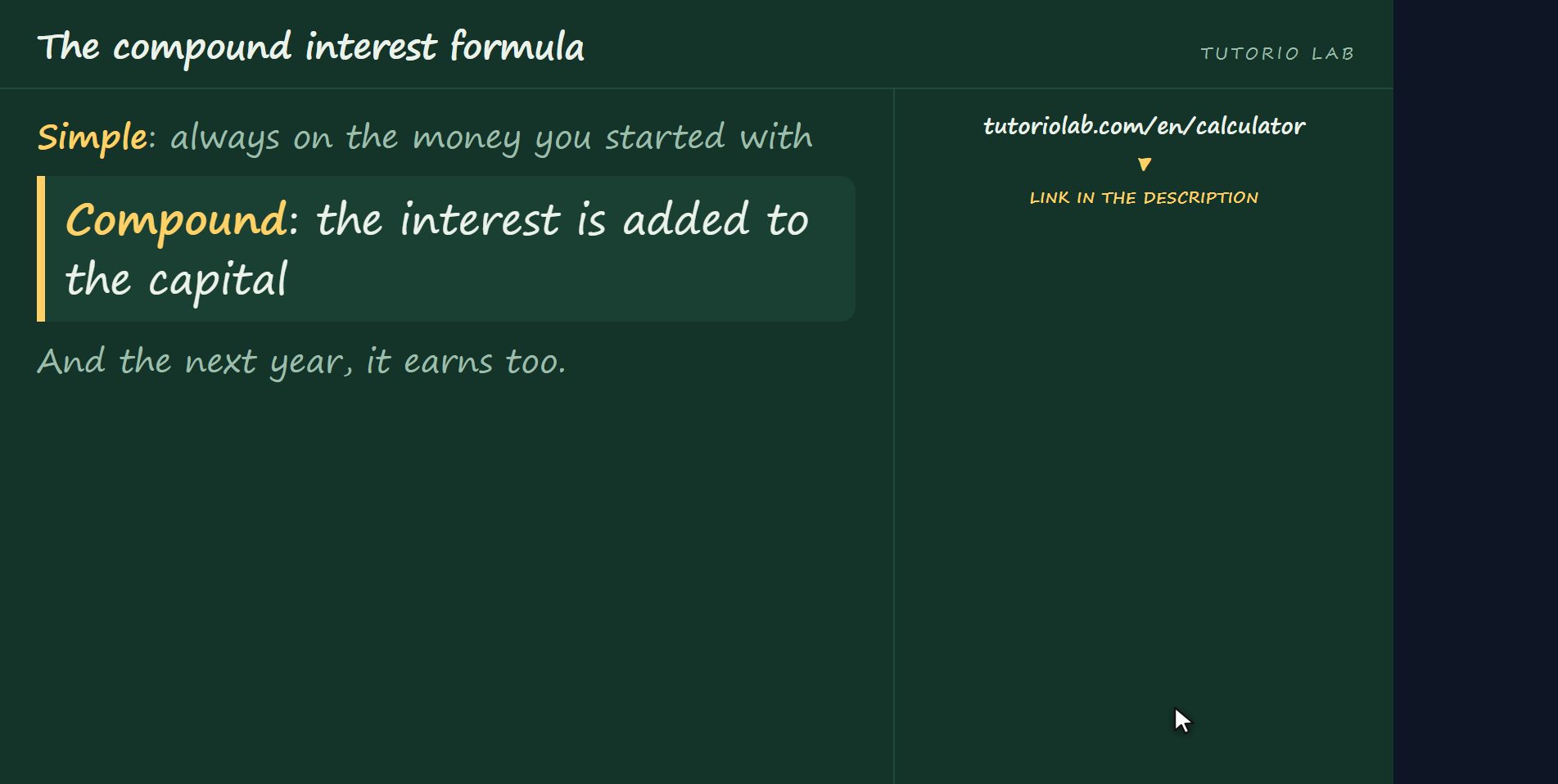
The difference from simple interest is one single thing. With simple, the interest is always worked out on the money you put in at the start. With compound, each year the interest is added to the capital, and the following year that money earns interest too. The interest starts working on its own.
The formula
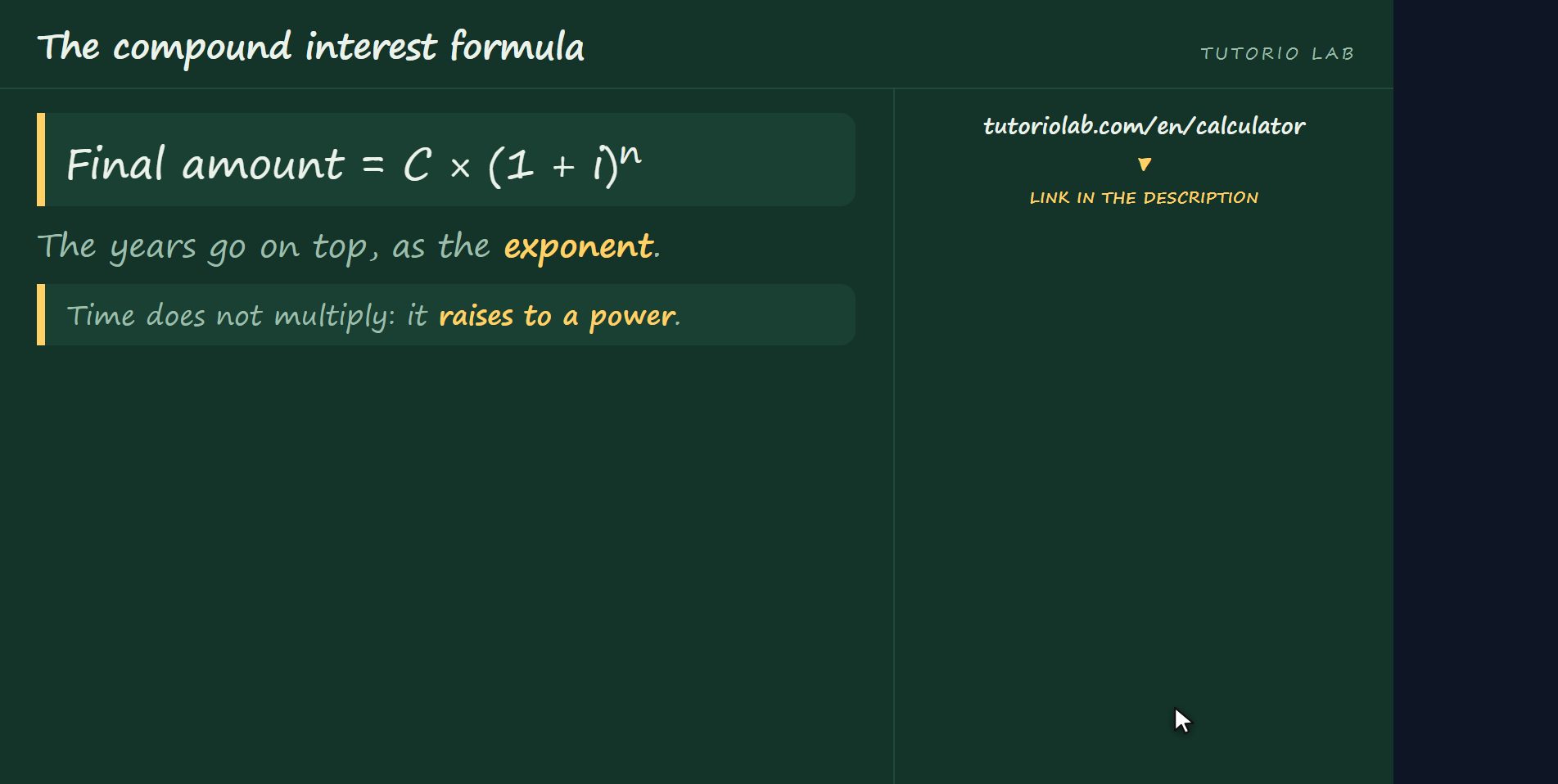
The formula is short: the capital, times one plus the rate, raised to the number of years. That one is the money you already had, the rate is what it grows by each year, and the number of years goes on top, as the exponent. And there is the key to the whole thing: time does not multiply, time raises to a power.
The example
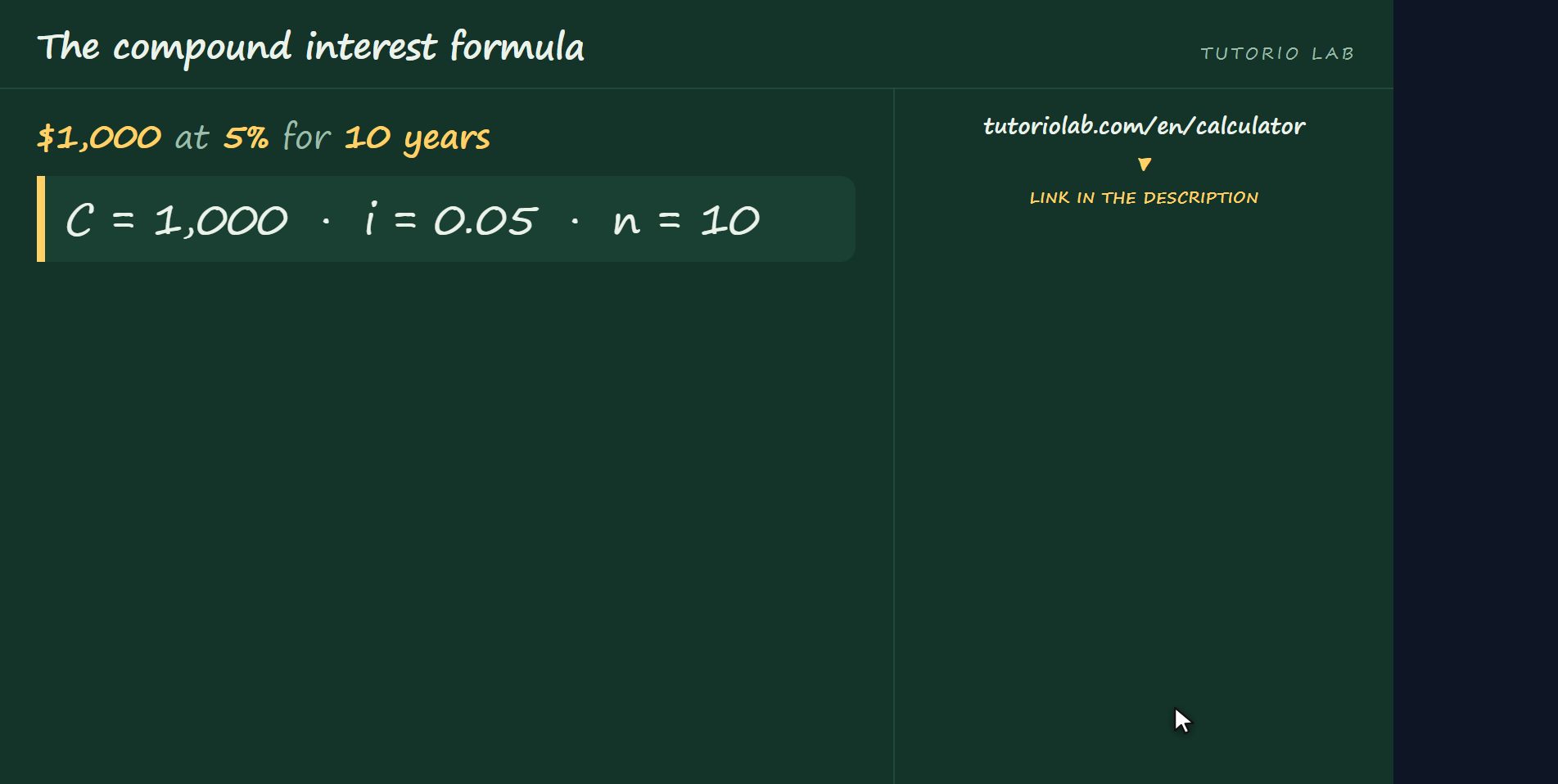
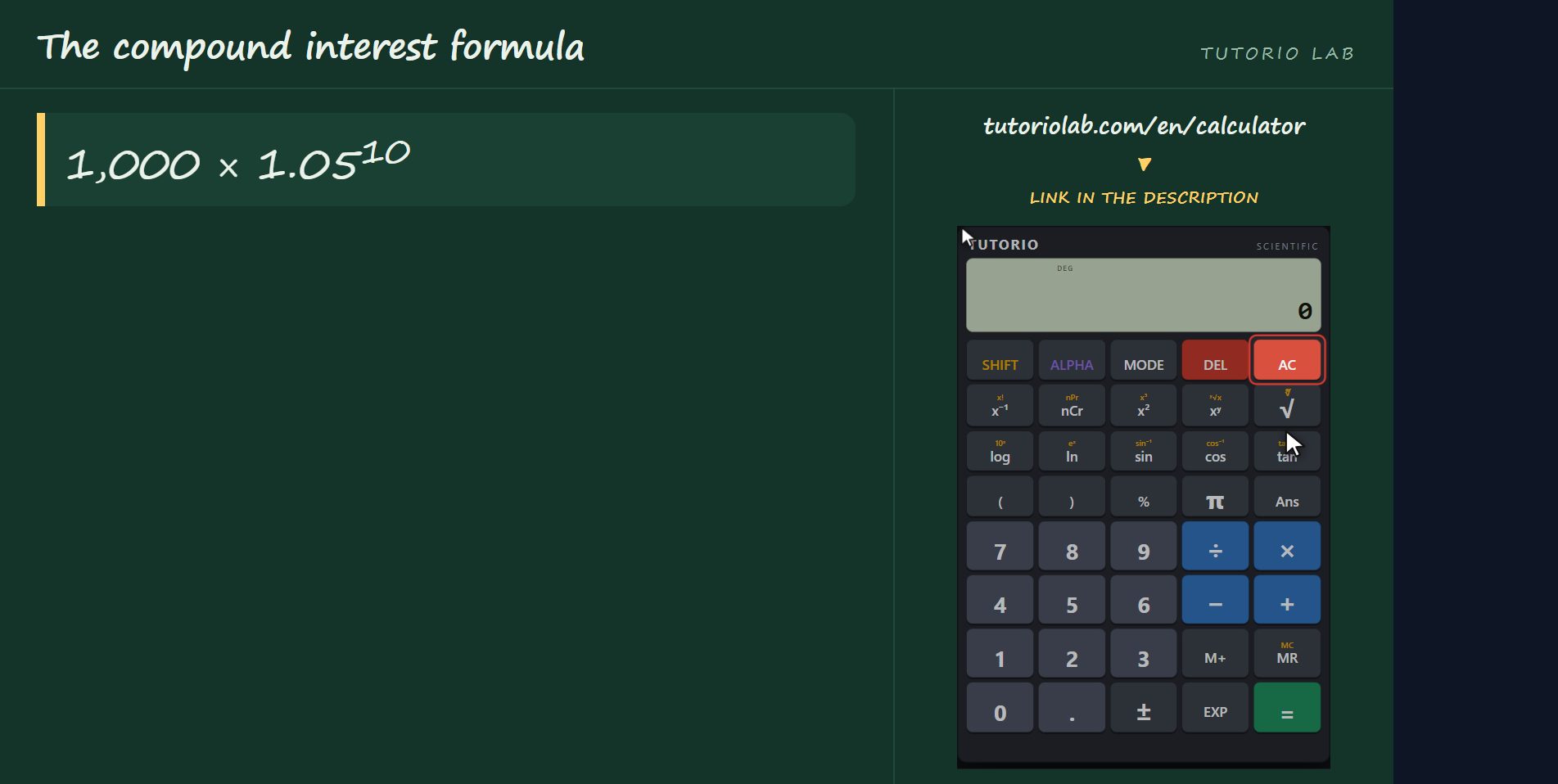
Let us use numbers. You put in a thousand dollars at five per cent a year and leave it for ten years. The capital is a thousand, the rate is nought point nought five, and the exponent is ten. That is all.
The sum
Over to the calculator, because this sum can be typed. We put in a thousand, times one point nought five, which is the one plus the rate. And now the part that changes everything: that has to be raised to ten, which is the years. And it gives one thousand six hundred and twenty-eight point eight nine. You put in a thousand and you have six hundred and twenty-eight eighty-nine of interest.
Against simple interest
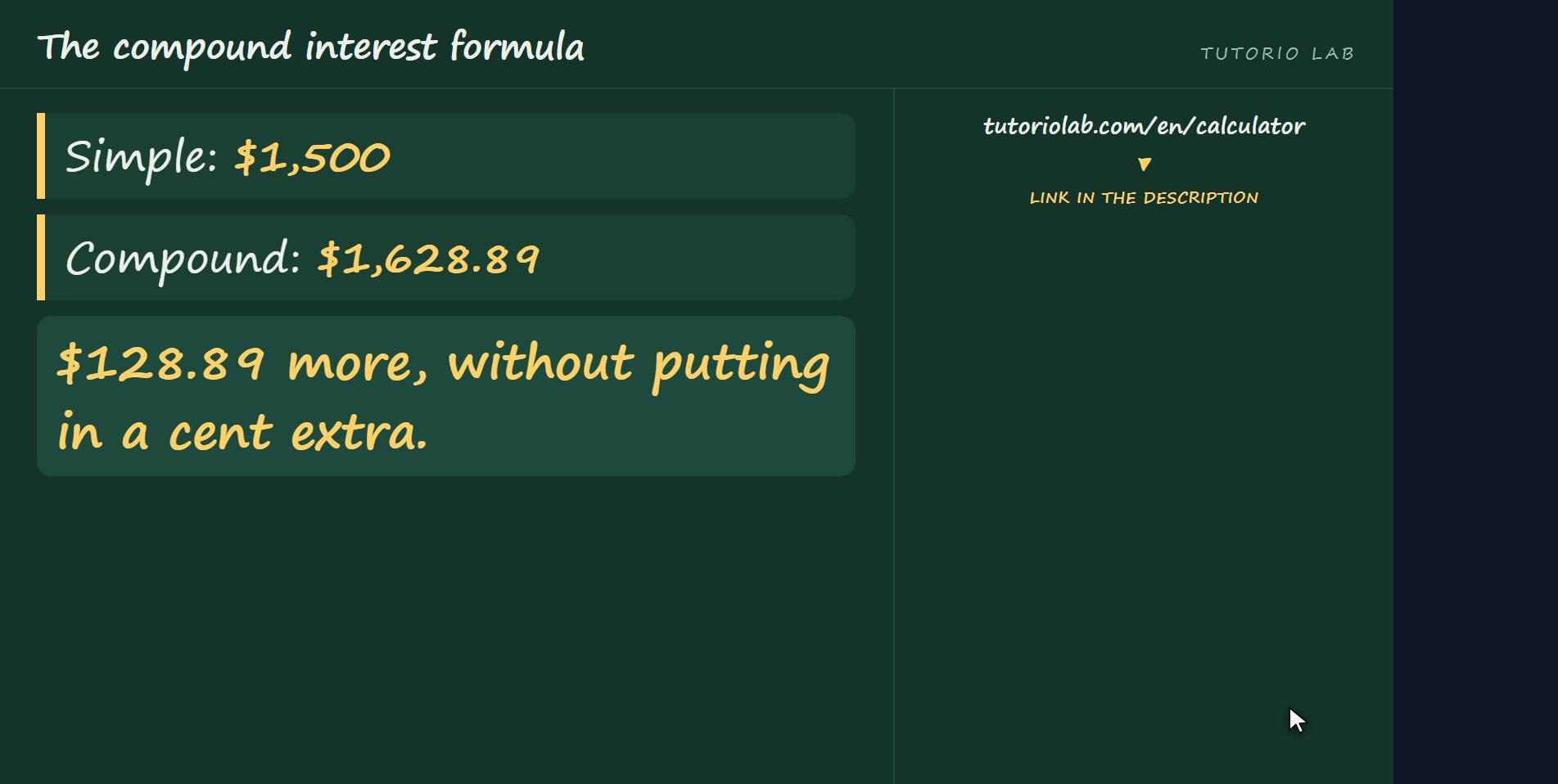
Now the comparison, which is what makes it click. With simple interest, that same money at the same five per cent over the same ten years would give one thousand five hundred. With compound, one thousand six hundred and twenty-eight. A hundred and twenty-eight eighty-nine more, without putting in a cent extra.
Where the difference comes from
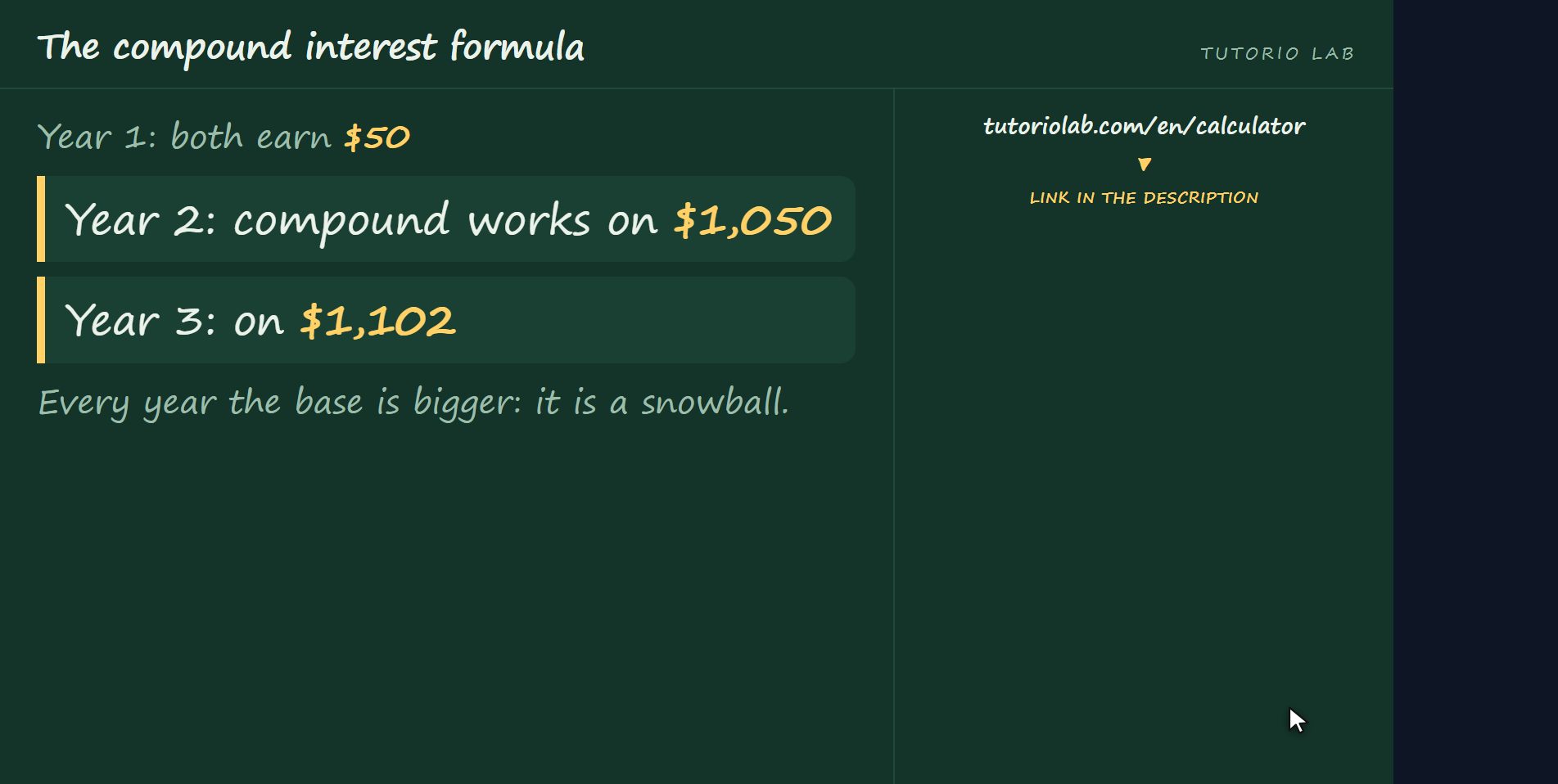
And that difference does not come out of nowhere: it is exactly what the interest earned on its own. In year one they both do the same, fifty of interest. But in year two, compound works on one thousand and fifty instead of on a thousand. And in year three, on one thousand one hundred and two. Every year the base is a little bigger, and that snowball is the whole thing.
Time beats the rate
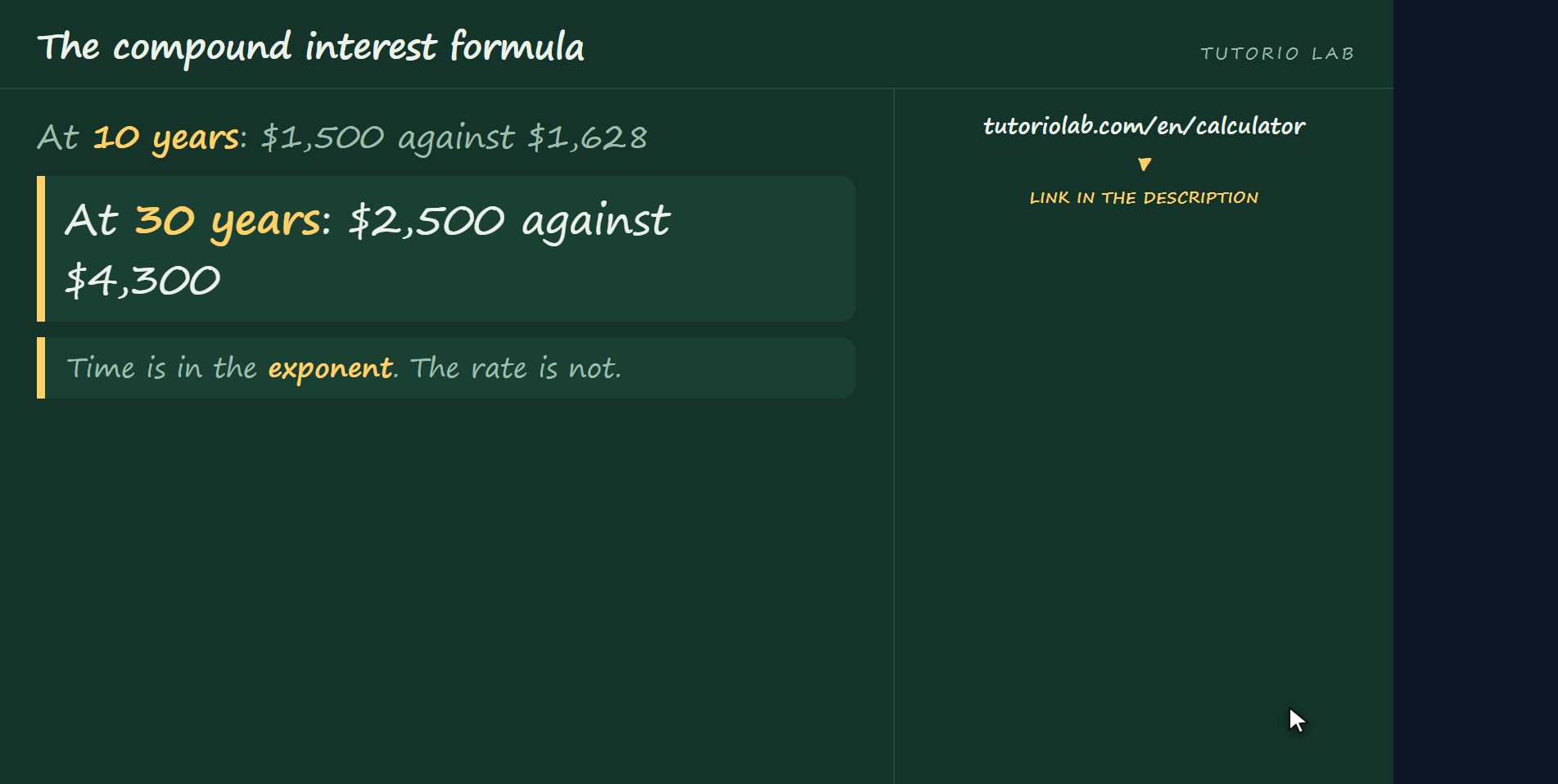
And that is where the most important part comes from, and hardly anybody says it: time matters more than the rate. Over ten years the difference is a hundred and twenty-eight; over thirty years, with the same thousand and the same rate, compound reaches four thousand three hundred and simple only two thousand five hundred. Nearly double. Because time is in the exponent and the rate is not.
Adding to it every month
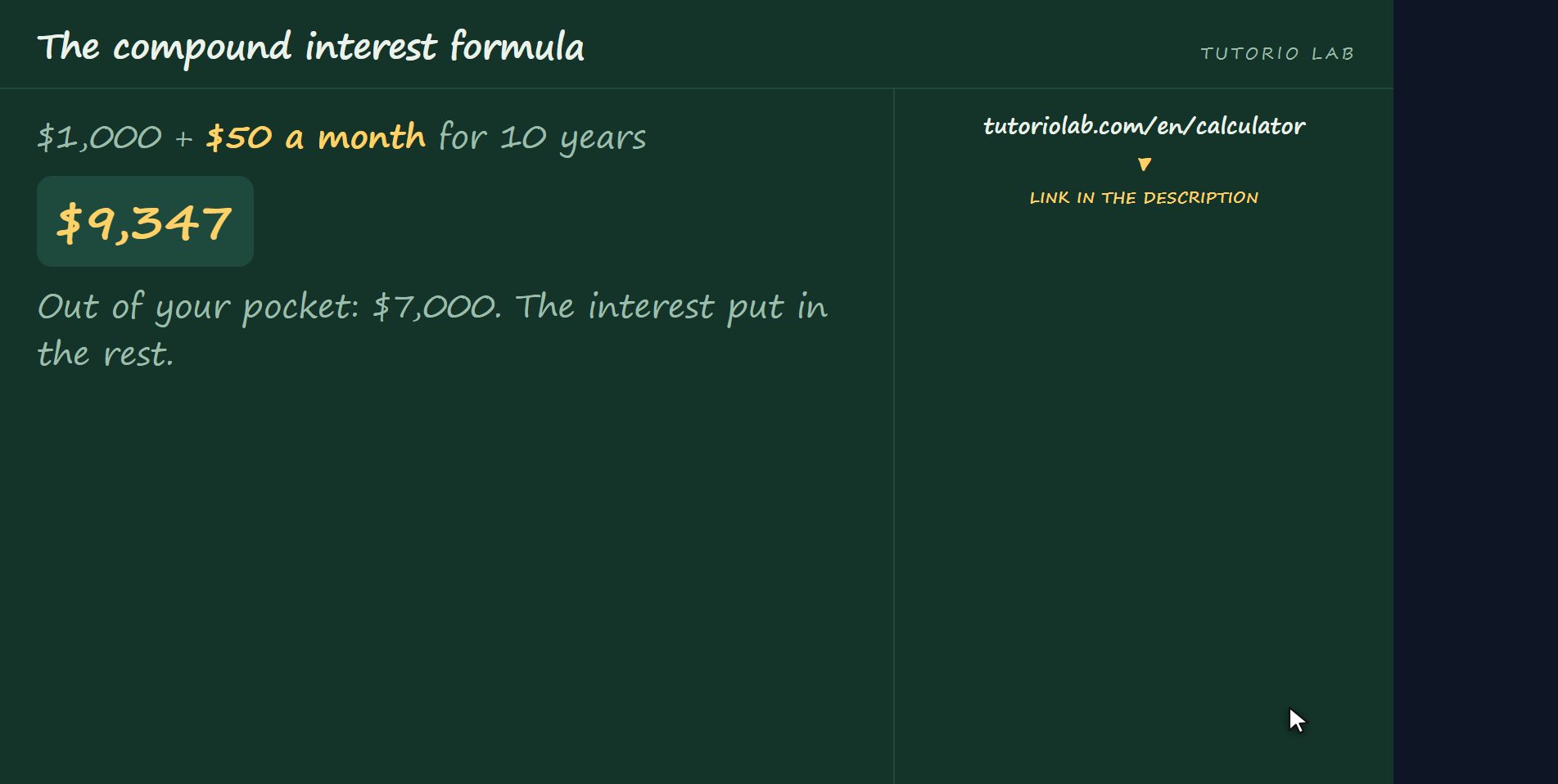
And there is the real case, which is not leaving a thousand sitting there: it is putting a bit in every month. If on top of that thousand you add fifty a month for the ten years, you end up with nine thousand three hundred and forty-seven. Seven thousand of that came out of your pocket, so two thousand three hundred and forty-seven was put there by the interest.
The website does it for you
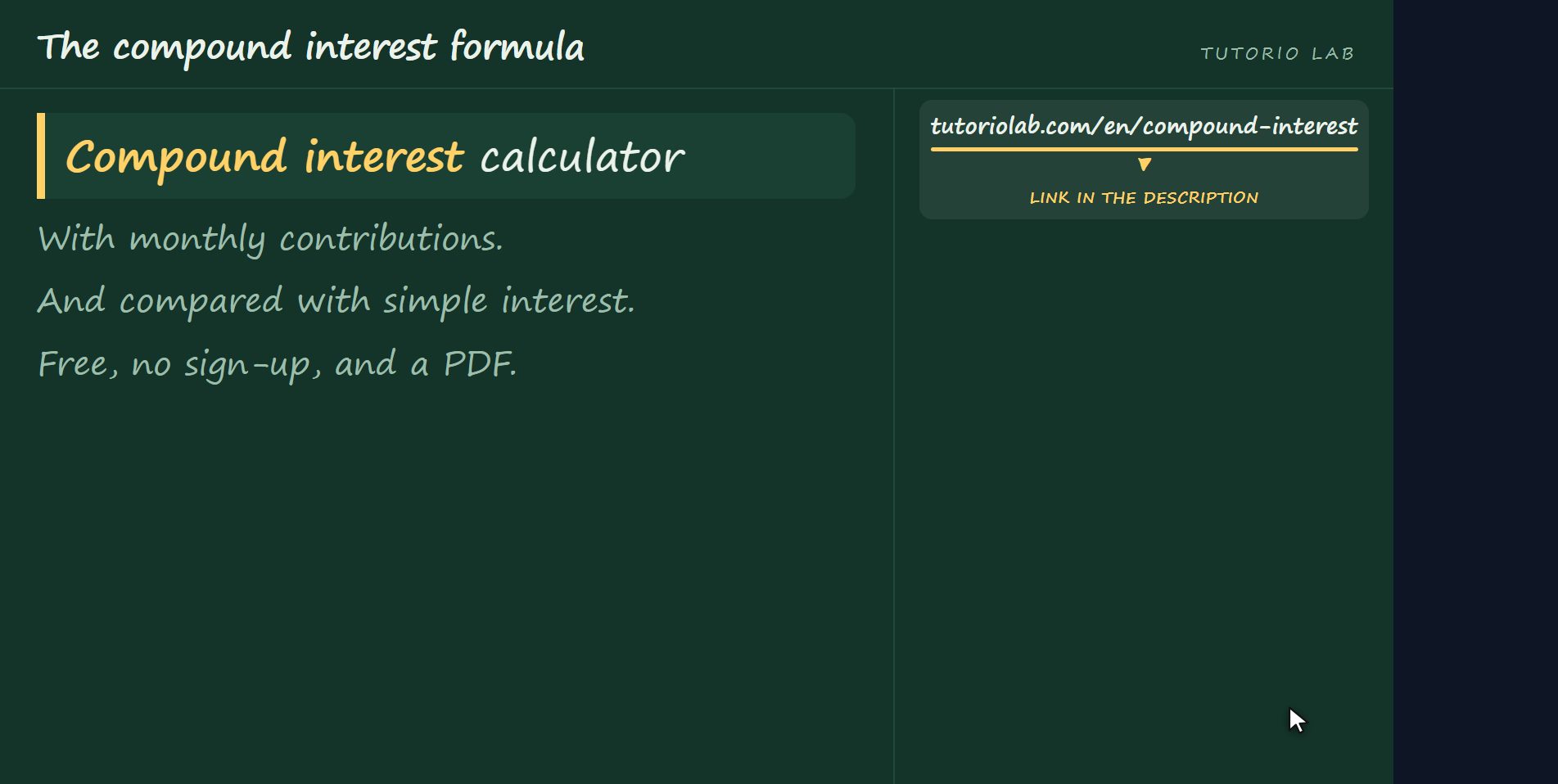
And that sum with monthly contributions is not one you do in your head. At tutoriolab.com, slash e-n, slash compound interest, you put in the capital, what you add each month, the rate and the years, and it works it out, tells you how much you put in and how much was earned, and compares it with simple interest. Free, no sign-up, and it downloads as a PDF.
To sum up: with compound, interest earns interest; the formula is capital times one plus the rate raised to the years; and time matters more than the rate because time is in the exponent. The links are in the description. If this helped, do subscribe.
Common questions
What is the compound interest formula?
Final amount = C × (1 + i)^n. C is what you put in, i is the rate as a decimal (5% is 0.05) and n is the number of years, which goes in the exponent.
How much more is compound than simple?
With $1,000 at 5% over 10 years: $1,628.89 compound against $1,500 simple, so $128.89 more. Over 30 years it is $4,321 against $2,500 — the gap grows with time, not with the rate.
Why does time matter more than the rate?
Because the rate multiplies once and the years are the exponent. Raising to a bigger power grows far faster than multiplying by a slightly bigger number.
What if I add money every month?
It changes a lot. $1,000 plus $50 a month at 5% over 10 years comes to $9,347. You put in $7,000 of that; the interest put in the other $2,347.
Is there a calculator that does it?
Yes, and it is free: tutoriolab.com/en/compound-interest. It takes monthly contributions and different compounding frequencies, and compares it with simple interest.