
Order of operations, from zero
The order of operations is a staircase with four steps, always top down: brackets, then powers and roots, then multiplication and division, and last addition and subtraction. 3 + 4 × 5 = 23, not 35, because the × is on a higher step than the +. A bracket outranks everything, which is why (3 + 4) × 5 = 35 is right. And what almost nobody explains: × and ÷ rank THE SAME, so a tie is settled left to right — 24 ÷ 4 × 2 is 12, not 3 — and + and − behave the same way. PEMDAS hides this: the M does not come before the D. For long expressions, solve one operation per turn and rewrite the whole thing after every step.
The order of operations, and a long expression solved all the way through.

Why an order is needed
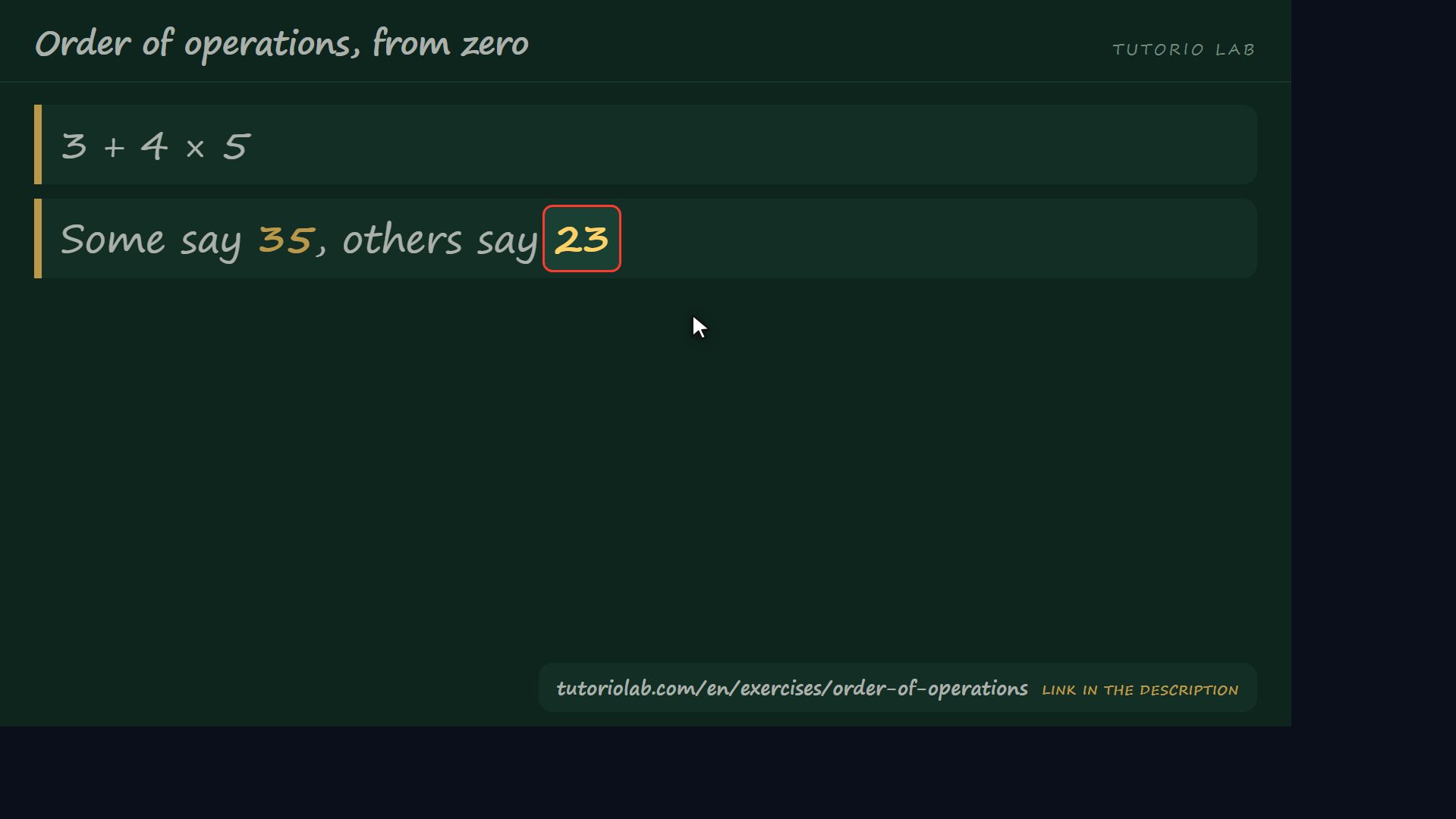
Let us start with the why, because once you get the why there is nothing left to memorise. Look at this expression: three plus four times five. If you give it to ten people, some will tell you thirty-five and others will tell you twenty-three. And that is a serious problem, because one and the same expression cannot give two different results depending on who reads it. That is why mathematicians agreed on an order, one single order that holds all over the world, so that the same expression always means the same thing. And with that order, the right answer is twenty-three. Now let us see where it comes from.
The four step staircase
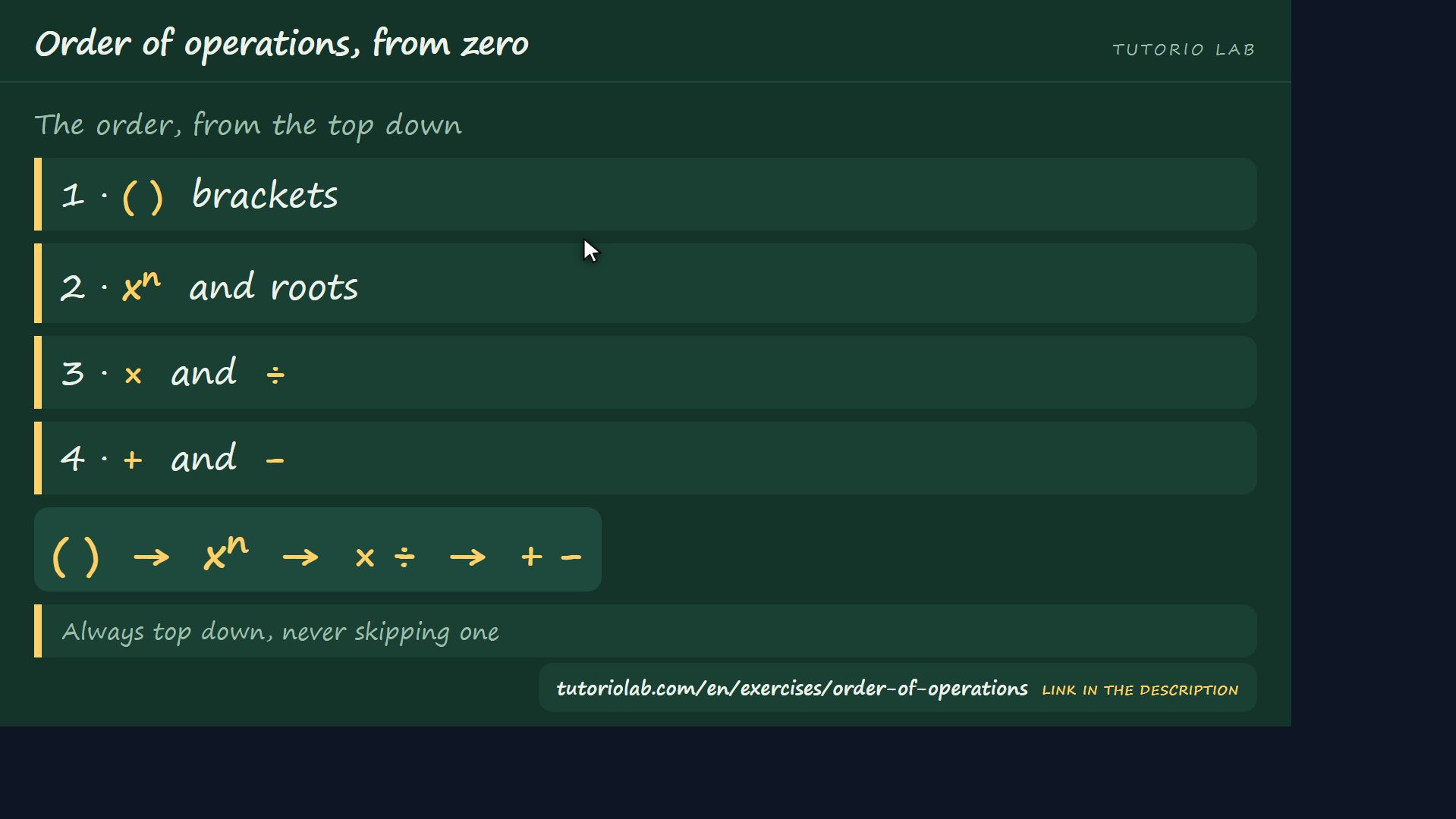
The order is a staircase with four steps, and you always go from the top down. Step one, before anything else: the brackets. Whatever is inside a bracket gets solved before anything. Step two: the powers and the roots. Step three: the multiplications and the divisions. And step four, last of all: the additions and the subtractions. Write the staircase down, because it never changes: brackets, powers, multiply and divide, add and subtract. And the important part is that you go all the way down: you do not move to the next step while anything is left of the previous one.
Why × comes before +
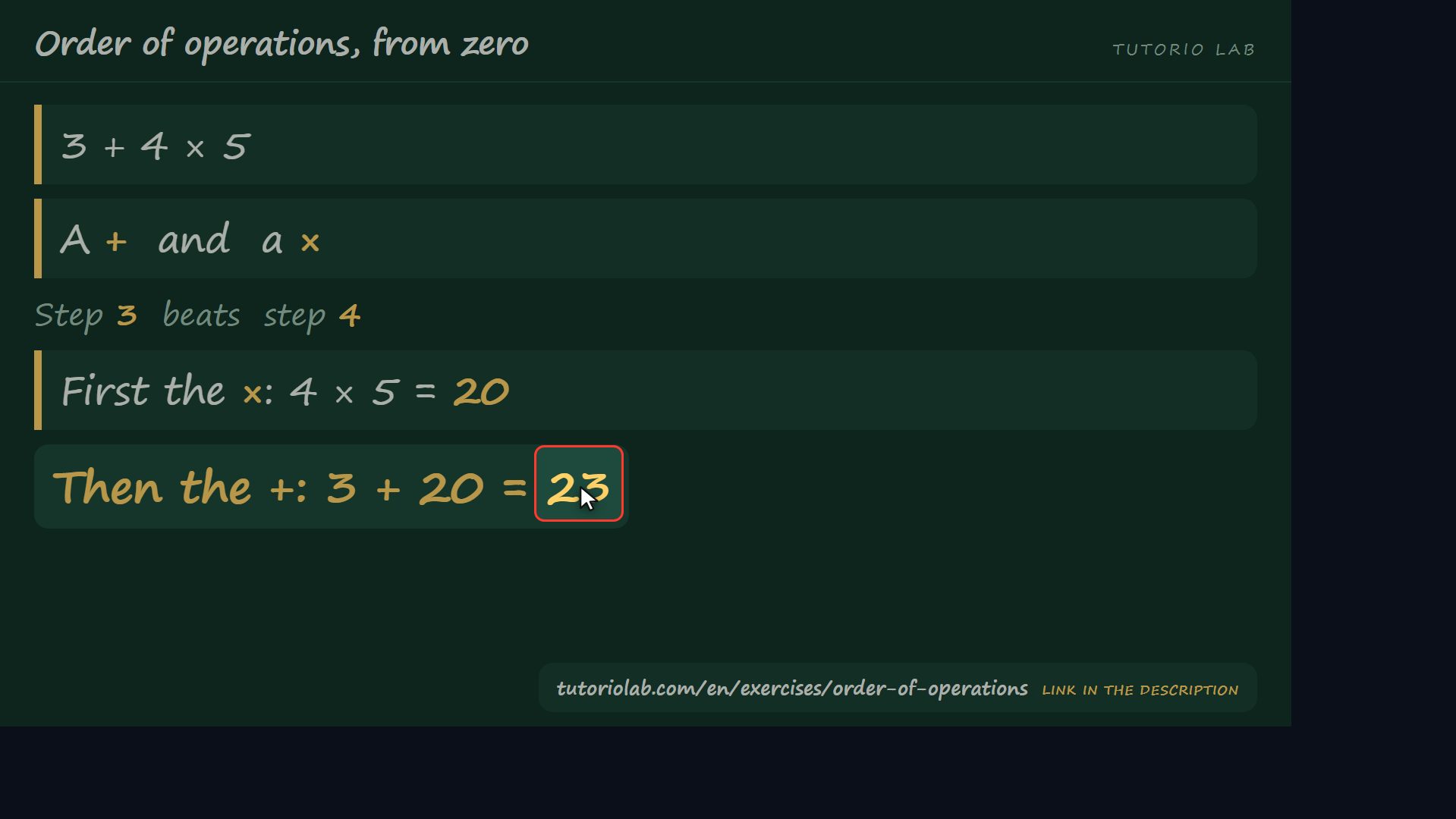
Let us go back to our expression: three plus four times five. What is in here? There is an addition and there is a multiplication. We look at the staircase: the multiplication is on step three and the addition on step four, so the multiplication goes first. Four times five is twenty. And now, only now, the addition: three plus twenty, twenty-three. That is where the twenty-three comes from. And where did the thirty-five come from? From adding three plus four first, seven, and multiplying by five. That is what you get if you read the expression as if it were a text, left to right. And that is exactly what you do not do.
Brackets outrank everything
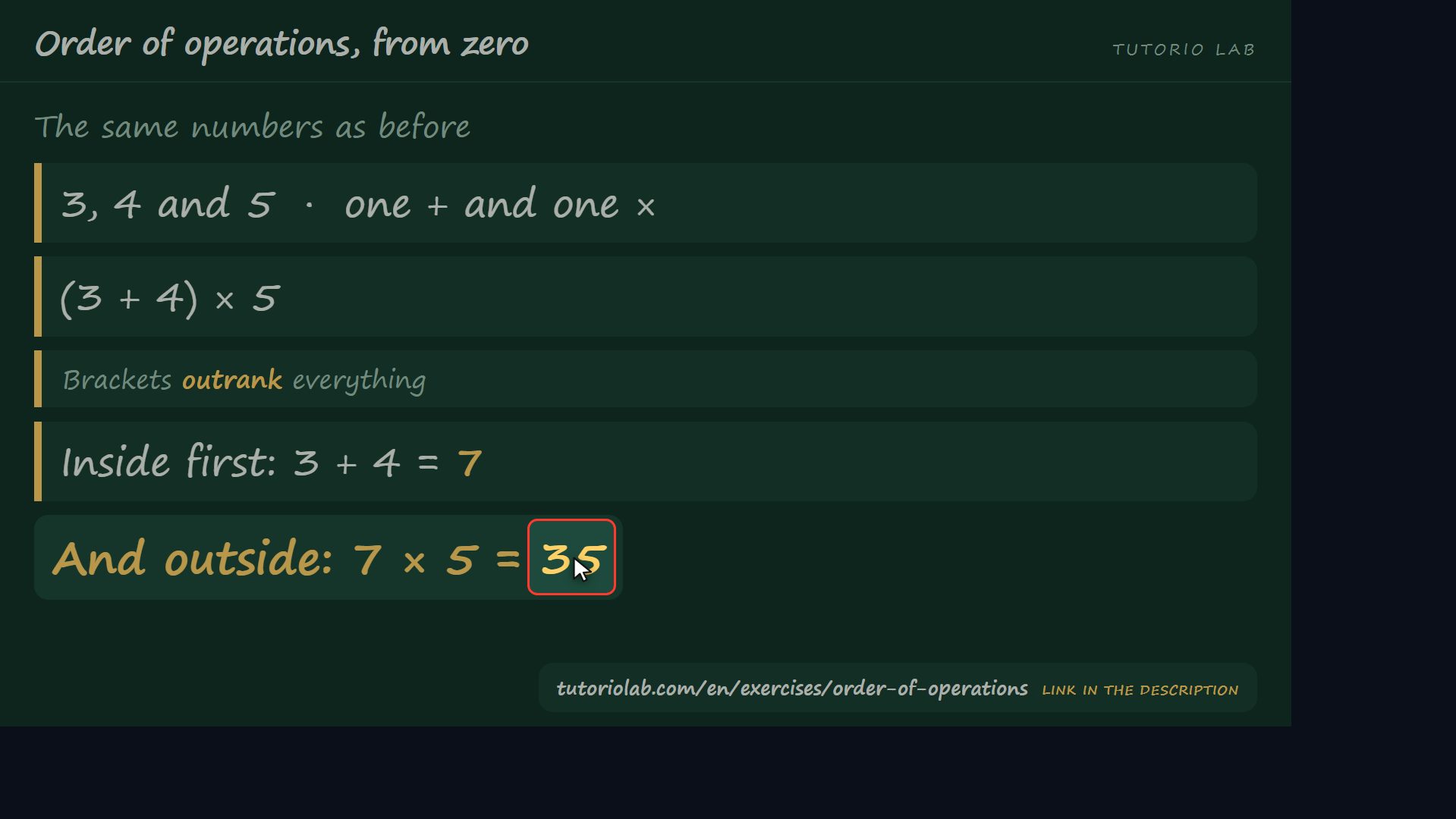
Now pay attention, because here comes something that looks like a detail and is not. Take the same numbers, three, four and five, with the same signs, and put a bracket around the three plus four. The bracket is on step one, which means it outranks everything else: what is inside gets solved first. Three plus four, seven. And now what is outside: seven times five, thirty-five. So that thirty-five that was wrong before is right with the bracket. That is what a bracket is for: to change the order on purpose.
The tie: left to right
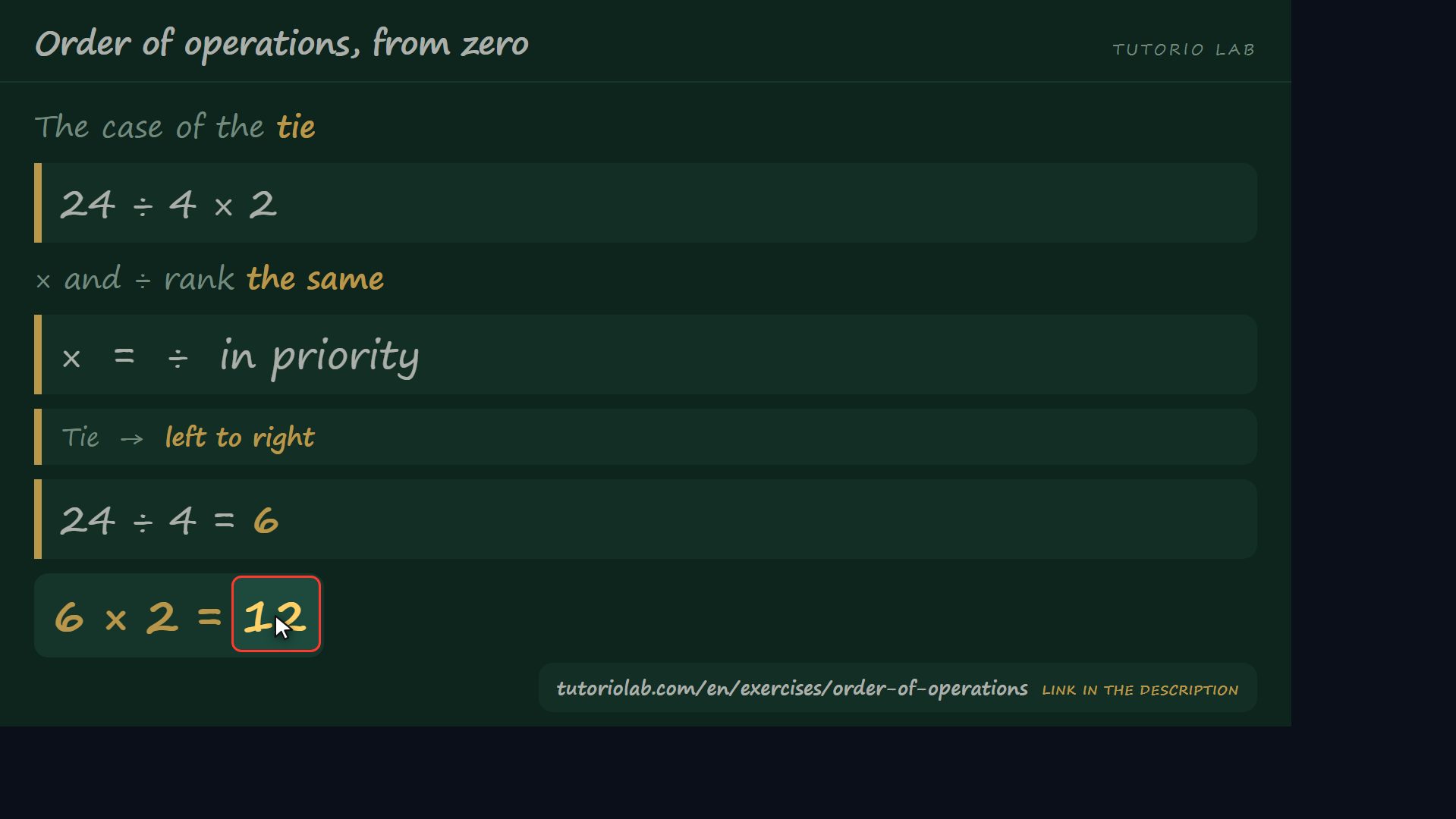
And now the case that almost nobody explains and that decides half the exercises. Look at this: twenty-four divided by four, times two. There is a division and a multiplication here, and both are on the same step, step three. Neither outranks the other. So what then? Then, and only then, you go left to right. The division is first, so it goes first: twenty-four over four is six. And then six times two, twelve. The answer is twelve. If you had done the multiplication first, four times two eight, and twenty-four over eight, it would have given you three, and it would be wrong. And with the additions and the subtractions exactly the same thing happens: same step, you go left to right.
A long one: brackets and power
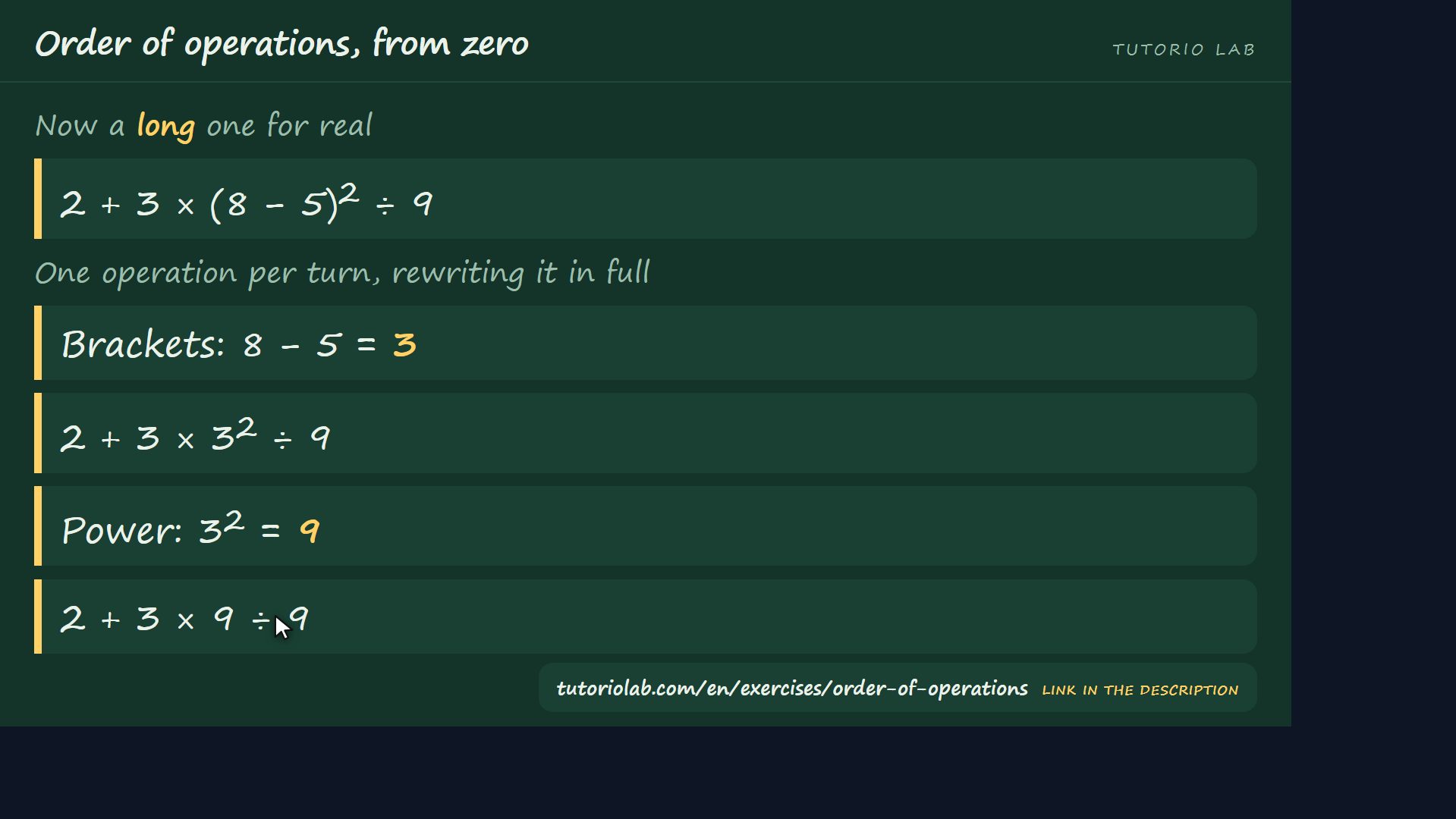
And now for what really gets asked, which is a long expression. This one: two plus three times, open bracket, eight minus five, close bracket, squared, divided by nine. It looks scary, but it works the same: going down the staircase and solving ONE single operation per turn. Step one, brackets: eight minus five, three. And now, very important, I rewrite the whole expression with that three in place. Step two, powers: three squared, nine. And I write it out in full again.
The same one, to the end
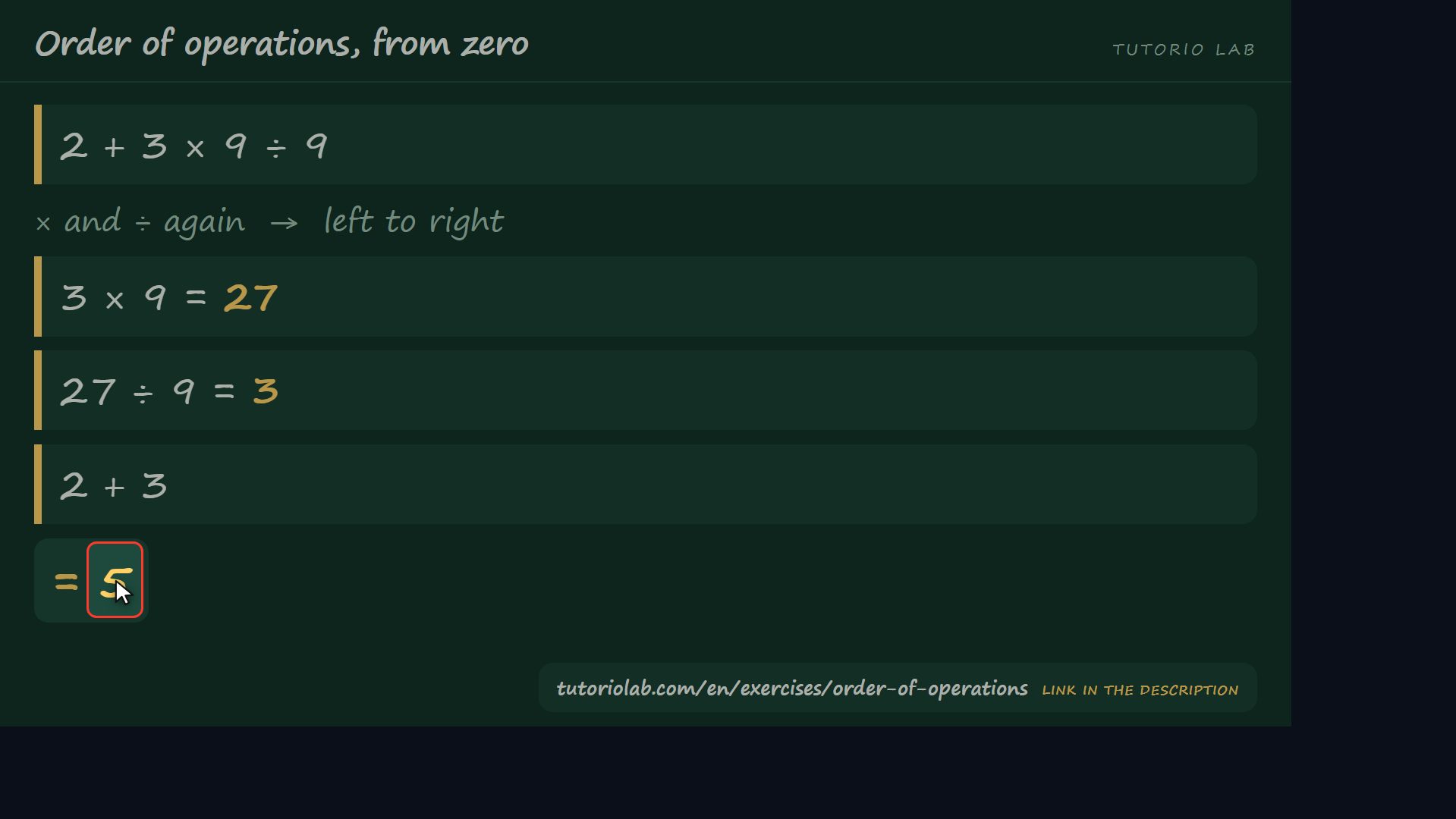
We carry on down the staircase. Step three, multiply and divide, and both rank the same, so I go left to right: three times nine, twenty-seven. And now twenty-seven over nine, three. I am left with two plus three. Step four, the addition: two plus three, five. The result is five. And notice what I have just done: one single operation at a time, and rewriting the whole expression after every step. That is exactly what stops you getting lost in long expressions.
PEMDAS and its trap
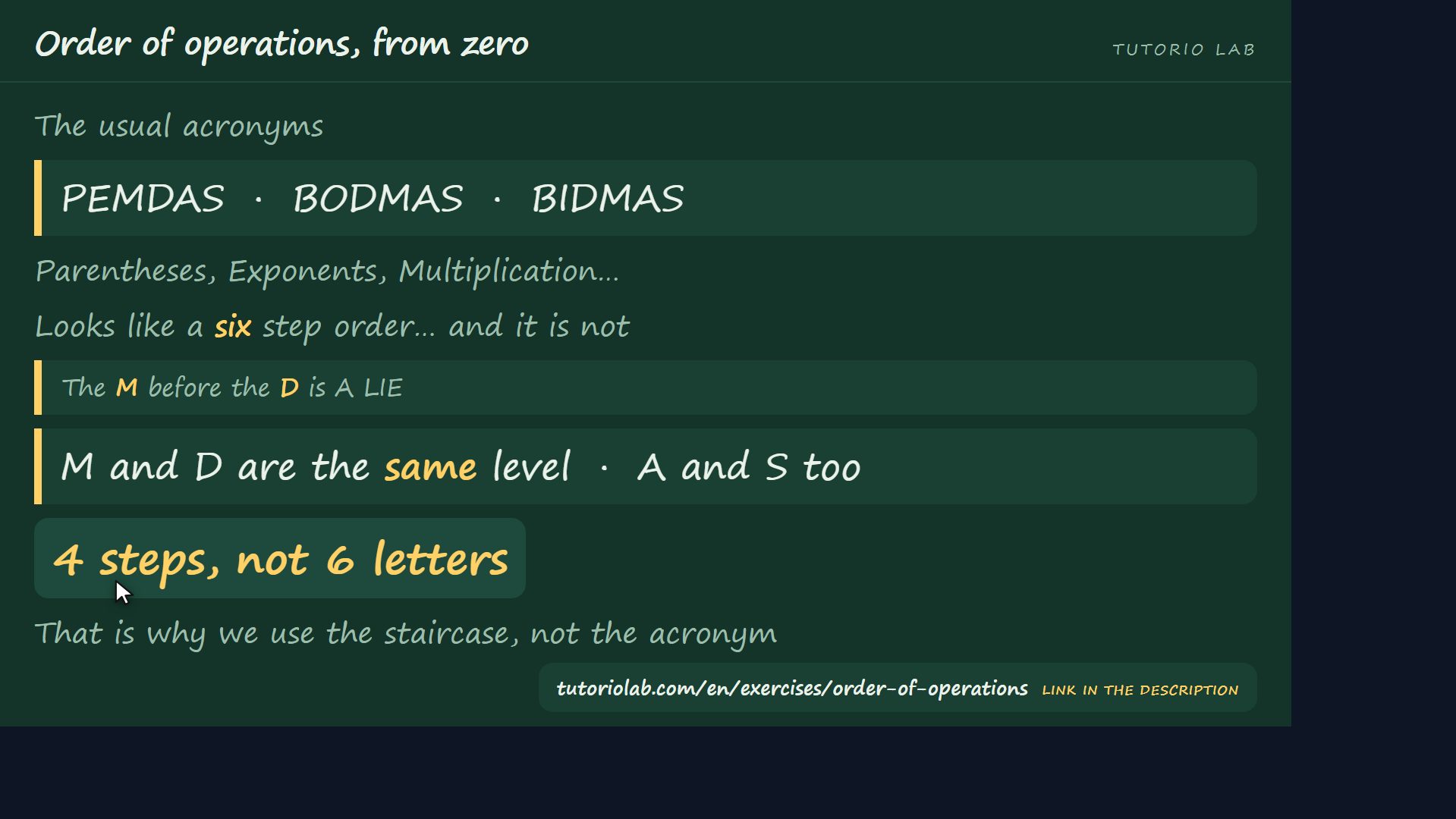
And a word about the acronyms, because you are going to see them and because they do a lot of people harm. You have probably heard PEMDAS, or BODMAS, or BIDMAS depending on the country. PEMDAS is parentheses, exponents, multiplication, division, addition, subtraction. The problem is that, read like that, it looks as if multiplication comes before division and addition before subtraction, and that is false. Multiplication and division are the same step, and addition and subtraction too. The acronyms do not say so, and that is why here we use the four step staircase: because it shows the ties, which is where the costly mistake is.
Exercise 1, step by step
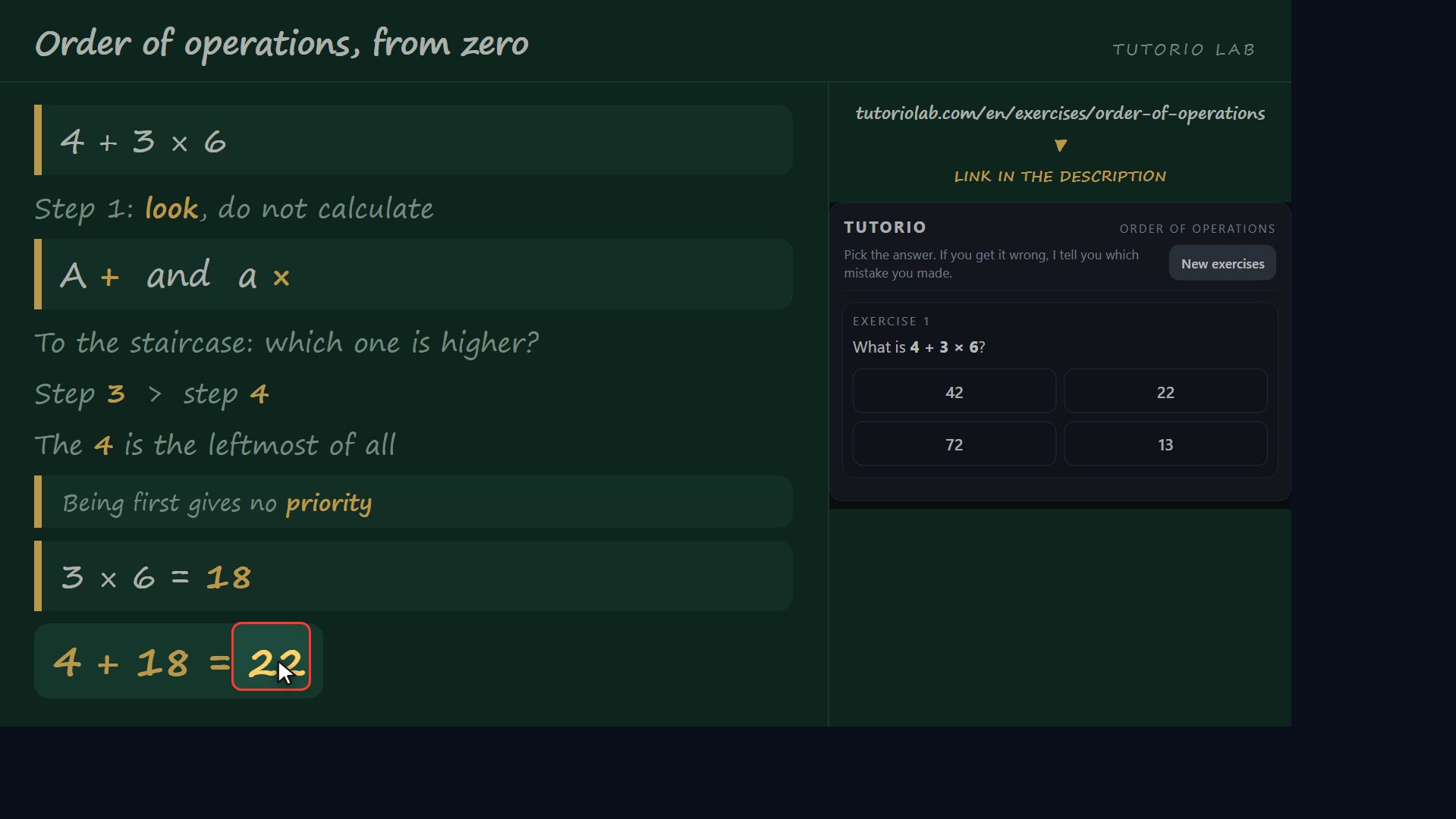
Let us do the first exercise, and we will solve it together before touching anything. Four plus three times six. The first step is not to calculate: it is to look at which operations are there. Here there is an addition and there is a multiplication. Let us go to the staircase: the multiplication is on step three, the addition on step four, so the multiplication wins. And notice something that throws a lot of people: the four is the first of all, written on the far left, and even so it has to wait its turn. The place where a number is written gives it no priority at all. We multiply: three times six is eighteen. And now, yes, the addition: four plus eighteen, twenty-two. The answer is twenty-two. And look at the forty-two trap: it comes from adding four plus three, seven, and multiplying by six. It is exactly the mistake of reading the expression left to right. I mark the twenty-two. And notice that the forty-two is not a random wrong number: it is what you get by doing every calculation carefully and still reading in the wrong order, which is why it catches so many people.
Practise for free
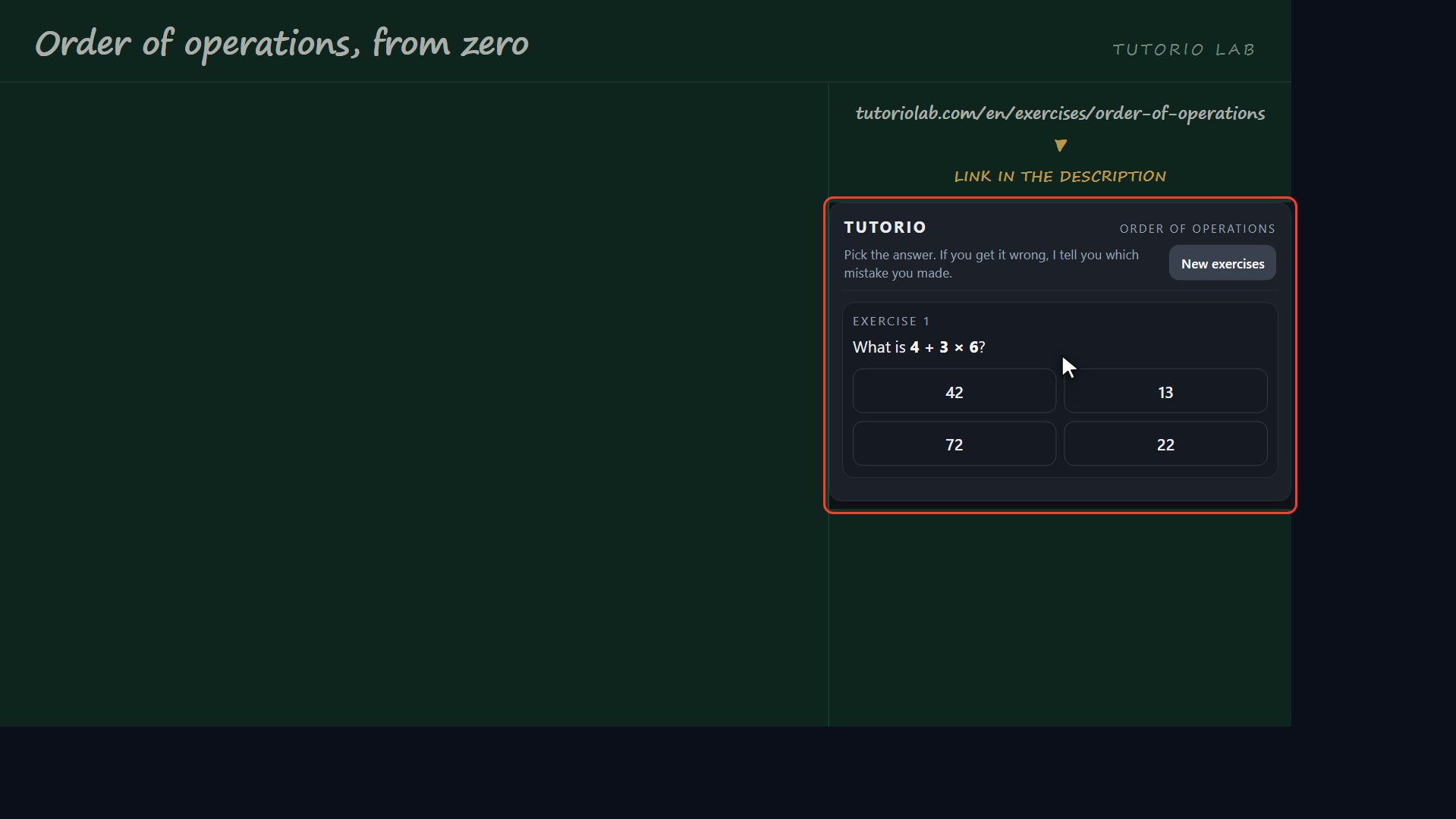
And I want you to take a good look at this on your right here, because it is ours and it is free. It is an exercise page: tutoriolab.com, slash e n, slash exercises, slash order of operations. You get the three cases from the video: without brackets, with brackets and the tie one, with different numbers every time. And what really matters: when you get one wrong it does not just throw an incorrect at you and leave you where you were. It tells you what mistake you made, by name.
Exercise 2, step by step
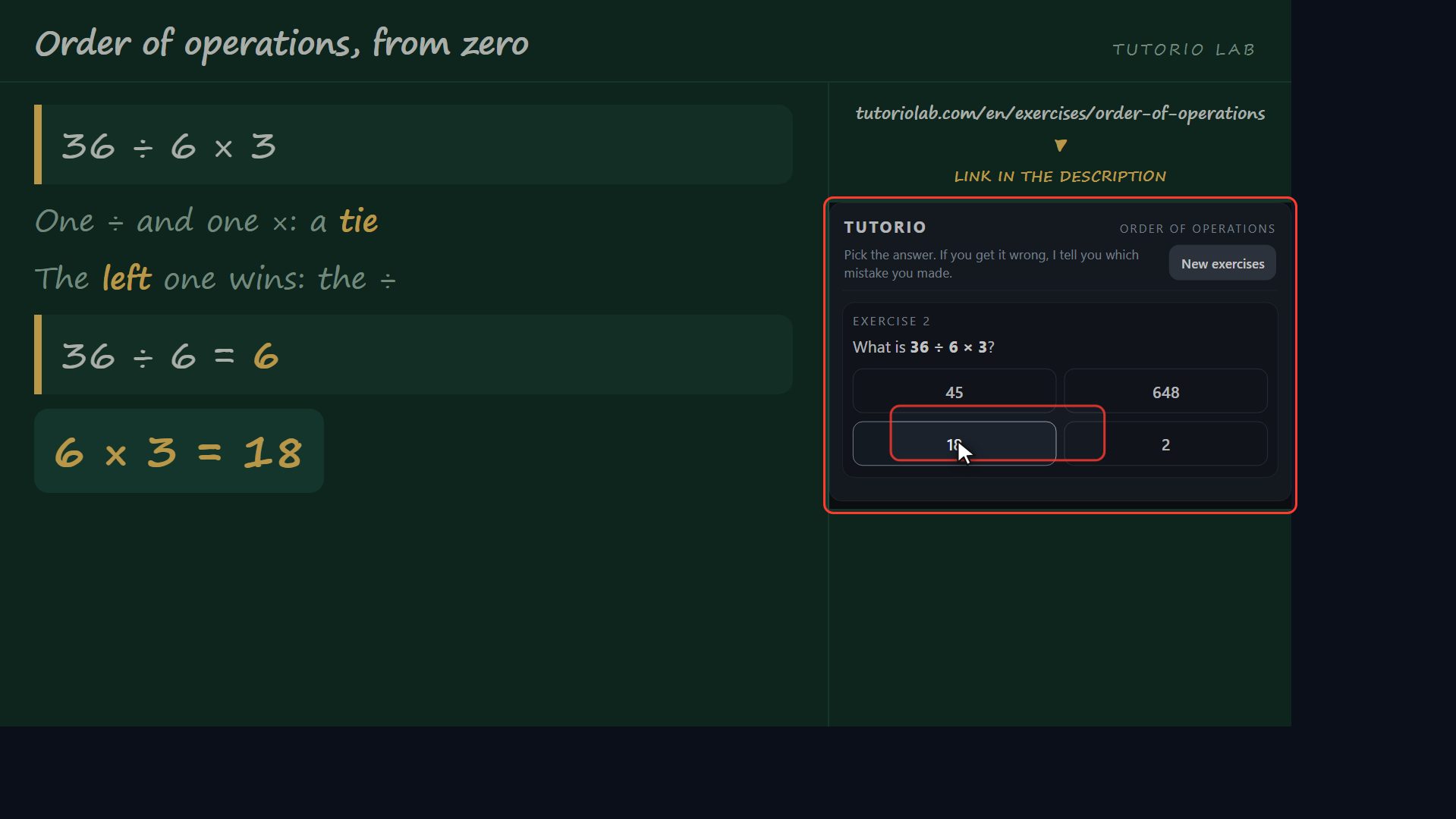
Second and last exercise, and it is exactly the tie one, which is the one you have to be clear about. Thirty-six divided by six, times three. What is there? A division and a multiplication, both on step three. A tie. So left to right, and the left one is the division. Thirty-six over six is six. And now six times three, eighteen. The answer is eighteen. And look at the two trap: it comes from doing six times three first, eighteen, and then thirty-six over eighteen. It looks reasonable and it is wrong, because the times does not outrank the divide.
What to take away
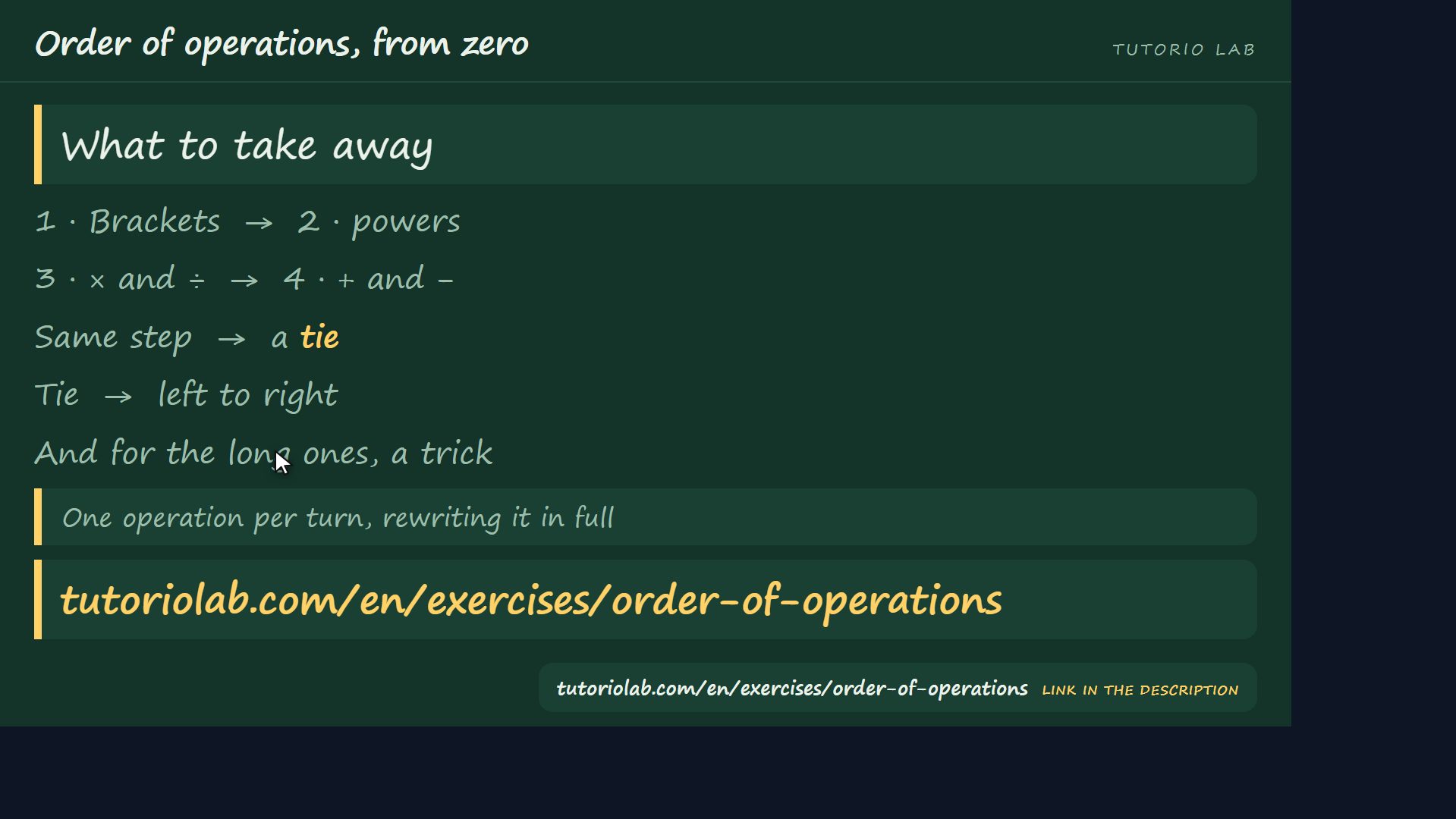
Let us go over what you have to take away. The staircase: brackets first, powers and roots second, multiply and divide third, and add and subtract fourth. When two operations are on the same step there is a tie, and the tie is settled left to right, never by doing first the one that looks more important to you. And for long expressions, the trick that really works: solve one single operation per turn and rewrite the whole expression after every step. Practise it at tutoriolab.com, slash e n, slash exercises, slash order of operations.
If this helped, subscribe.

Common questions
What is the order of operations?
Brackets first, then powers and roots, then multiplication and division, and last addition and subtraction. You always go from the top down and you do not move to the next step while anything is left of the previous one.
Why is 3 + 4 × 5 equal to 23 and not 35?
Because multiplication is on a higher step than addition, so 4 × 5 = 20 goes first and then 3 + 20 = 23. The 35 comes from reading left to right, which is exactly what you do not do. With a bracket, (3 + 4) × 5, the 35 would be right.
Does multiplication come before division?
No. They rank the same, and that is the most common mistake with PEMDAS: the M before the D is a lie. When two operations are on the same step, it is settled left to right. That is why 24 ÷ 4 × 2 is 12 and not 3. Addition and subtraction work the same way.
How do you solve a long expression without getting lost?
One single operation per turn, and rewrite the whole expression after every step. Rewriting costs three seconds and it is what stops you losing a sign halfway through. For 2 + 3 × (8 − 5)² ÷ 9: brackets, then the power, then × and ÷ left to right, and last the addition.
Is PEMDAS wrong?
It is not wrong, but it is misleading: read as six letters it suggests six levels, and there are four. M and D are one level, A and S are another. The four step staircase shows the ties, which is exactly where the costly mistake happens.
Are there exercises to practise?
Yes, and they are free: tutoriolab.com/en/exercises/order-of-operations. You get the three cases from the video — without brackets, with brackets and the tie one — with new numbers every time, and when you get one wrong it tells you which mistake you made.