Probability with dice, from zero
Probability is counting: favourable cases divided by ALL the possible cases. With a die, P(4) = 1/6 because there is one good face out of six; P(even) = 3/6 because there are three (2, 4 and 6) and underneath there are still the six faces. When one thing OR the other works they are ADDED: P(2 or 5) = 1/6 + 1/6 = 2/6. When both have to happen (AND) they are MULTIPLIED, and so are the possible cases: with two rolls there are 6 × 6 = 36 pairs, so P(6 and 6) = 1/36. Confusing the AND with the OR is the most common mistake in this topic. And a die has no memory: after five sixes, the next six is still worth 1/6.
Probability with dice, from zero and with no strange formulas.
What probability is
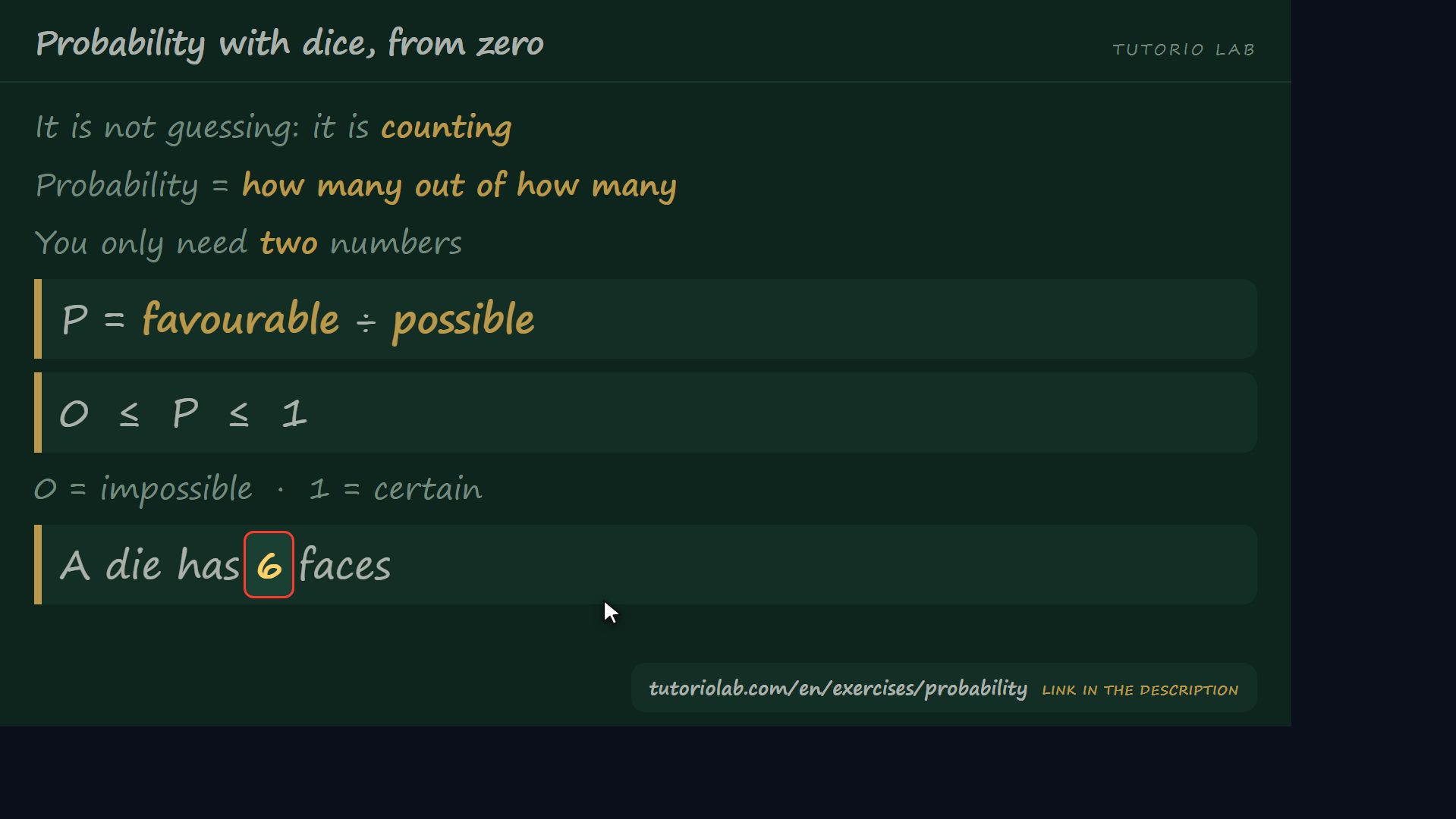
Let us start with the very basics, because I do not want to assume anything. Probability is not guessing and it is not luck: it is counting. Counting how many of the things that can happen are the ones you care about, and dividing. That is all, and that is where the only formula in this video comes from: probability equals favourable cases divided by possible cases. The result will always come out between zero and one. Zero means it is impossible, and one means it will happen for sure. And we are going to do everything with a die, which is how it shows up in the exercises: a normal die, with six faces. Nothing else, and everything in this video comes out of that one idea.
The fraction, step by step
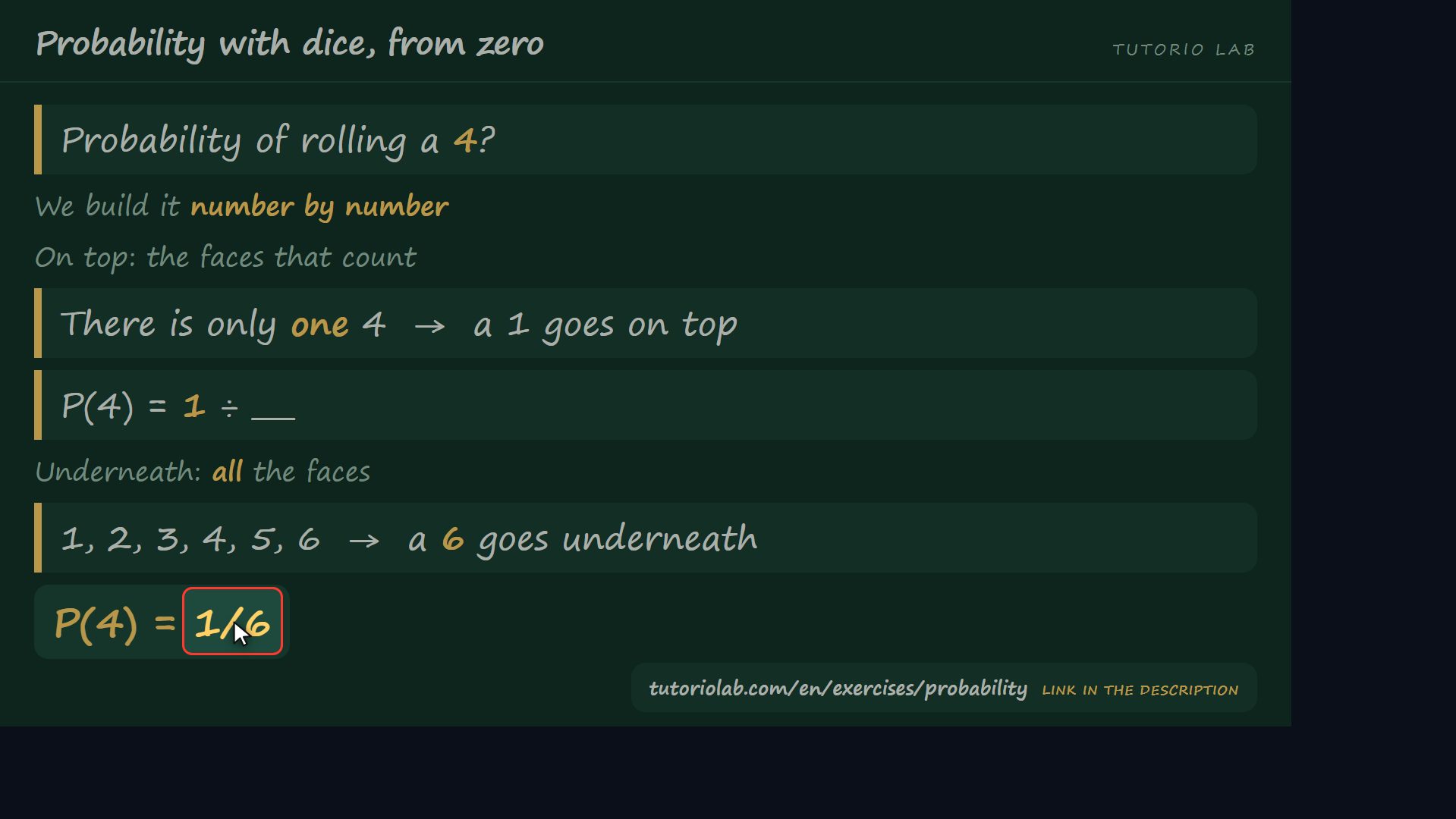
First question, the simplest of all: what is the probability of rolling a four? We are going to build the fraction slowly, because once you understand where each number comes from, you will never get it wrong again. On top, in the numerator, go the favourable cases: the faces that work for you. How many faces of the die are a four? Just one. So a one goes on top. And underneath, in the denominator, go the possible cases: every face that can come up, whether it works for you or not. A die has six faces, so a six goes underneath. The probability is one sixth. And if you want it as a percentage, one divided by six is zero point one six, that is sixteen point seven per cent.
When several faces count
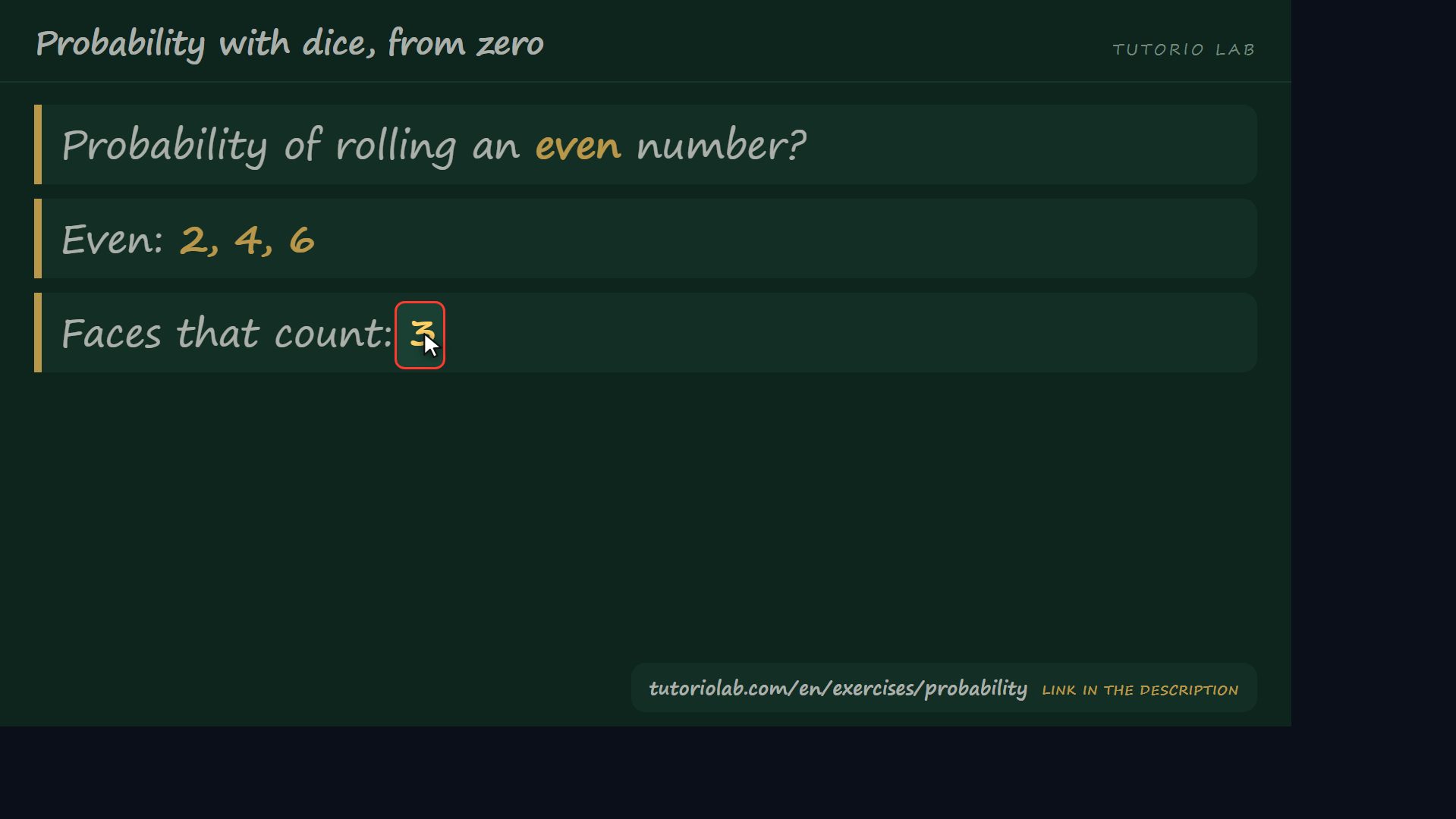
Second question, a bit more interesting: what is the probability of rolling an even number? Here there is not just one good face. Which are the even numbers on a die? Two, four and six. Three faces. So a three goes on top. And now pay attention, because this is where almost everybody gets it wrong: underneath does NOT go a three. Underneath there are still six, because the die still has six faces. What changes is the top, never the bottom. The probability is three sixths, which is exactly half, and it makes sense: half the faces of a die are even. Whenever the answer comes out as exactly one half, that is a good sign that you have counted right.
The OR: they are added
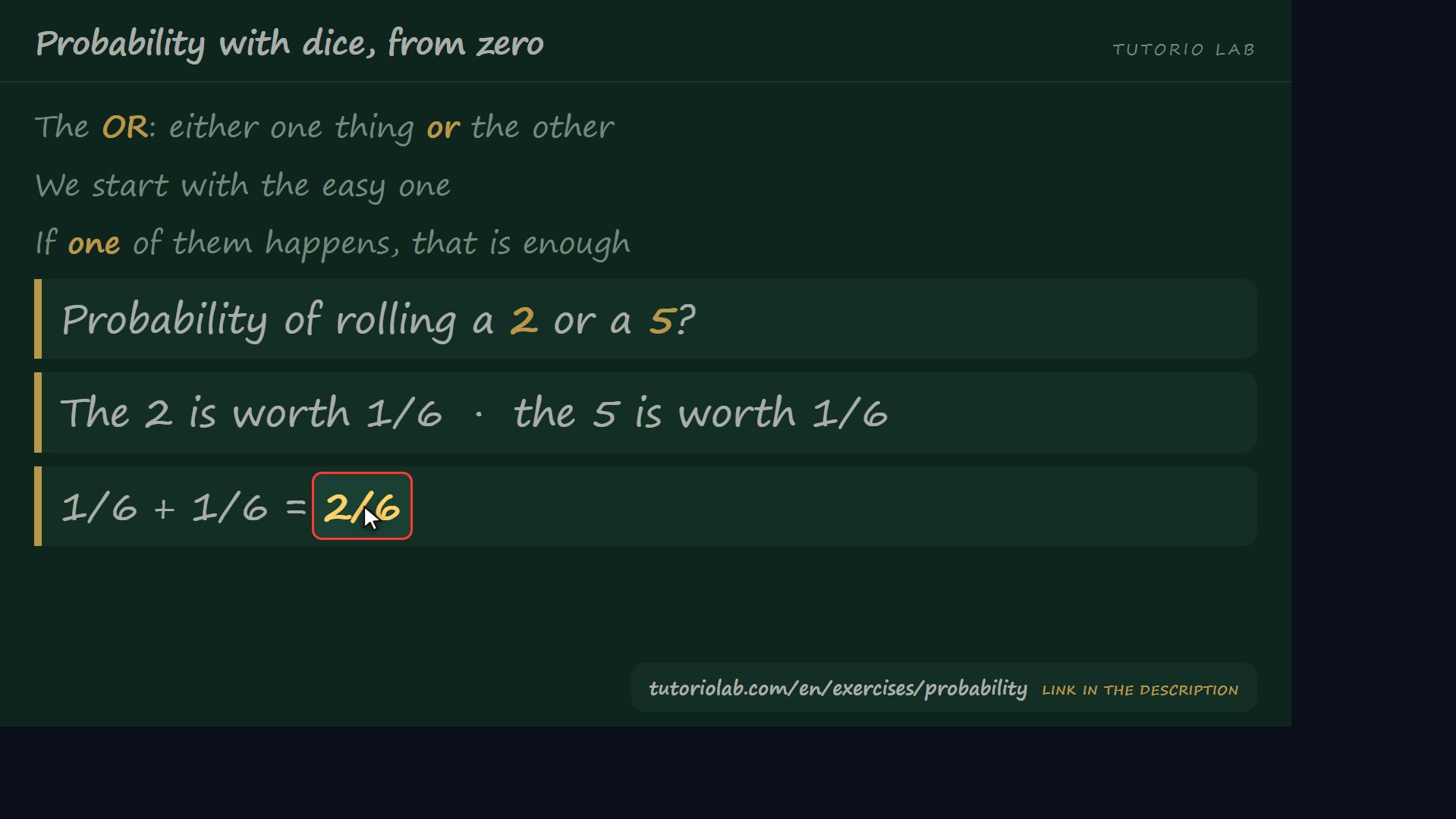
And now we get to what is really asked, which are the two words that muddle everything: the OR and the AND. We start with the OR, which is the easy one. The OR means that either one thing works or the other works: as long as any of the two happens, you are done. For example: what is the probability of rolling a two or a five? The two is worth one sixth. The five is worth one sixth. And since either of the two works for you, they are added: one sixth plus one sixth is two sixths. That is the rule of the OR: they are added. And an important warning: this holds while the two things cannot happen at the same time, which is what happens with the faces of a die, because only one comes up.
The AND: they are multiplied
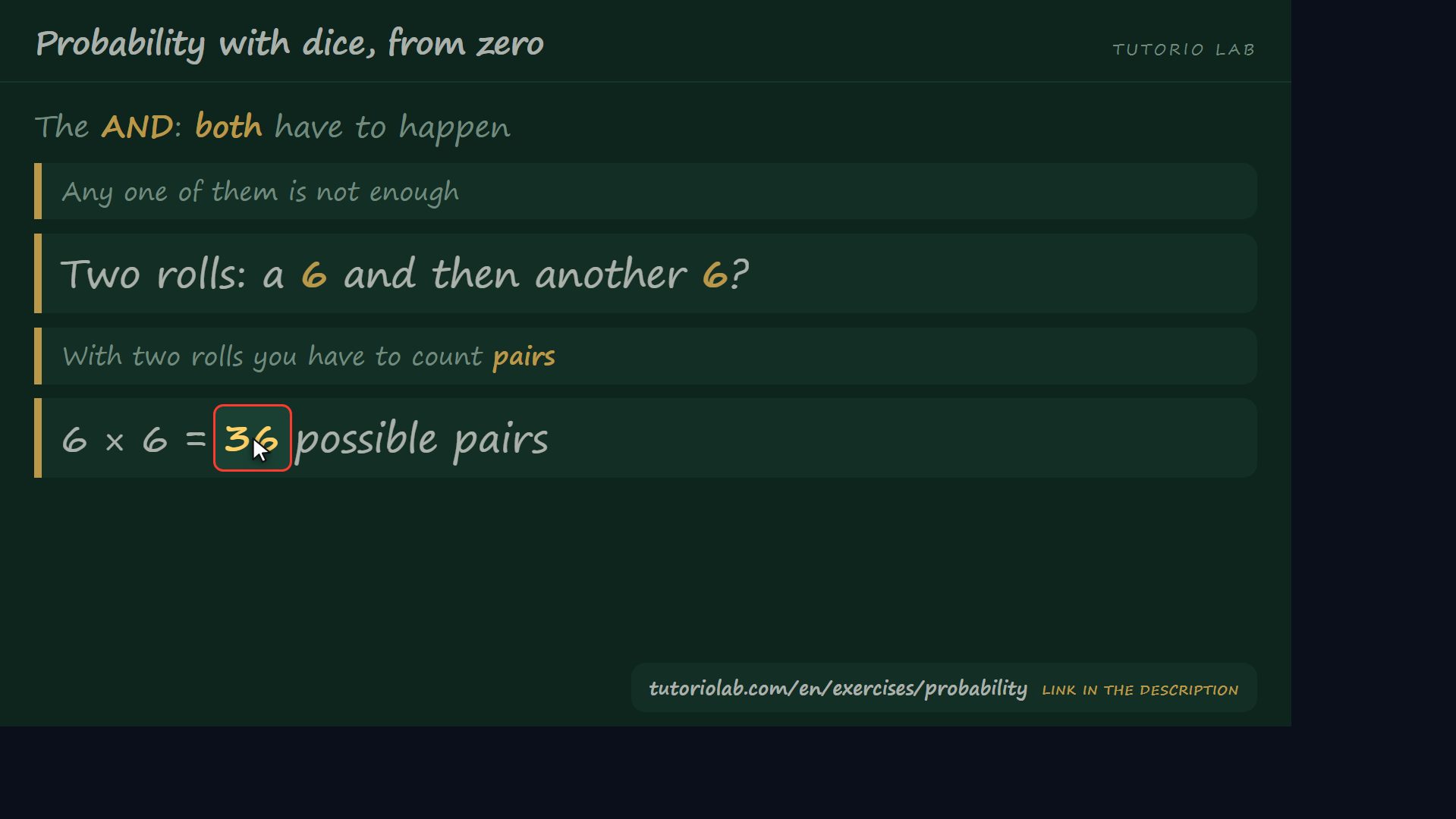
And now the AND, which is the one that really sticks in the throat. The AND means that both things have to happen, one is not enough. For example: you roll the die twice, what is the probability of rolling a six and then another six? The important thing here is to realise that the possible cases are no longer six. With two rolls, each face of the first can pair with each face of the second: six times six, thirty-six possible pairs. And out of those thirty-six, how many work? Only one, the pair with two sixes. So the probability is one out of thirty-six. And notice what has happened to the number: one sixth times one sixth is one thirty-sixth, much smaller. It makes sense, because asking for two things at once is harder than asking for one.
The two together
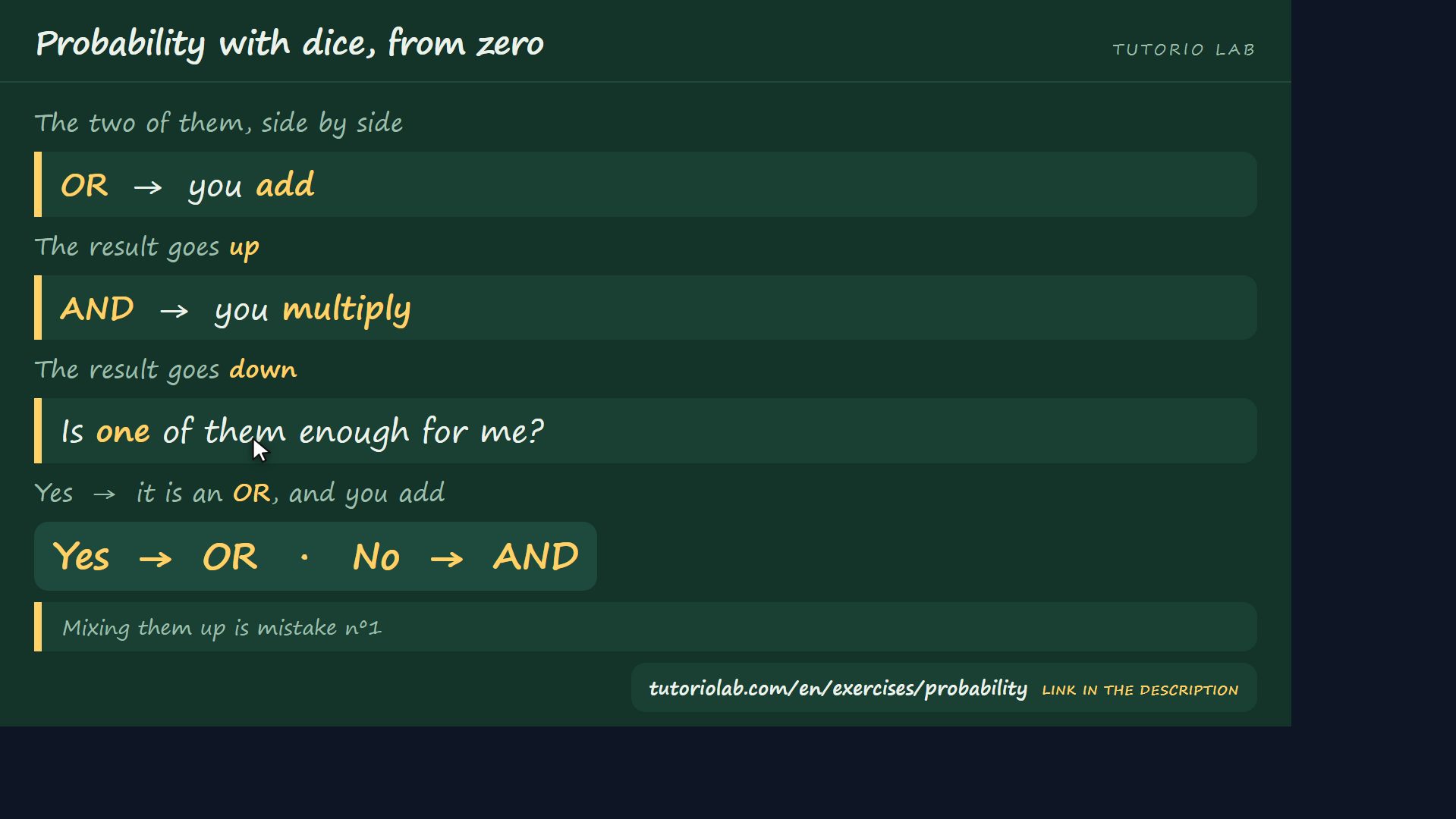
And now I want you to see the two of them together, because separately they get forgotten and together they tell themselves apart. The OR adds, and the result goes up, because you have more ways to get it right. The AND multiplies, and the result goes down, because you are asking for more things. And if you ever do not know which one applies, ask yourself this question: is it enough that just one of the two happens? If so, they are added. Do you need both? Then it is an AND and they are multiplied. Confusing them is, by far, mistake number one in every probability exercise.
Exercise 1, step by step
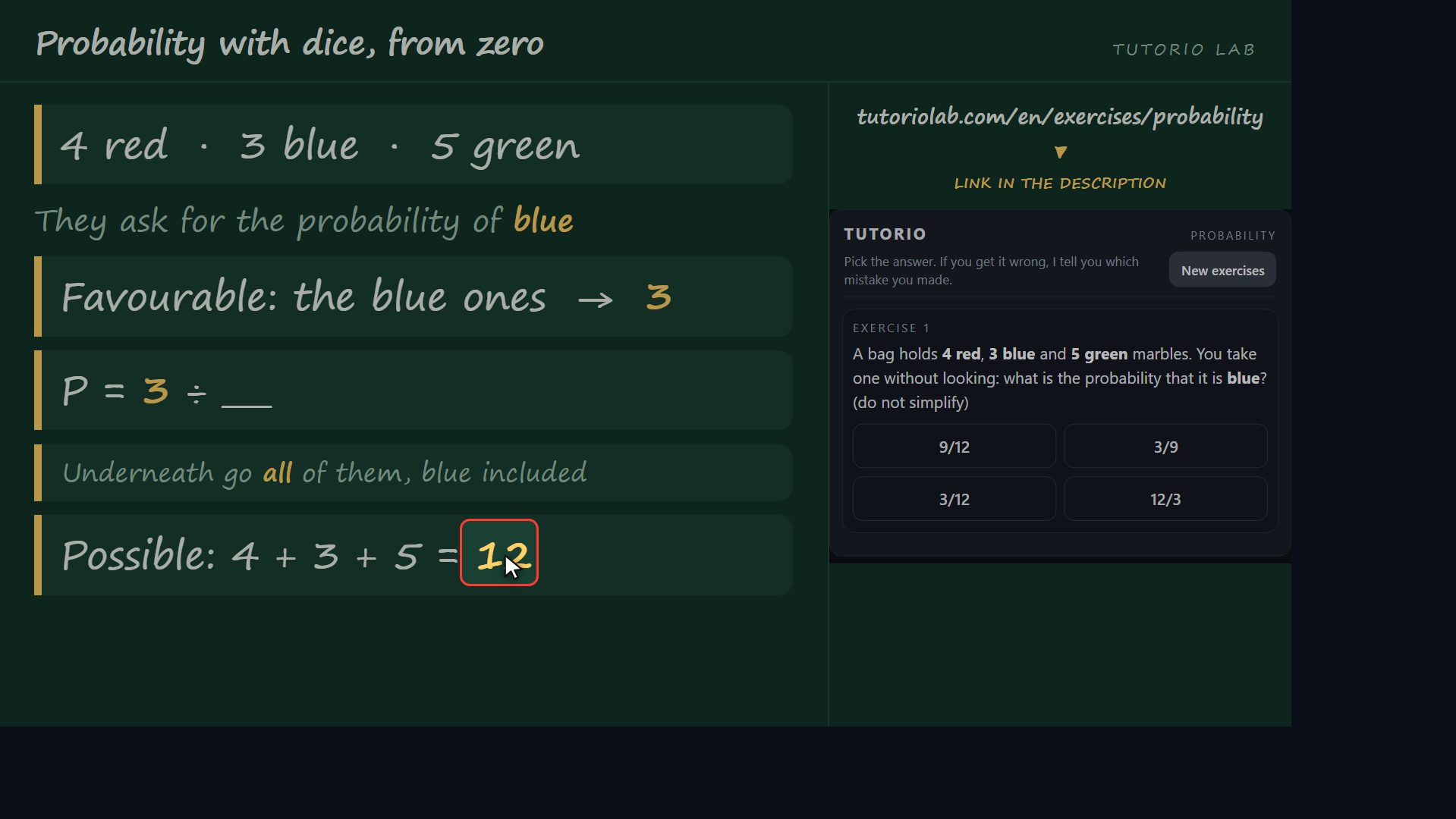
Let us do the first exercise, and we will solve it together before touching anything. A bag holds four red marbles, three blue and five green. You take one without looking: what is the probability that it is blue? First the top, the favourable cases: the blue ones, which are three. And now the bottom, the possible cases, which is where the trap is: it is all the marbles in the bag, not just the ones that are not blue. Four plus three plus five, twelve. So the probability is three twelfths. And look at the three ninths trap: nine is the marbles that are NOT blue, and those are not the possible cases. The possible cases are always all of them. And notice that the fraction is left as three twelfths, without simplifying, because what is being learned here is where each number comes from. I mark three twelfths.
Practise for free
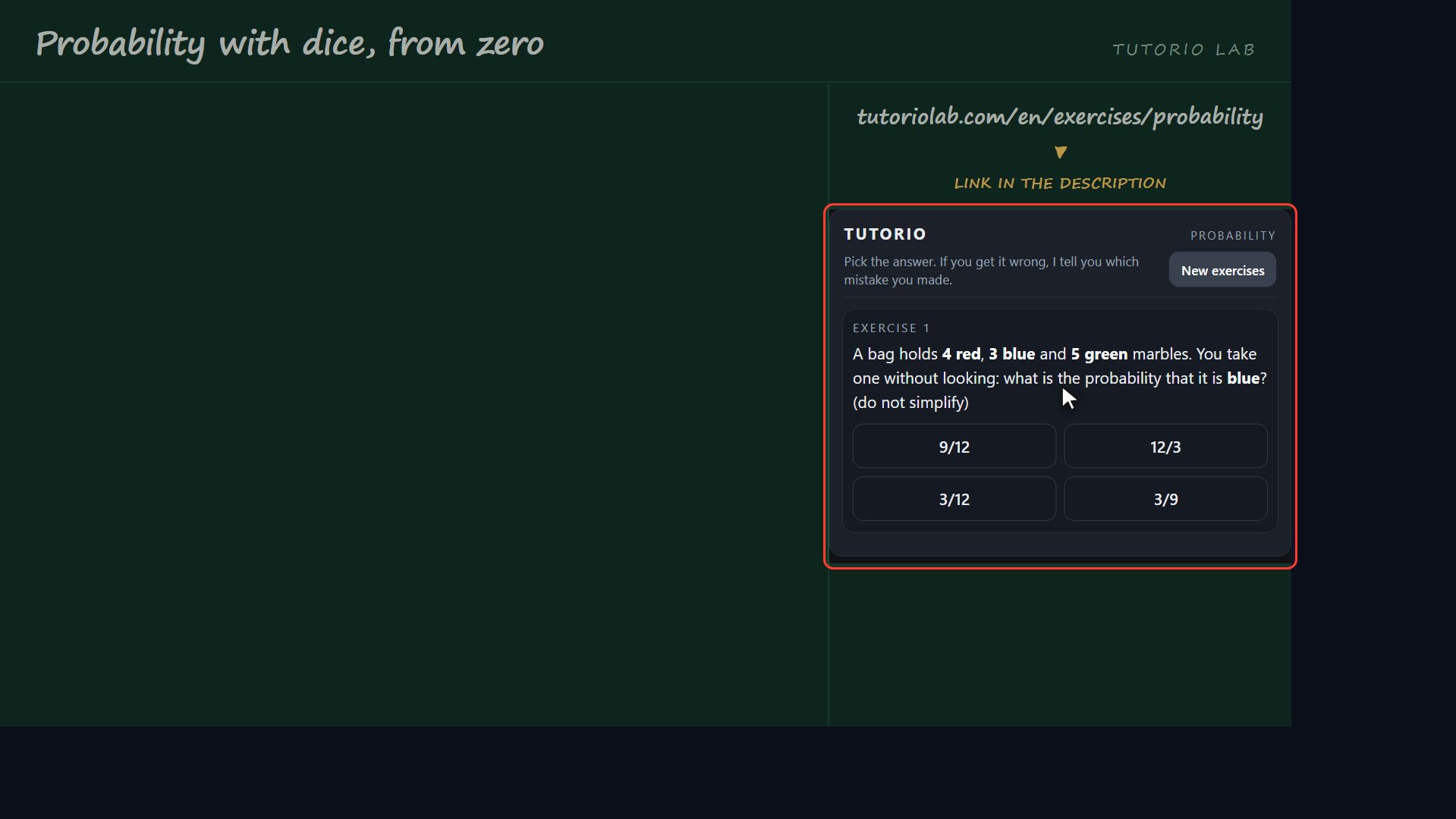
And I want you to take a good look at this on your right here, because it is ours and it is free. It is an exercise page: tutoriolab.com, slash e n, slash exercises, slash probability. You get the three things from the video: the fraction, the AND and the OR, with different bags and dice every time, so you can practise without repeating. And what really matters: when you get one wrong it does not just throw an incorrect at you and leave you where you were. It tells you what mistake you made, by name.
Exercise 2, step by step
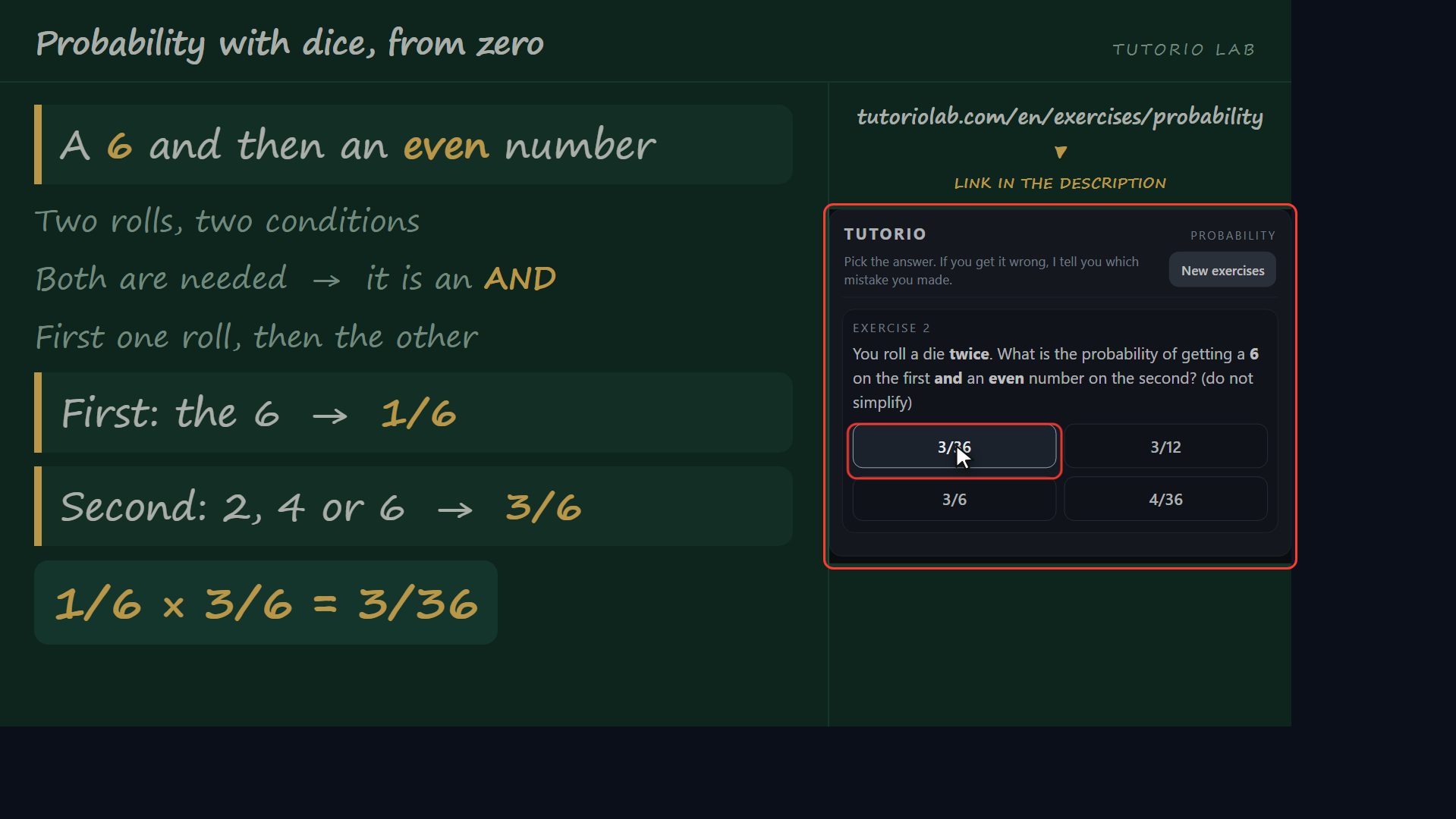
Second and last exercise, and it is the AND one, which is the one you have to be clear about. You roll a die twice: what is the probability of rolling a six on the first and an even number on the second? First, recognise which one it is: it says AND, and both things are needed, so it is going to multiply. Let us take each roll separately. First roll, getting a six: there is one good face out of six, that is one sixth. Second roll, getting an even number: two, four and six, three good faces out of six, that is three sixths. And now they are multiplied: one times three is three on top, and six times six is thirty-six underneath. Three thirty-sixths. And look at the four trap: it comes from adding one plus three instead of multiplying. That is exactly the confusion from this video.
A die has no memory
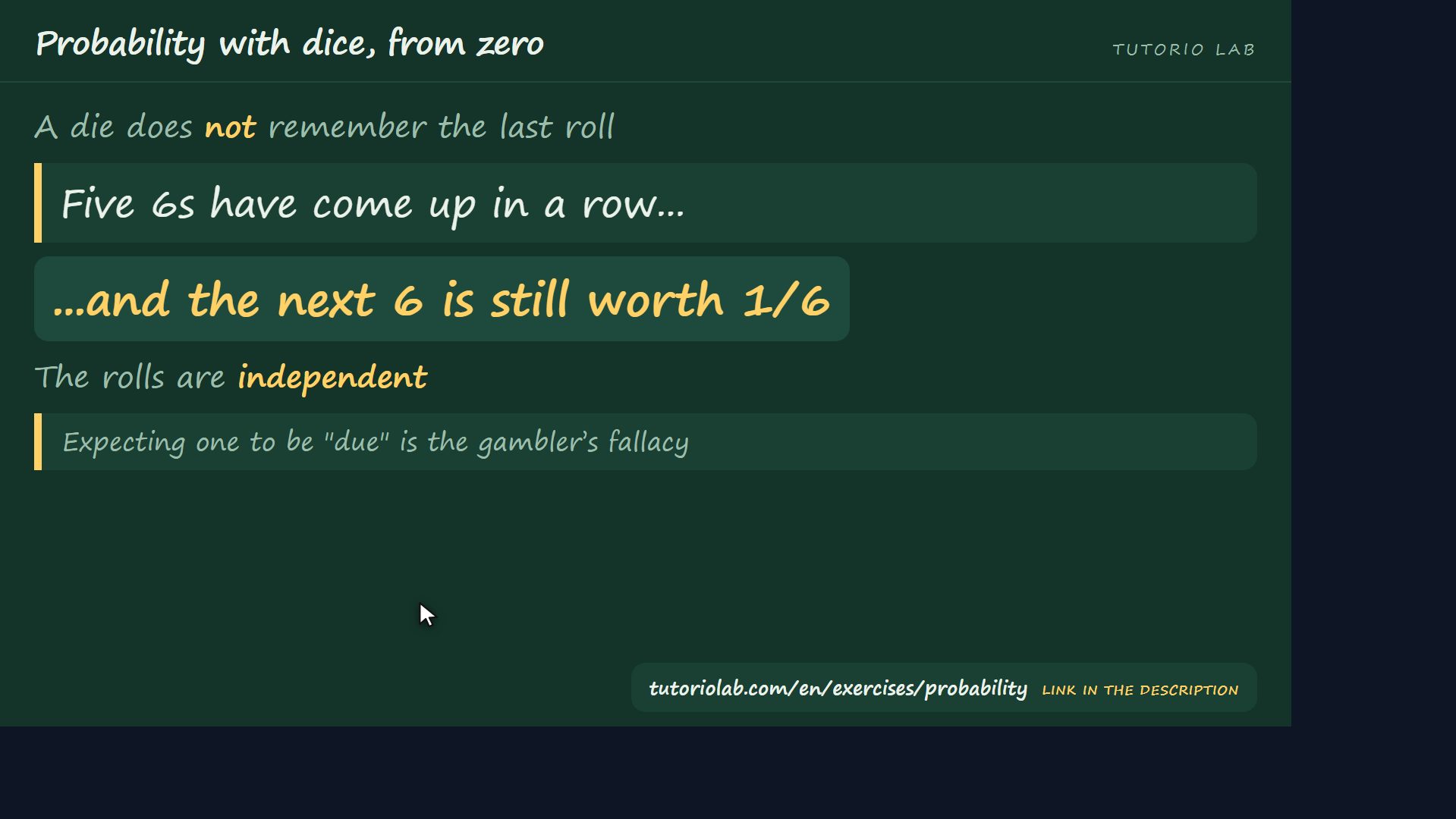
And before we finish, something that has to be said because it costs a lot of people money: the die has no memory. If five sixes have come up in a row, the probability that the next one is a six is still exactly one sixth. No more, no less. The die does not remember what it did before, and there is no number that is due to come up. That idea that something is due is called the gambler’s fallacy, and it is a mistake, not a strategy. Every roll starts from scratch. And this is not only about dice: it is the same with a coin, with a roulette wheel and with a lottery draw. Something that has no memory cannot owe you anything.
What to take away
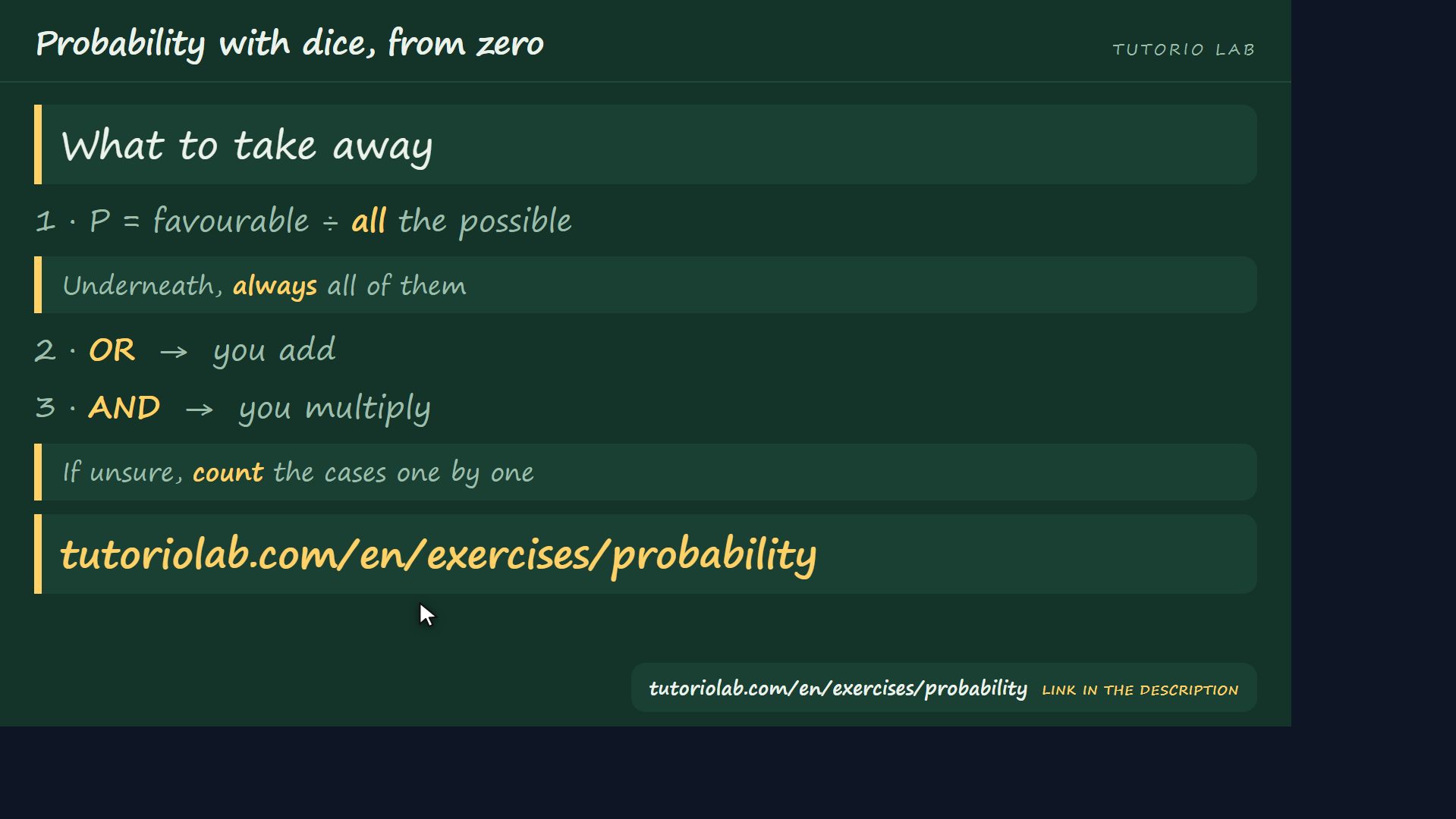
Let us go over what you have to take away. One: probability is favourable cases divided by all the possible cases, and the bottom is always all of them, without exception. Two: when one thing or the other works, they are added. Three: when both have to happen, they are multiplied, and remember that then the possible cases are multiplied too. And four, the lifeline: if you get lost, count the cases one by one, because there are few of them. Practise it at tutoriolab.com, slash e n, slash exercises, slash probability.
If this helped, subscribe.

Common questions
How do you calculate probability?
You count the favourable cases (the ones that work for you) and divide by the possible cases (everything that can happen). With a die, the probability of rolling a 4 is 1/6: one good face out of six faces.
When are probabilities added and when are they multiplied?
If one thing OR the other works for you, they are ADDED: P(2 or 5) = 1/6 + 1/6 = 2/6. If both have to happen (AND), they are MULTIPLIED: P(6 and then 6) = 1/6 × 1/6 = 1/36. The question that settles it is "is one of them enough?": if yes, it is an OR; if you need both, it is an AND.
Why are there 36 possible cases with two dice and not 12?
Because each face of the first die can pair with each face of the second: 6 × 6 = 36 different pairs. Adding 6 + 6 would count faces, not pairs, and what is being looked at is pairs.
Why does P(even) have 6 underneath and not 3?
Because underneath go ALWAYS all the possible cases, and the die still has six faces whether even or odd come up. The only thing the question changes is the number on top. It is the most repeated mistake in this topic.
Five sixes have come up in a row, is another one more likely?
No, and it is not less likely either: it is still 1/6. A die has no memory of previous rolls. Believing that a number is "due" is called the gambler’s fallacy and it is a mistake, not a strategy.
Are there exercises to practise?
Yes, and they are free: tutoriolab.com/en/exercises/probability. You get new bags and dice every time, with the three cases from the video — the fraction, the AND and the OR — and when you get one wrong it tells you which mistake you made and shows you the worked calculation.