Logarithms, from zero and easy
Written and checked by the Tutorio Lab editors · Reviewed on · Who we are and how we are funded
A logarithm is a power looked at backwards: if 2³ = 8, then log₂8 = 3. That is why solving any logarithm is answering a single question: what do I raise the base to so that it gives the number inside? When no base is written the base is 10 (the common logarithm) and with powers of 10 it is enough to count the zeros: log 1000 = 3, log 1,000,000 = 6. The logarithm of 1 is 0 in any base (because b⁰ = 1) and the one of the base itself is 1; the one of 0 and the one of a negative do not exist. The three rules come from the laws of powers: log a + log b = log(a·b), log a − log b = log(a÷b) and log(aⁿ) = n·log a. And the costliest mistake: log(a + b) is NOT log a + log b.
Logarithms, from zero and with nothing to memorise.

What a logarithm asks
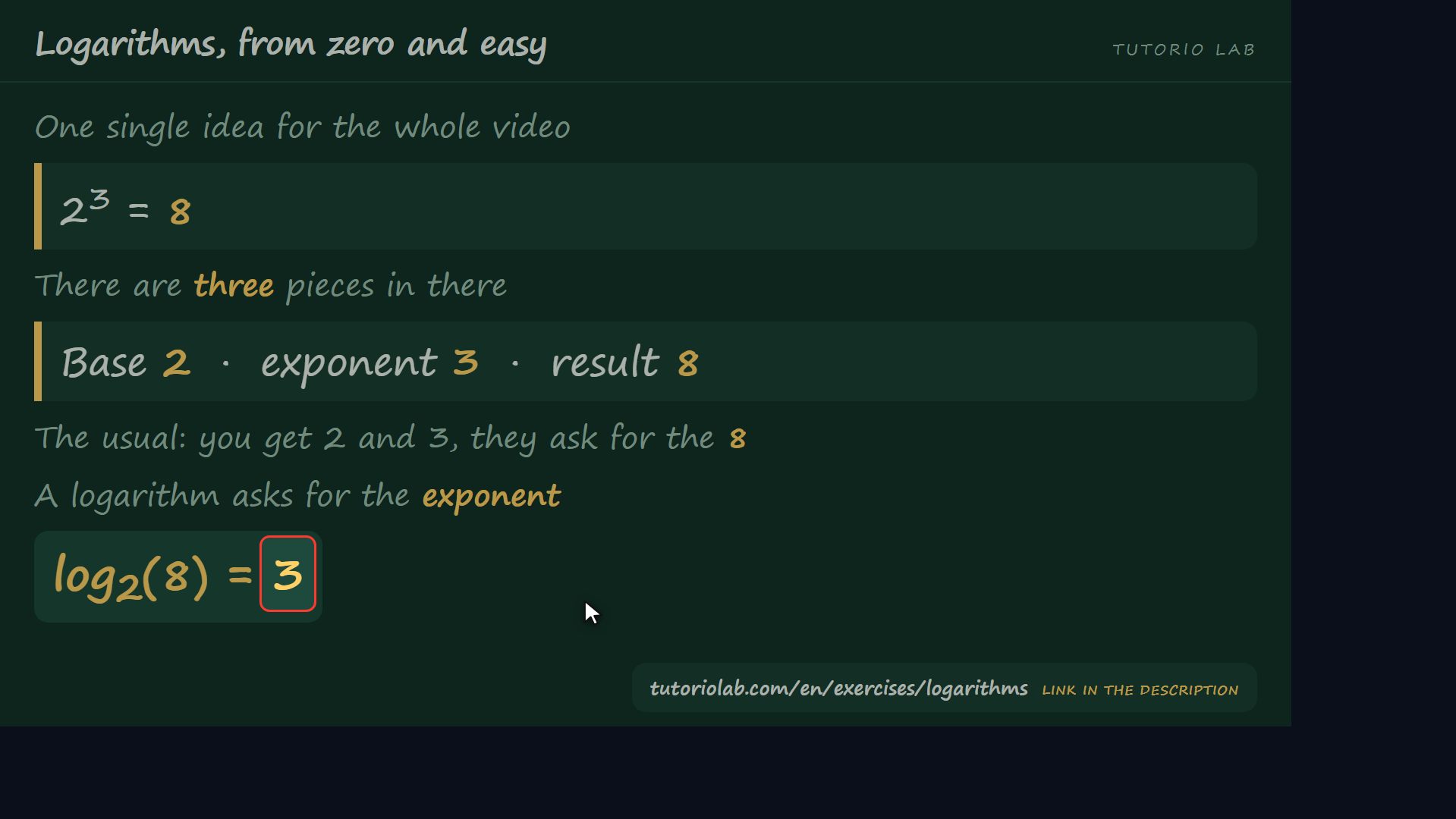
Let us start with what really matters, because if you get this the rest of the video is easy. A logarithm is not a strange operation: it is a power looked at backwards. Take this power: two to the third, equals eight. There are three pieces in there: the base, which is the two; the exponent, which is the three; and the result, which is the eight. Normally you are given the base and the exponent and asked for the result. Well, a logarithm does the opposite: it gives you the base and the result, and asks you for the exponent. Log base two of eight equals three. And that is read exactly like that: log base two of eight. It is the same sum as before, asked backwards.
How to solve any of them
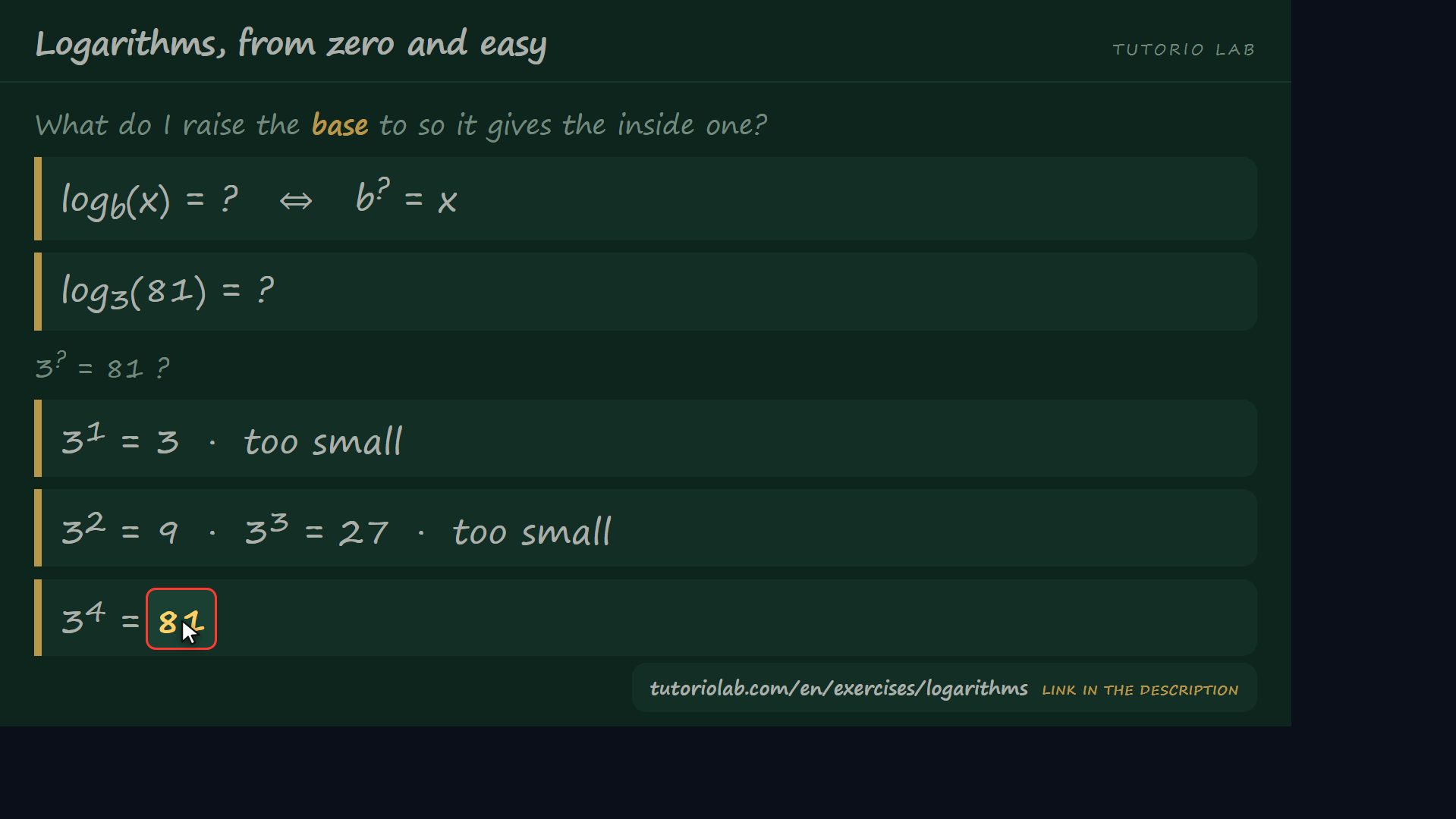
And from that comes the way to solve any logarithm, which is a single question: what do I have to raise the base to so that it gives me the number inside? Nothing more. Let us do one: log base three of eighty-one. I ask myself what I raise the three to. And I try, which works perfectly well: three to the one is three, too small. Three squared is nine, too small. Three cubed is twenty-seven, still too small. Three to the fourth is eighty-one. There it is. So log base three of eighty-one is four. And this works for all of them: you are always looking for the exponent.
Base 10: count the zeros
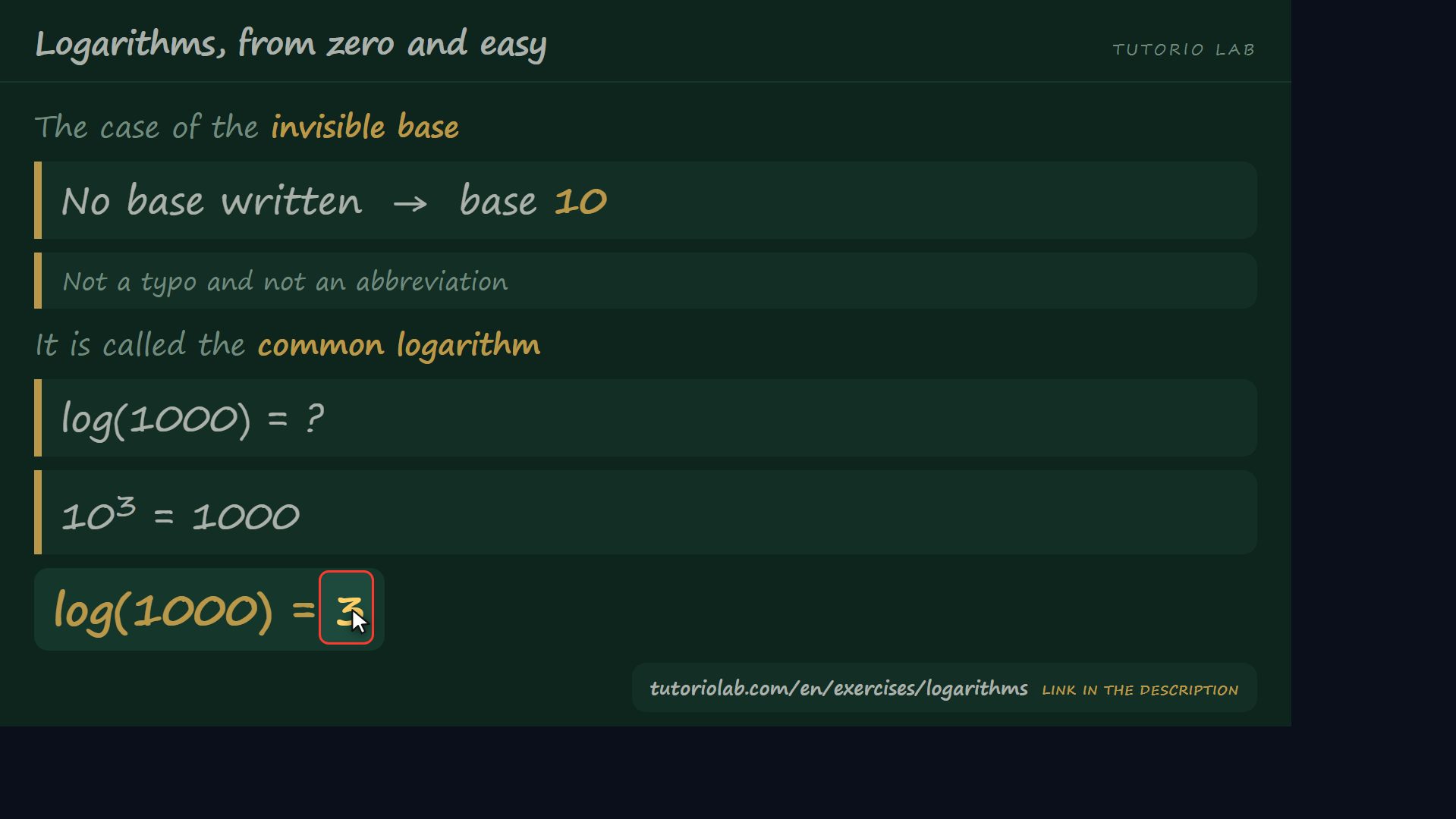
Now, something that confuses a lot of people at the start. Sometimes you will see log written on its own, with no little base number. That is not a mistake and not a strange abbreviation: when no base is written, the base is ten, and that one is called the common logarithm. So log of a thousand, with no base, means log base ten of a thousand. What do I raise ten to so that it gives me a thousand? Ten cubed is a thousand, so the answer is three. And here there is a shortcut worth gold: with powers of ten, the logarithm is simply the number of zeros. Log of a thousand, three zeros, three. Log of a million, six zeros, six. You do not have to try anything: the zeros do the work for you.
log 1 = 0 and other cases
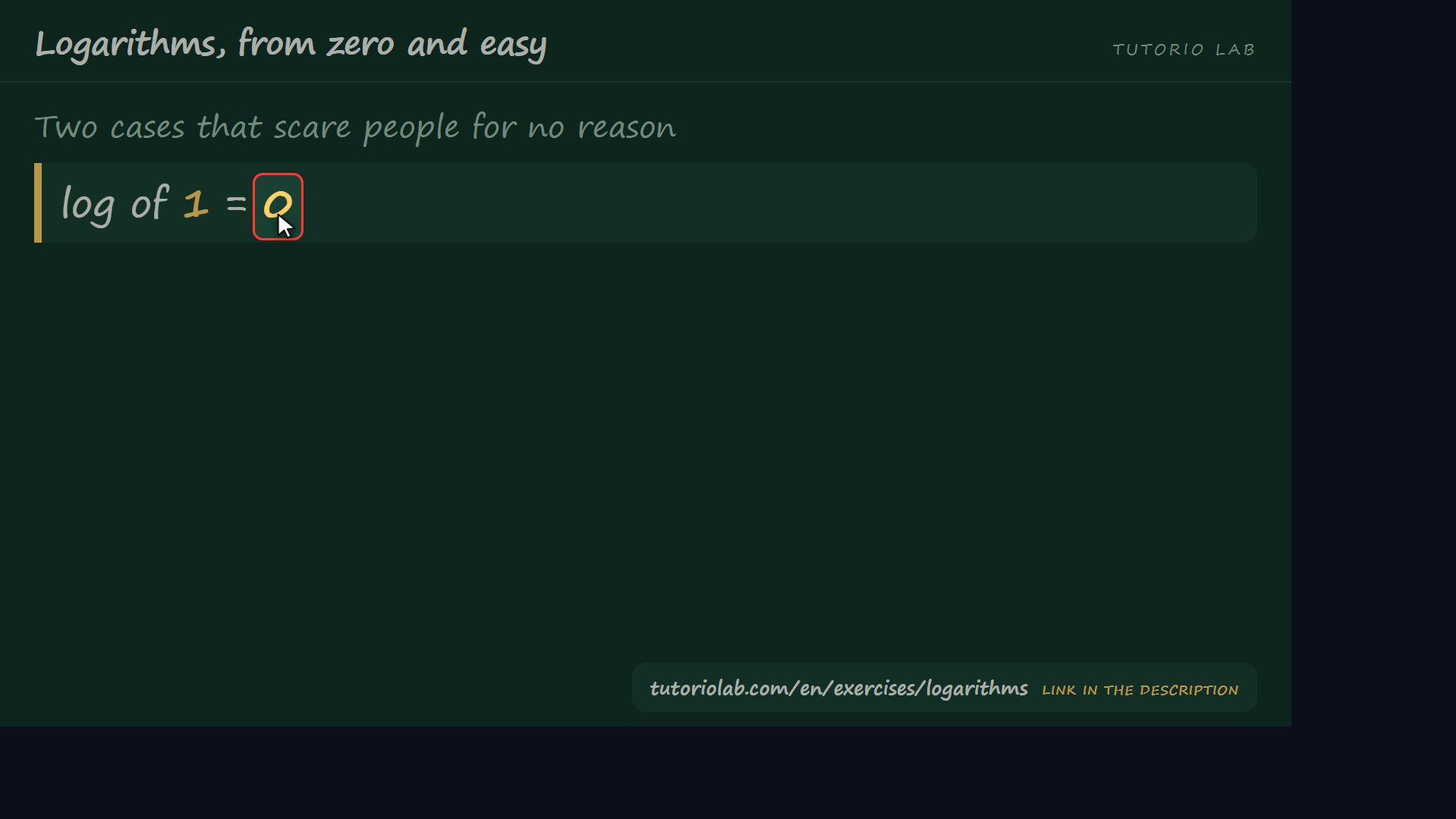
And now two cases that turn up in every exam and that scare people for no reason. The first: the logarithm of one is always zero, in any base. Why? Because a logarithm asks for the exponent, and you already know that any number raised to zero gives one. So the exponent you are after is zero. The second: the logarithm of the base itself is one. Log base five of five is one, because five raised to one is five. And a warning: there is no logarithm of zero and none of a negative number. No power of a positive number gives zero or gives negative, so that question has no answer. If an exercise asks you for it, the answer is that it does not exist, and saying so is the correct answer.
The sum multiplies
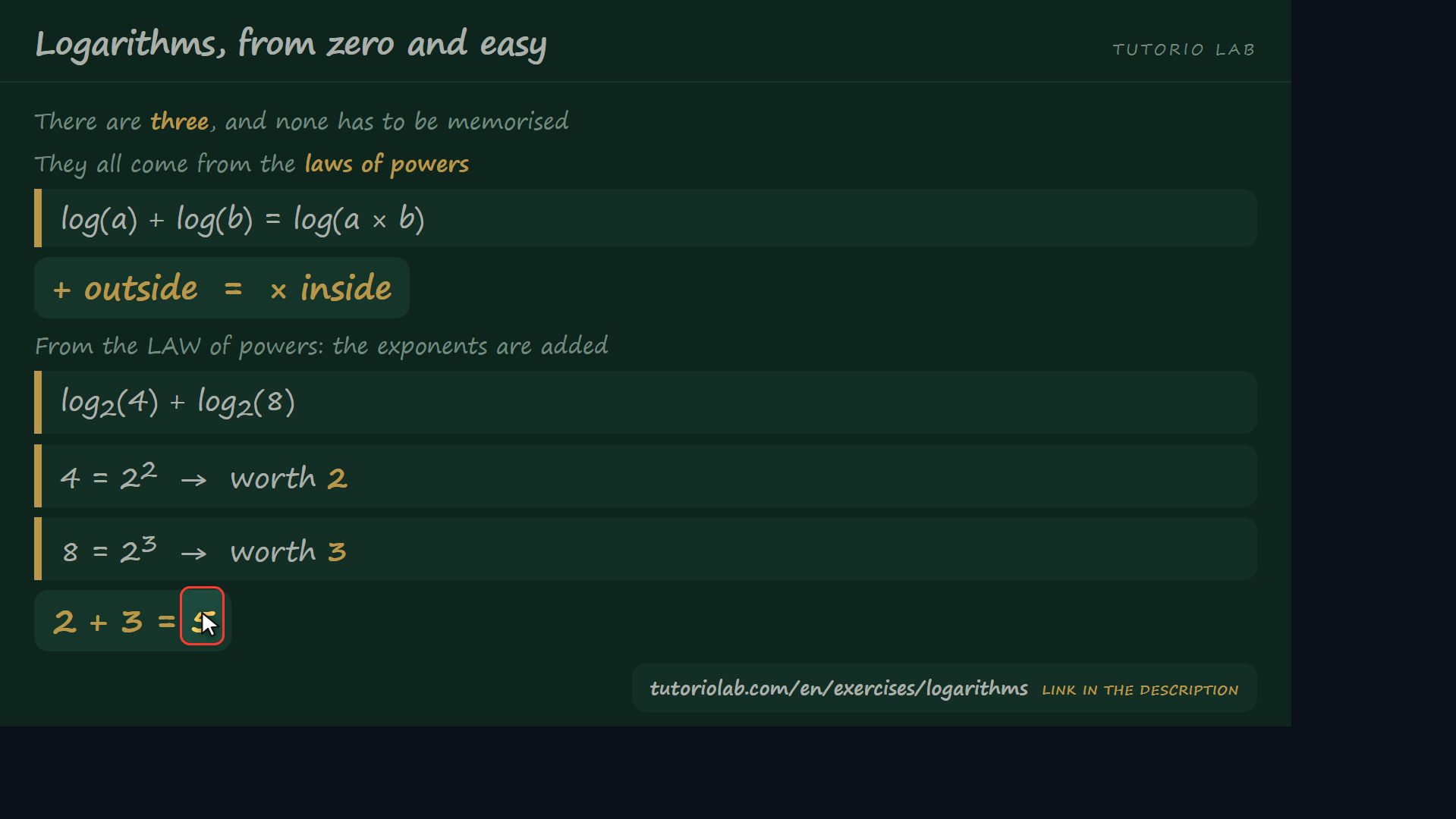
And now the properties, which is what gets searched for most. There are three, and all three come from the laws of powers, so there is nothing new to memorise. The first: the sum of two logarithms with the same base is the logarithm of the product. That is, adding logarithms is multiplying inside. Where does it come from? From the fact that when you multiply powers with the same base, the exponents are added. Let us see it with numbers. Log base two of four, plus log base two of eight. On one hand: four is two squared, so the first one is worth two; and eight is two cubed, so the second one is worth three. Two plus three, five. And on the other hand: four times eight is thirty-two, which is two to the fifth. Five as well. It matches.
The difference divides, the exponent drops
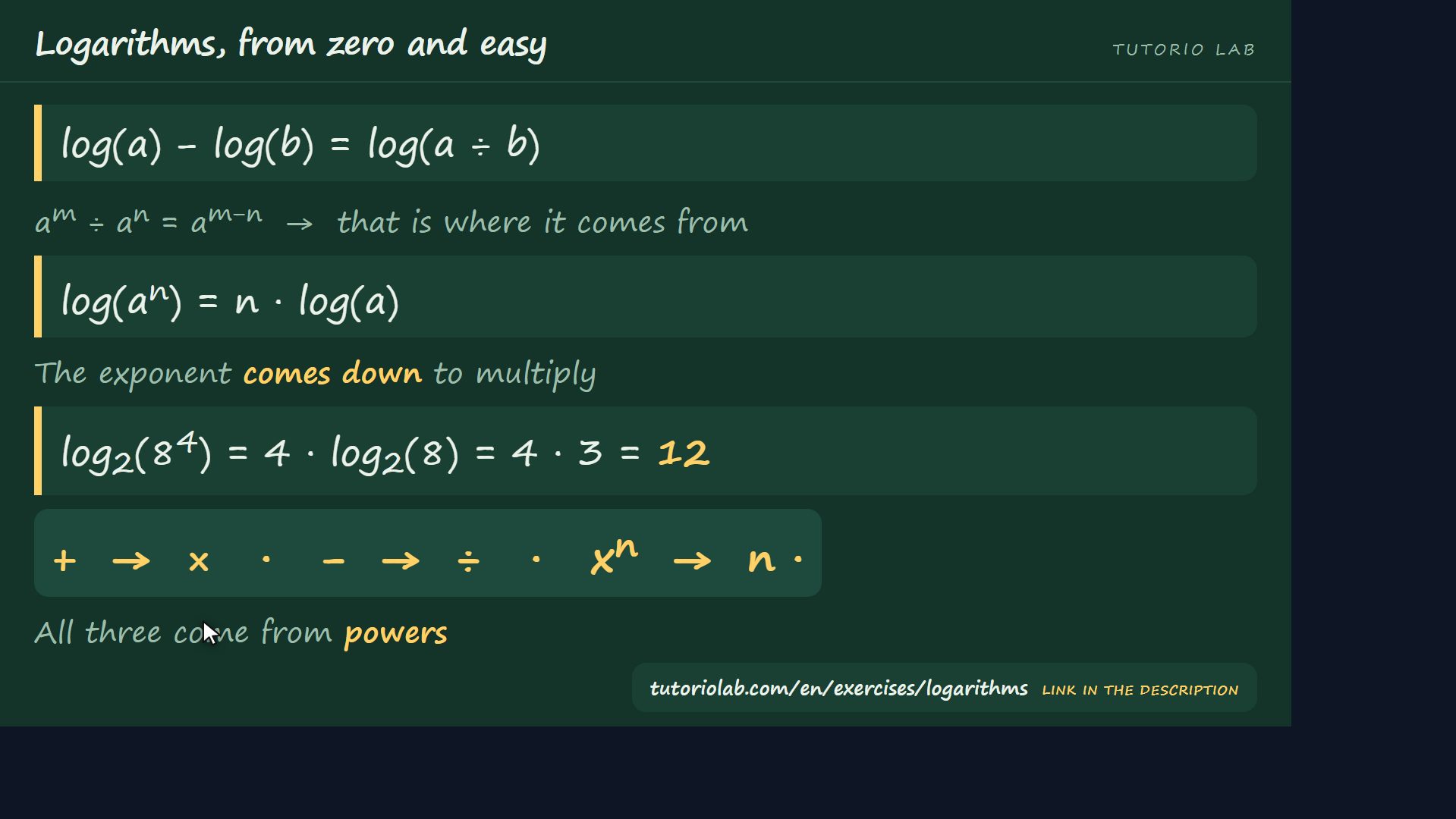
The second property is the same idea the other way round: the difference of two logarithms is the logarithm of the quotient. Subtracting logarithms is dividing inside, and it comes from the fact that when you divide powers the exponents are subtracted. And the third, which is the one used most in exams: the logarithm of a power is the exponent multiplying outside. That is, the exponent comes down. Log base two of eight to the fourth is four times log base two of eight, which is four times three, twelve. So the three of them, together: the sum multiplies inside, the difference divides inside, and the exponent comes down to multiply.
The costliest mistake
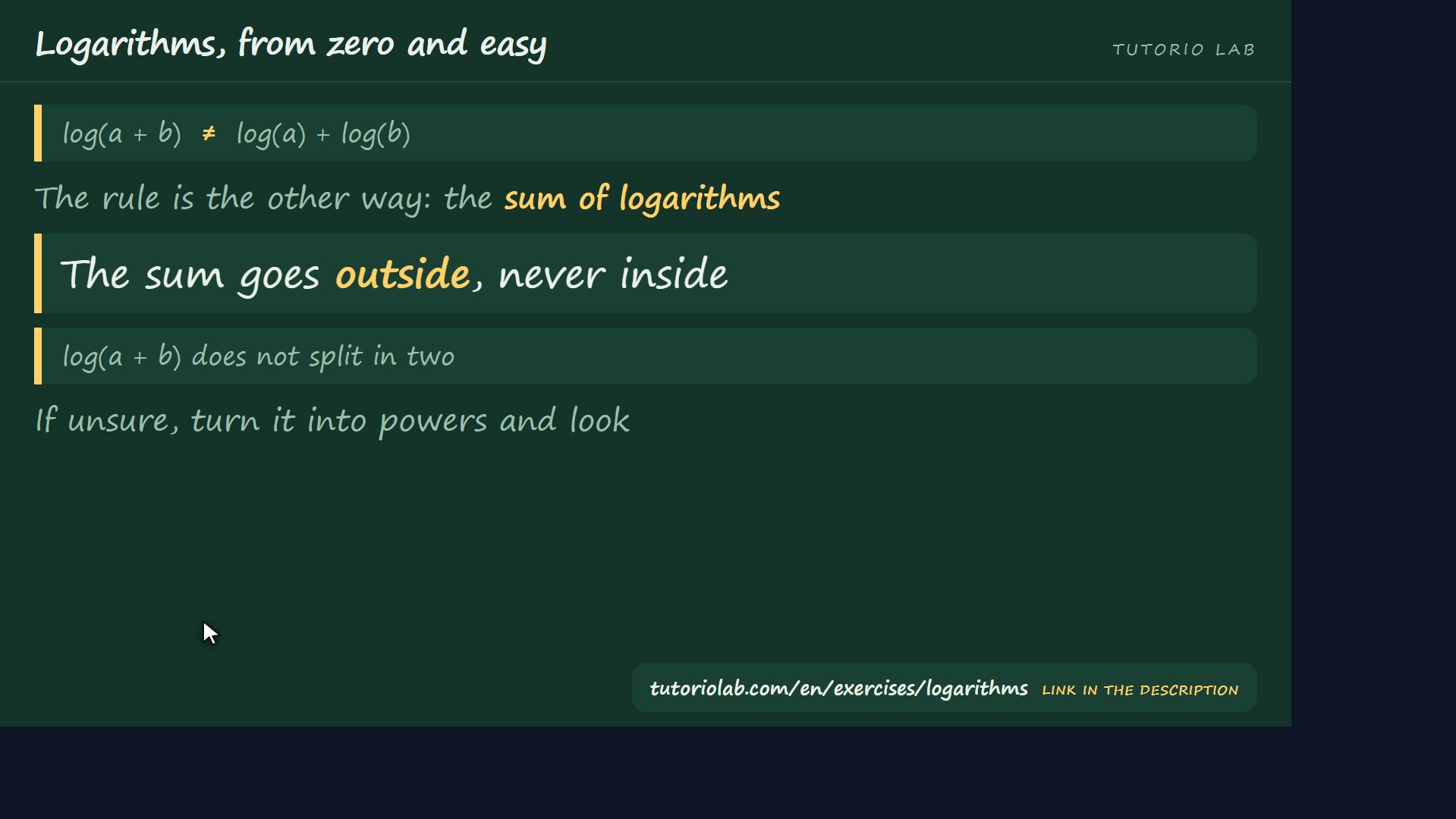
And now the mistake you have to get rid of, because it is the one that costs most dearly. A lot of people, on seeing the first property, come away with the wrong idea and write that the logarithm of a sum is the sum of the logarithms. And that is false. The property talks about the SUM OF TWO LOGARITHMS, which turns into the logarithm of a product. It says nothing about what happens when the sum is inside. The logarithm of a plus b cannot be split. If you are ever unsure, the remedy is the same as always: write things as powers and see what happens.
Exercise 1, step by step
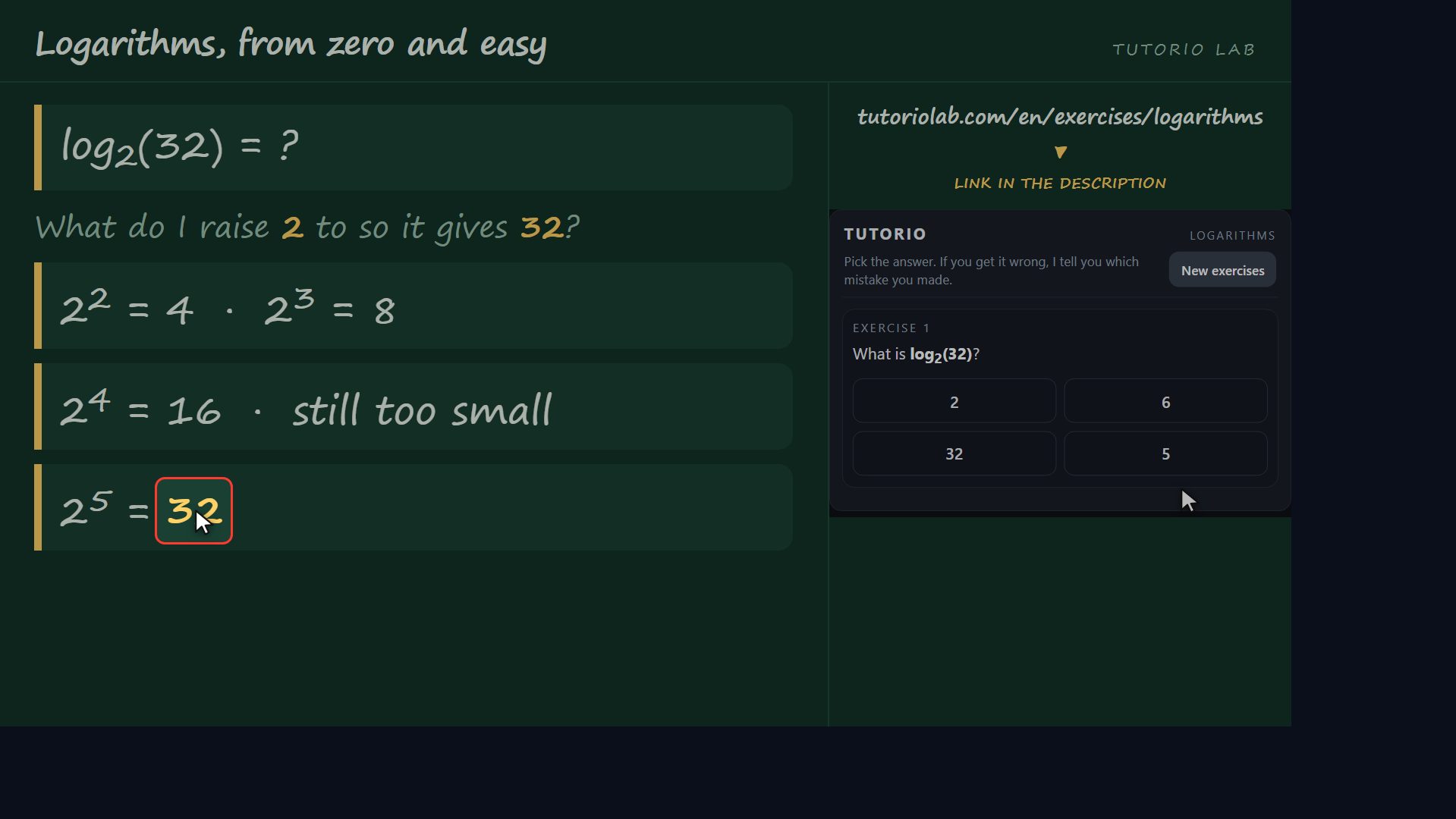
Let us do the first exercise, and we will solve it together before touching anything. Log base two of thirty-two. We ask ourselves the usual question: what do I have to raise the two to so that it gives me thirty-two? And we try, without hurrying: two squared is four, too small. Two cubed, eight, too small. Two to the fourth, sixteen, too small. Two to the fifth, thirty-two. And there we are. So the answer is five. And look at the thirty-two trap: thirty-two is the number INSIDE the logarithm, not what the logarithm is worth. Confusing the inside one with the result is the most repeated mistake in this topic. I mark the five.
Practise for free
And I want you to take a good look at this on your right here, because it is ours and it is free. It is an exercise page: tutoriolab.com/en/exercises/logarithms. You get the three cases from the video: solving a normal one, a base ten one and one with the sum property, with different numbers every time. And what really matters: when you get one wrong it does not just throw an incorrect at you and leave you where you were. It tells you what mistake you made, by name.

Exercise 2, step by step
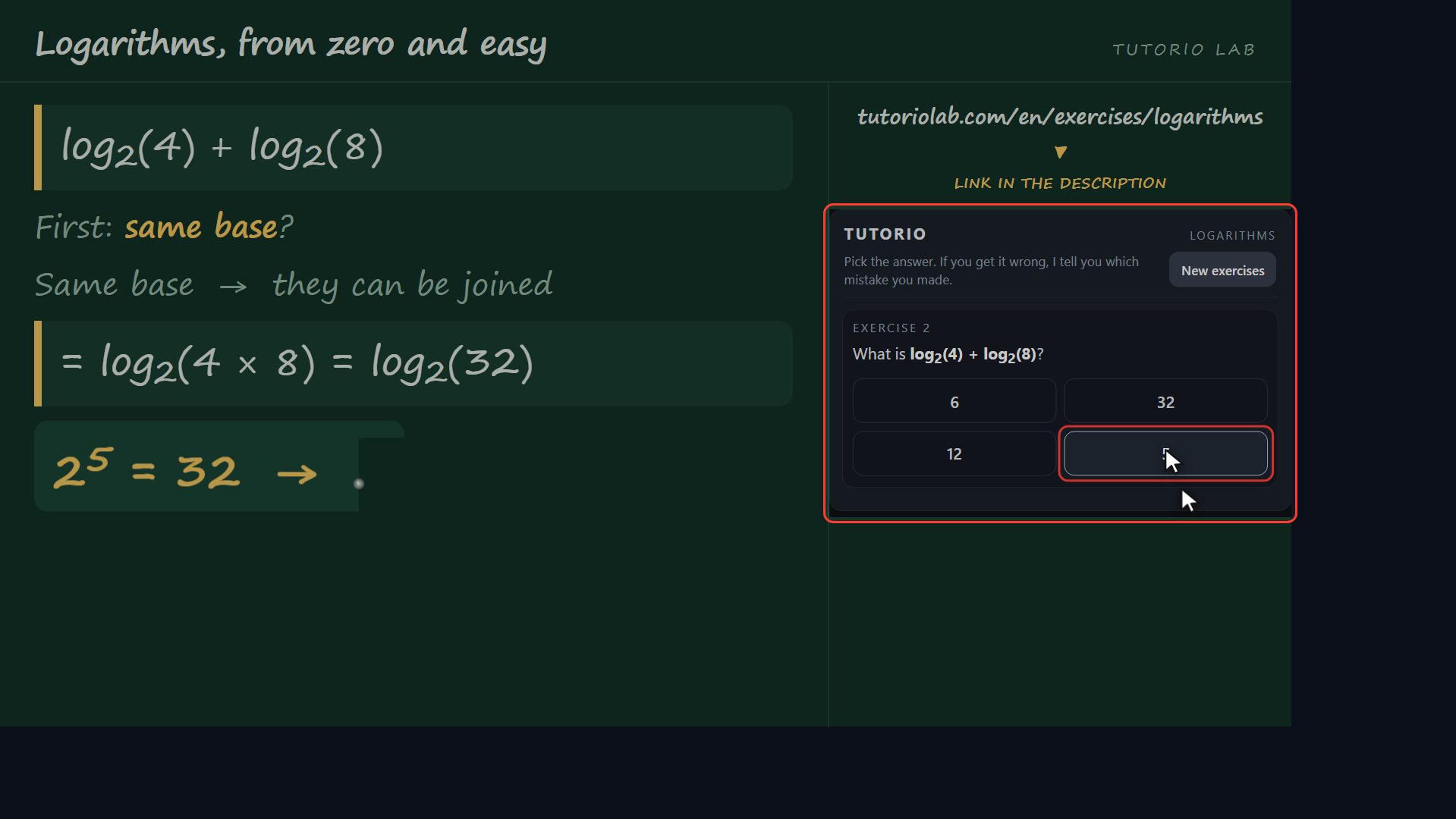
Second and last exercise, and it is the property one. Log base two of four, plus log base two of eight. The first thing to look at is whether both have the same base, because if not, they cannot be put together. Here both are base two, so yes. We apply the first property: the sum of logarithms is the logarithm of the product. Four times eight, thirty-two. So this is log base two of thirty-two, and we have already done that one: it is five. And look at the thirty-two trap again: the thirty-two is what is inside, and the step of solving the logarithm is missing. You could also have done it separately: the first is worth two, the second is worth three, two plus three five. The same result.
What to take away
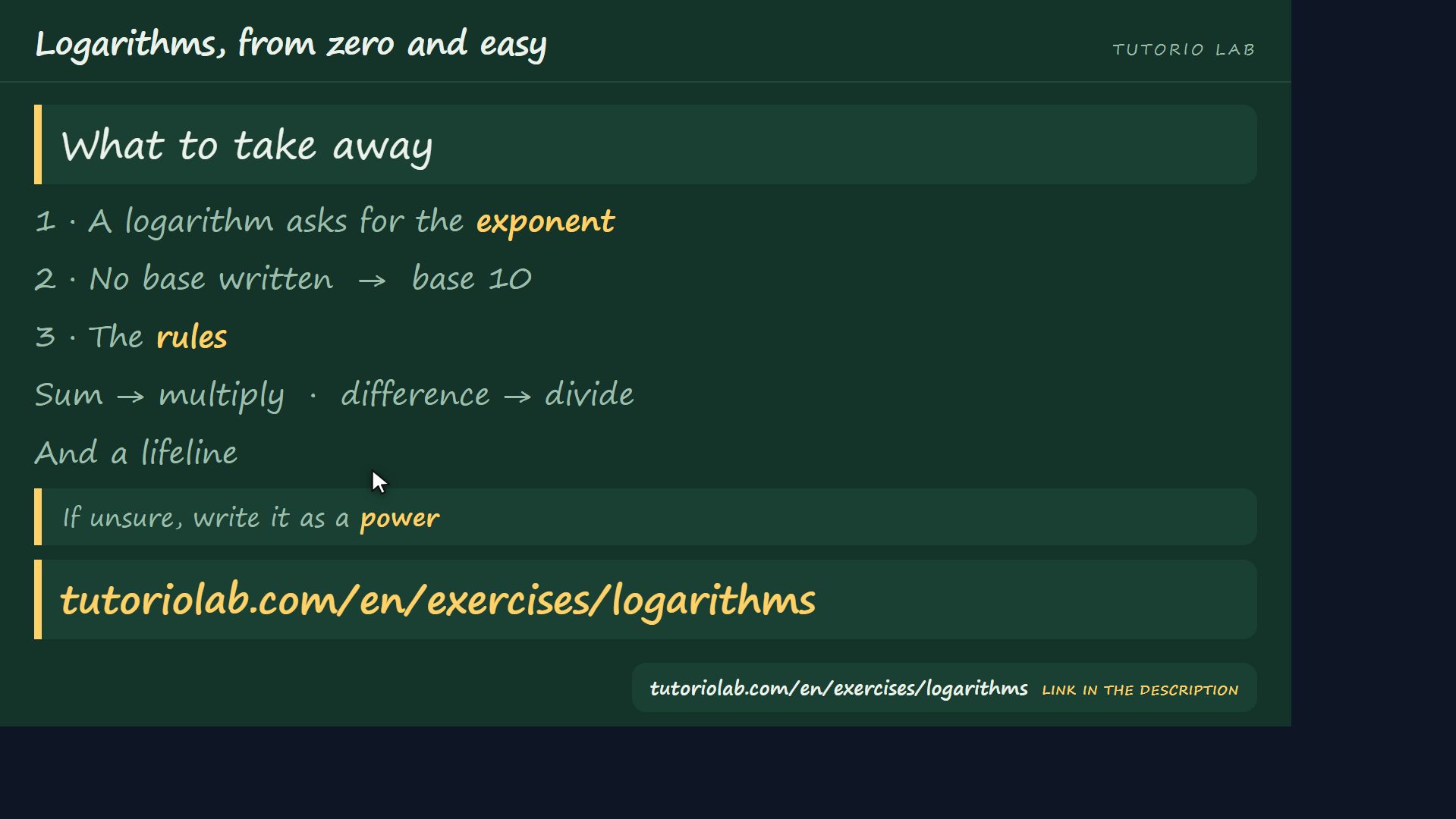
Let us go over what you have to take away. One: a logarithm asks for the exponent, so the question is always what do I raise the base to. Two: if there is no base written, the base is ten, and with powers of ten it is enough to count the zeros. Three: the properties, which all come from powers: the sum of logarithms multiplies inside, the difference divides inside, and an exponent from inside comes down to multiply outside. And four, the lifeline: if you get lost at any point, write the logarithm as a power and it clears itself up. Practise it at tutoriolab.com/en/exercises/logarithms.

Common questions
What is a logarithm?
It is a power asked backwards. In 2³ = 8 you are given the base and the exponent and asked for the result; a logarithm gives you the base and the result and asks for the exponent: log₂8 = 3. Solving any logarithm is answering "what do I raise the base to so that it gives the number inside?".
What does log with no base written mean?
Base 10, and it is called the common logarithm. log 1000 is log base 10 of 1000, that is 3, because 10³ = 1000. With powers of 10 the logarithm is simply the number of zeros.
What are the properties of logarithms?
Three, and all three come from the laws of powers: log a + log b = log(a·b) (adding logarithms multiplies inside), log a − log b = log(a÷b) (subtracting divides inside) and log(aⁿ) = n · log a (the exponent comes down to multiply).
Is log(a + b) the same as log a + log b?
No, and it is the costliest mistake in this topic. The rule says that the SUM OF TWO LOGARITHMS is the logarithm of a product; it says nothing about a sum placed inside. The logarithm of a sum cannot be split.
Why is the logarithm of 1 equal to 0?
Because a logarithm asks for the exponent, and any number raised to 0 gives 1. So the exponent you are after is 0, in any base. By the same reasoning, the logarithm of the base itself is 1.
Are there exercises to practise?
Yes, and they are free: tutoriolab.com/en/exercises/logarithms. You get the three cases from the video — solving a normal one, a base 10 one and one with the sum rule — with new numbers every time, and when you get one wrong it tells you which mistake you made.