How to find the percentage of a number
To find a percentage of a number you multiply and divide by 100: 15% of 80 is 80 × 15 ÷ 100 = 12. The other way round, to find what percentage one amount is of another, you divide the part by the total and multiply by 100: 30 of 120 is 30 ÷ 120 × 100 = 25%. And watch out: taking 20% off and adding it back does not return you to the original price (100 → 80 → 96).
Finding a percentage looks easy until somebody asks you the other way round. In three minutes I will show you both: fifteen per cent of eighty, and what percentage thirty is of a hundred and twenty. And at the end, a mistake that costs people money and that almost nobody explains: taking twenty per cent off and adding it back does not return you to the price you started from.
What per cent means
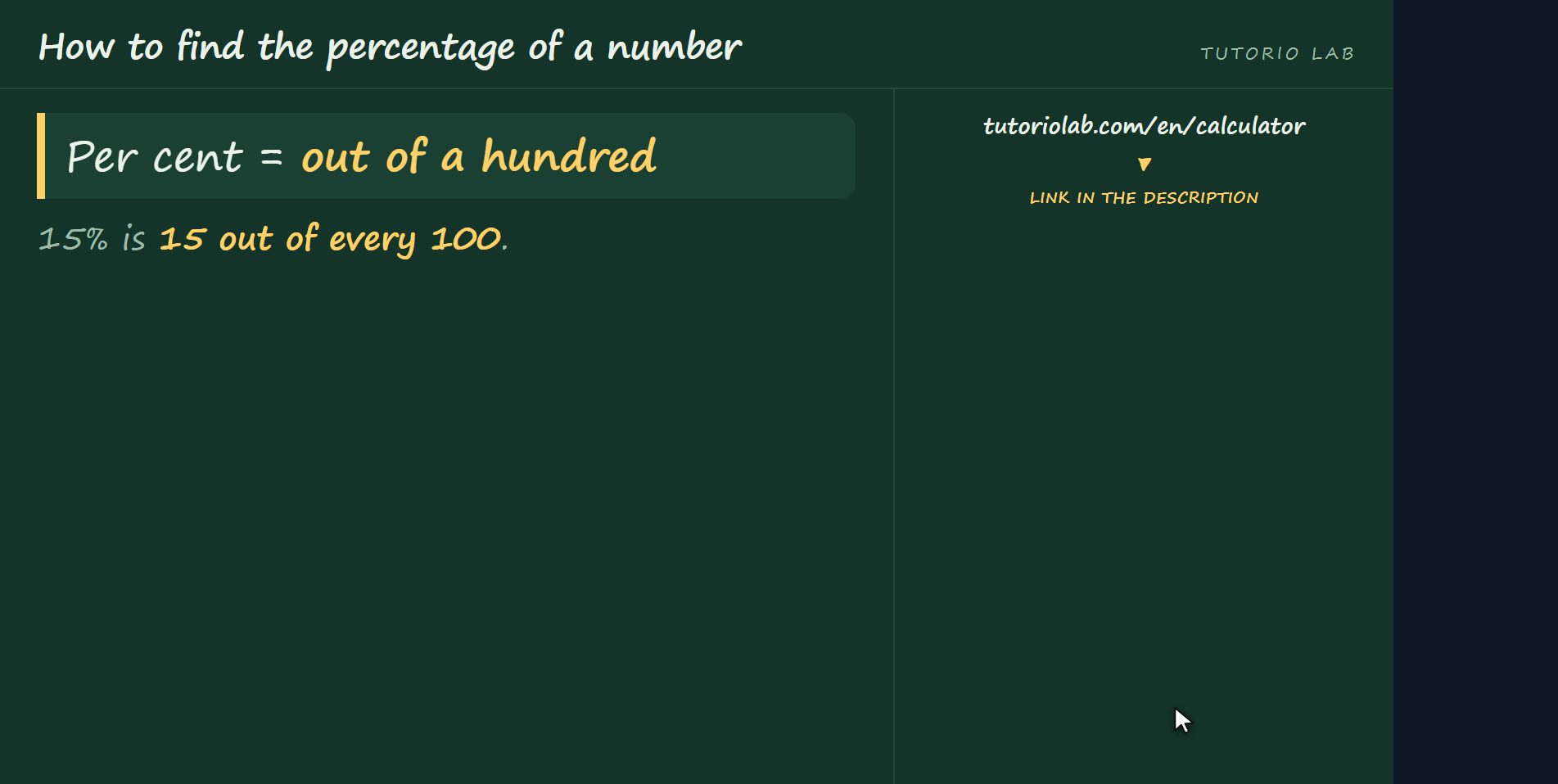
First, what per cent actually means. It means out of a hundred. Fifteen per cent is fifteen out of every hundred. Once you have got that, the rest is one multiplication and one division, and there is nothing to memorise.
The formula
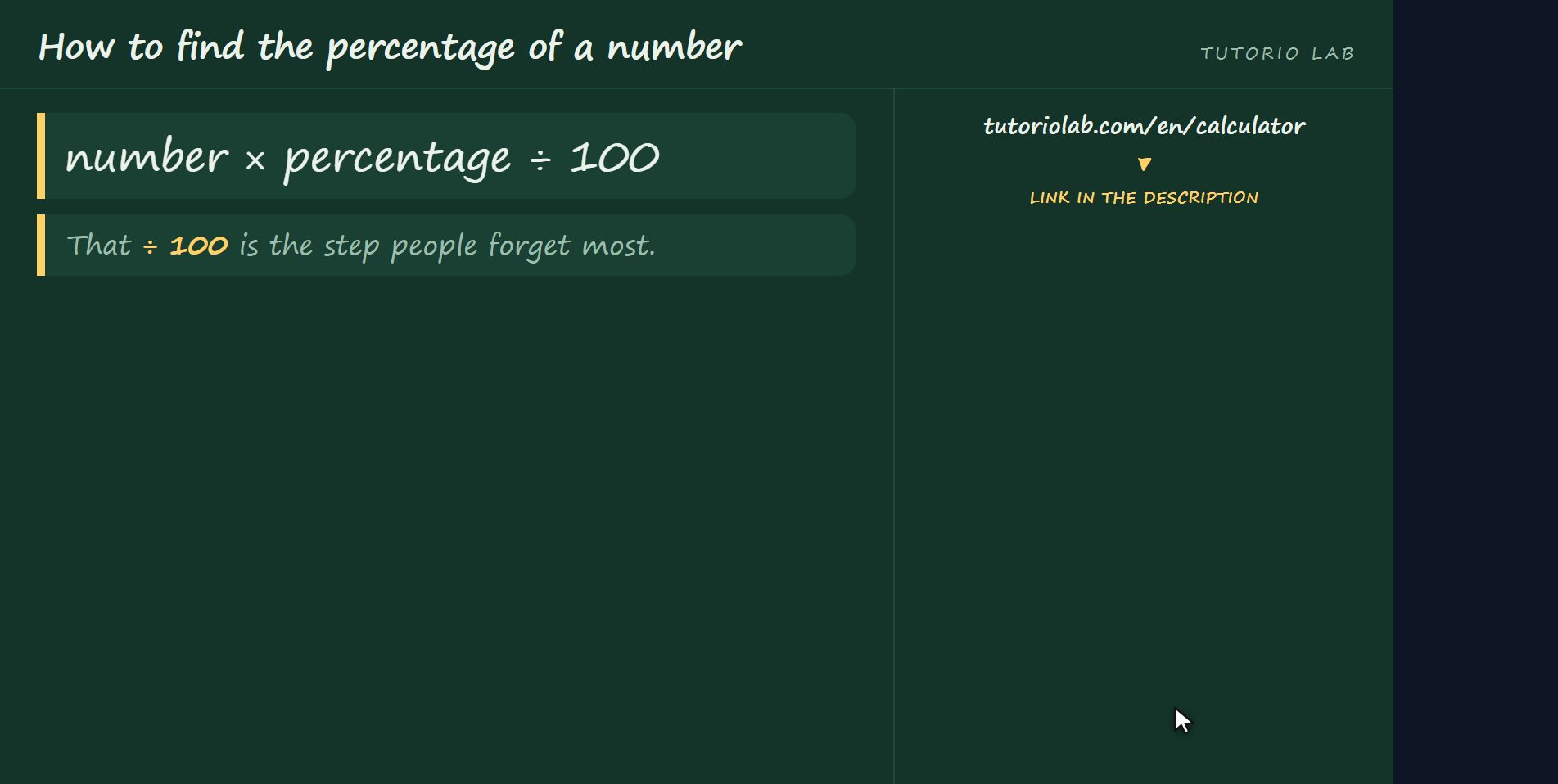
The formula is this: the number, times the percentage, divided by a hundred. You multiply and you divide by a hundred. That hundred is what turns the fifteen into fifteen out of a hundred, and it is the step people forget most.
15% of 80
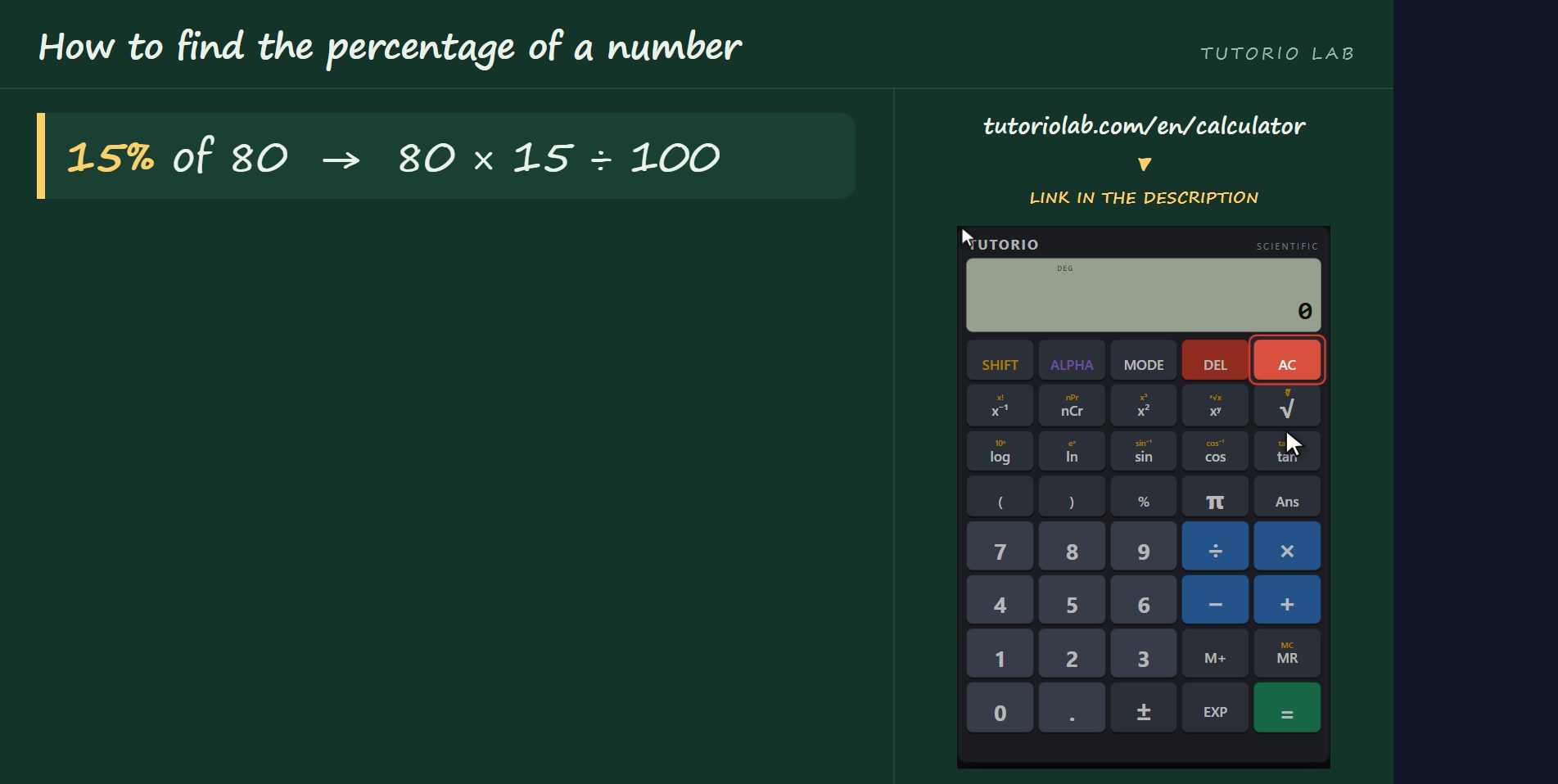
Let us use numbers. Fifteen per cent of eighty. Eighty times fifteen, divided by a hundred. And it gives twelve. Notice that twelve is a good deal less than eighty, which is what has to happen: fifteen per cent is a small part of the whole.
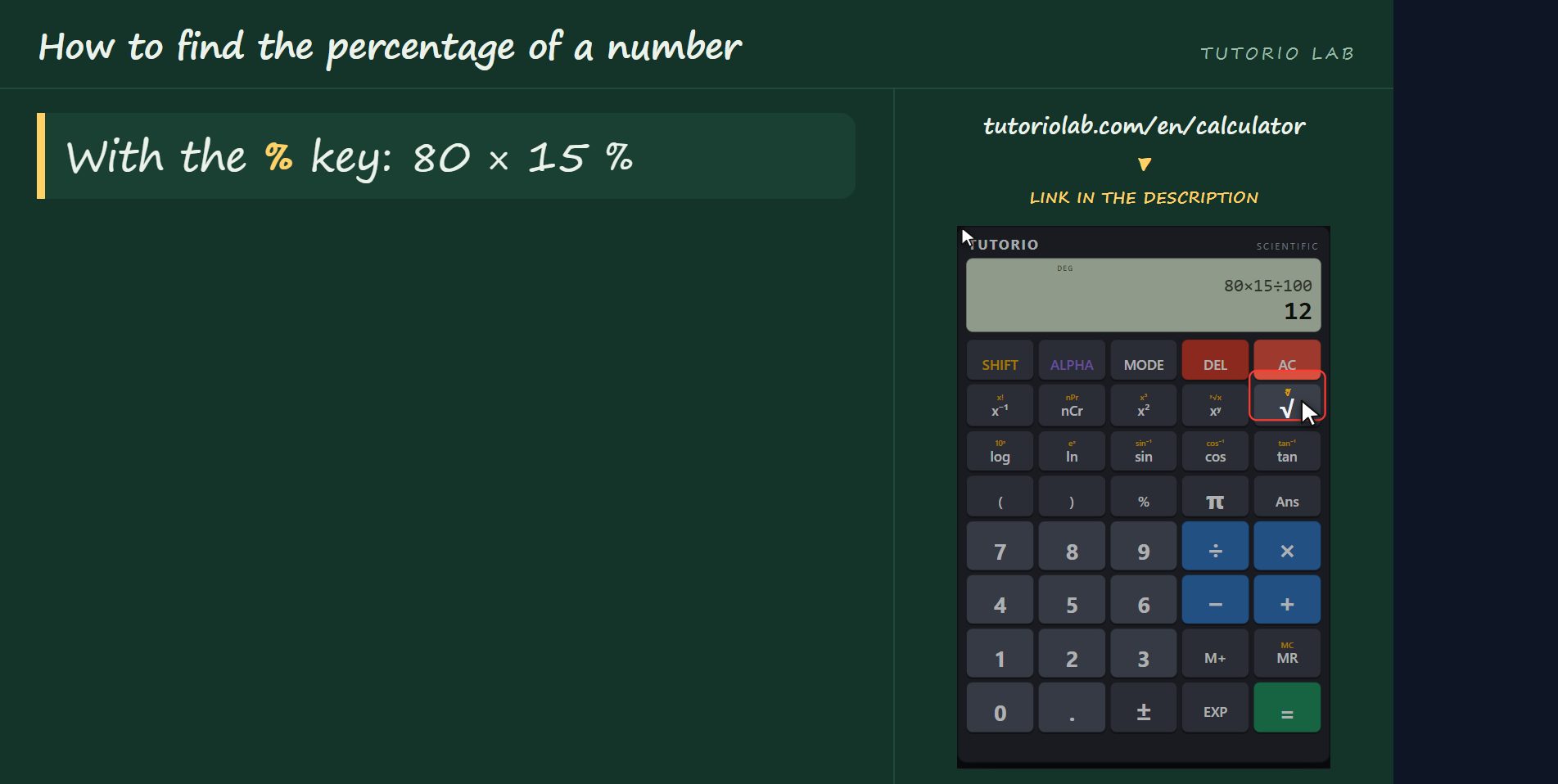
With the % key
And there is a shortcut: that key with the sign does it for you. Eighty, times, fifteen, and now the percent key. Twelve, the same answer. All that key does is divide by a hundred, so it is not magic; but it saves you the step people forget most.
The question the other way round
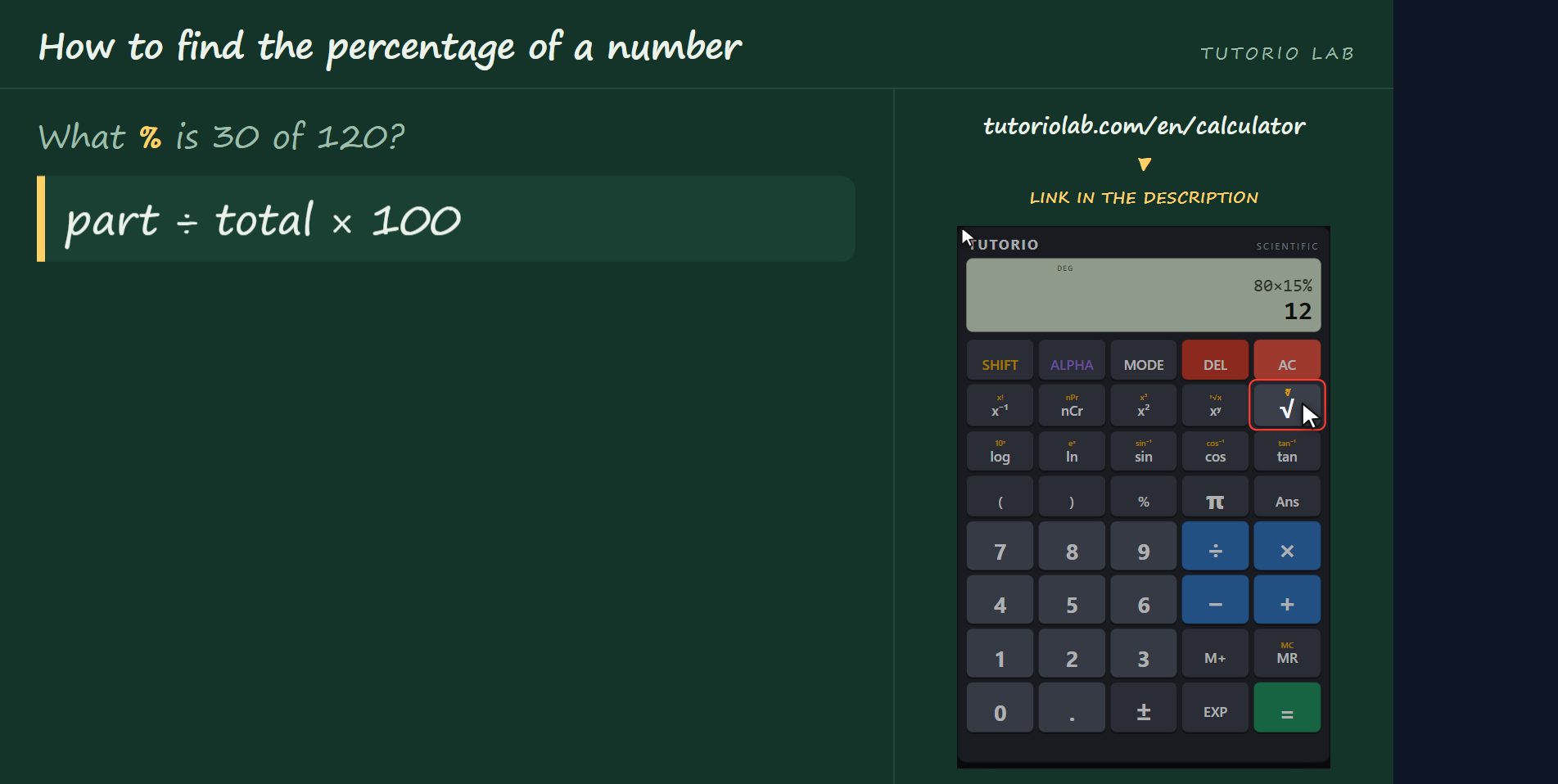
Now the question the other way round, which is the one that gets people stuck. They do not give you the percentage: they give you the two amounts. What percentage is thirty of a hundred and twenty? You turn the formula around: the part, divided by the total, times a hundred. Thirty over a hundred and twenty, times a hundred. Twenty-five per cent. Thirty is a quarter of a hundred and twenty, and a quarter is twenty-five per cent.
Adding a percentage
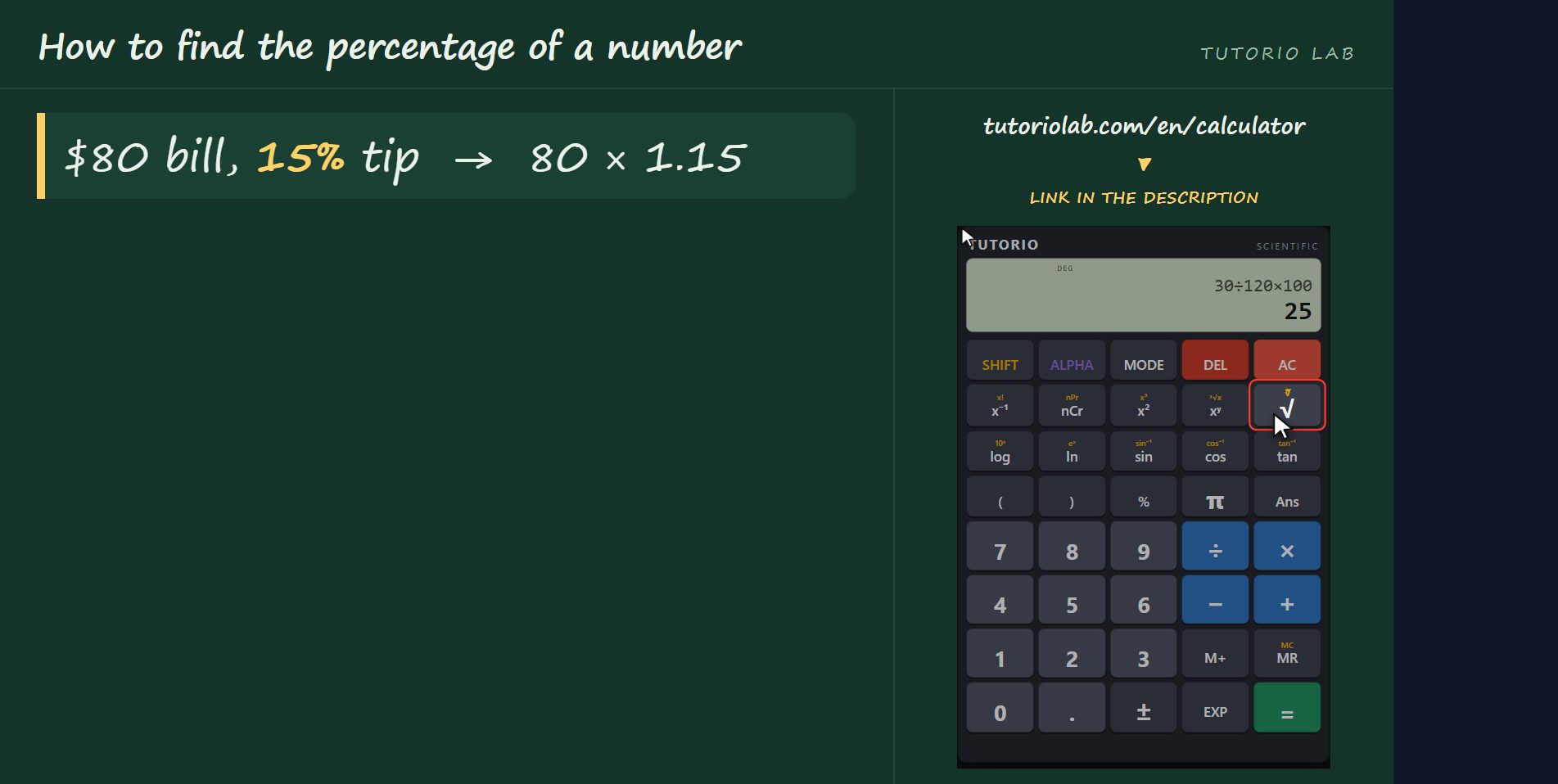
And the everyday one: adding a percentage. An eighty-dollar bill with a fifteen per cent tip. You do not work out the tip and add it on separately: you multiply straight away by one point one five. Eighty times one point one five is ninety-two. That one is the bill you already had, and the nought point one five is what you are adding. And look: fifteen per cent of eighty was twelve, and eighty plus twelve is ninety-two.
The discount mistake
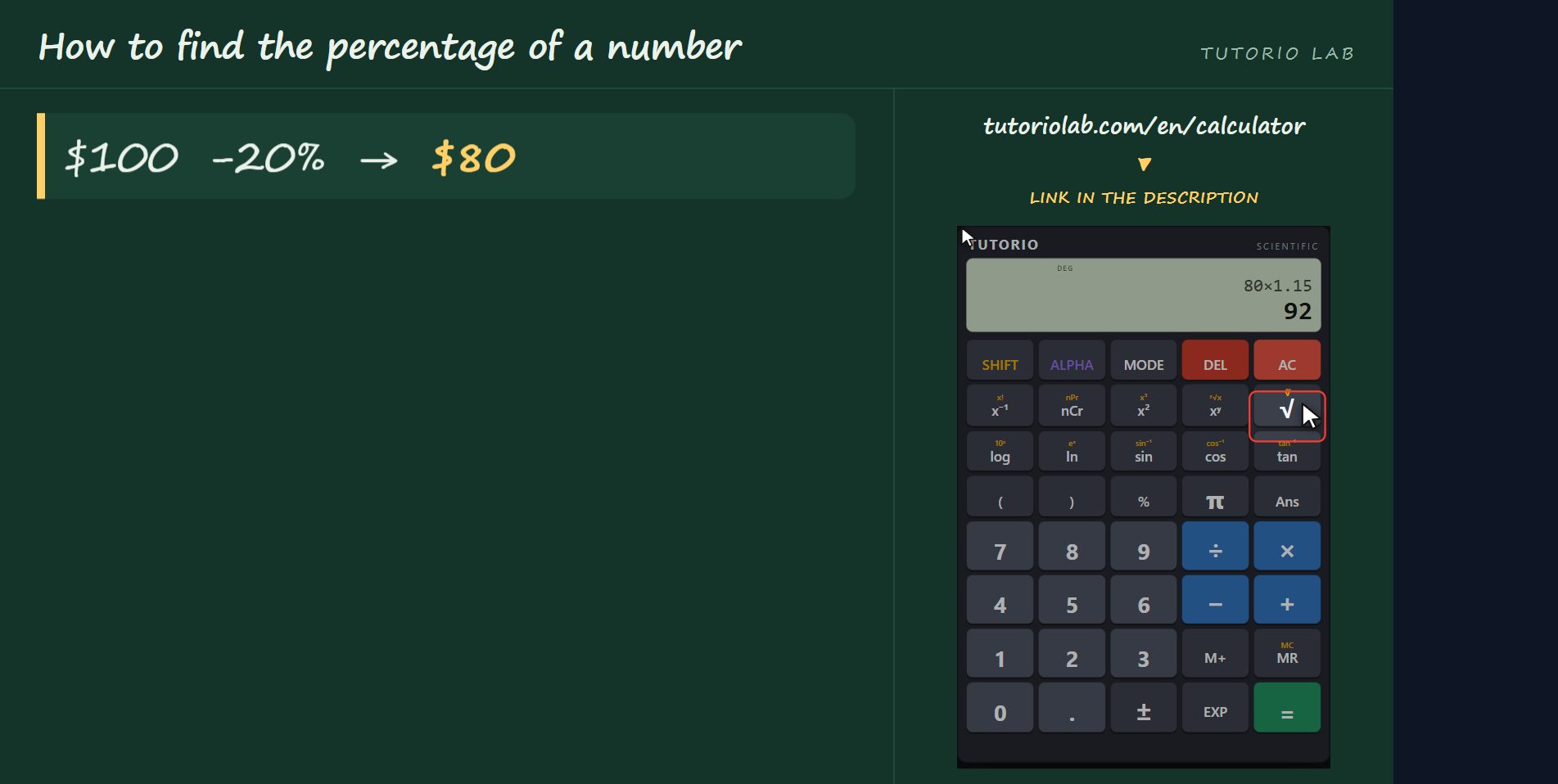
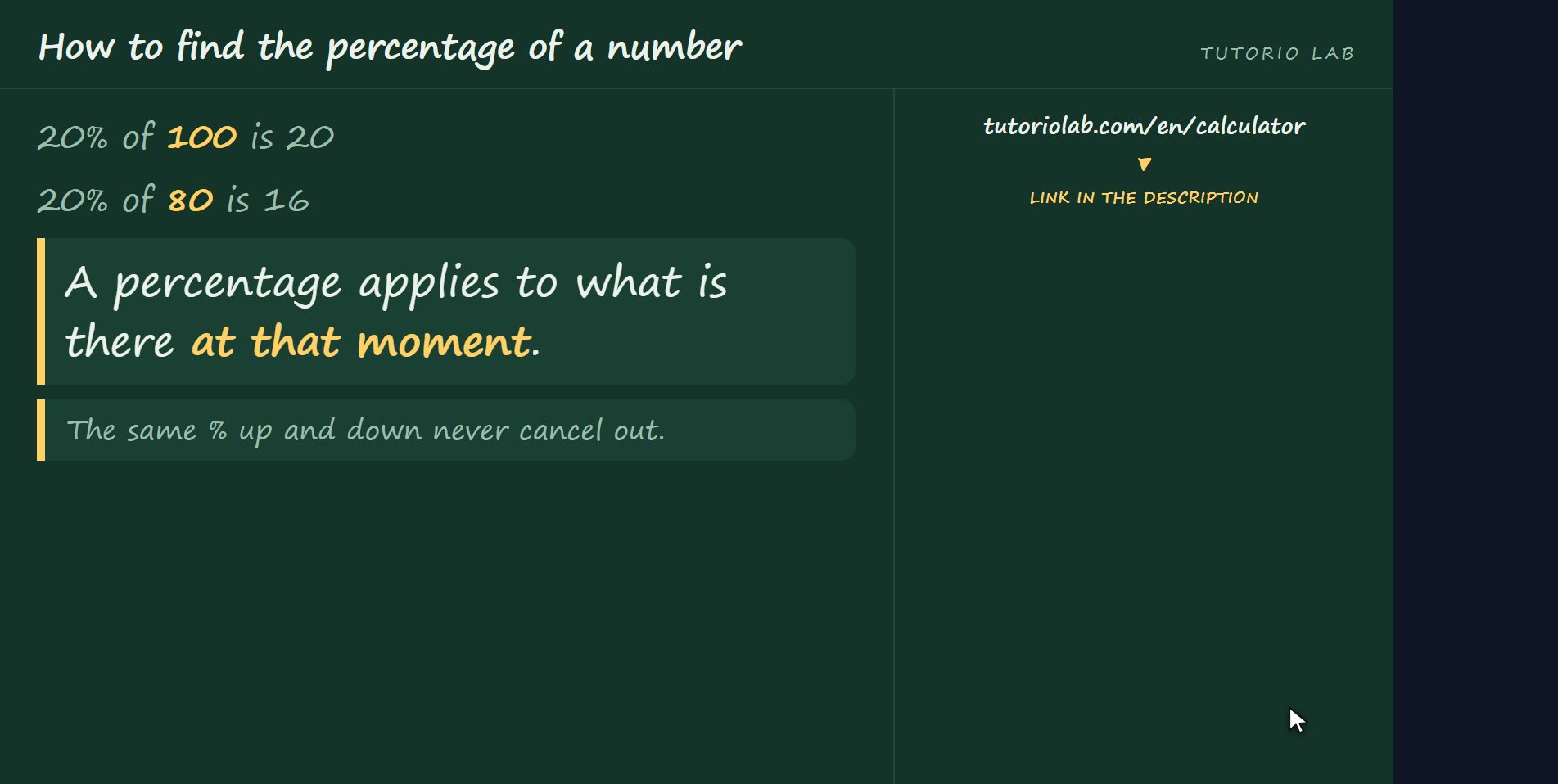
And now the thing I mentioned at the start. A hundred-dollar coat with twenty per cent off comes down to eighty. So far so good. But if you add twenty per cent back onto that eighty to get to the original price, you do not get a hundred: you get ninety-six. Four dollars short.
Why that happens
And it is not a trick, it is arithmetic. The twenty per cent of the discount was worked out on a hundred, and that is twenty dollars. The twenty per cent you add back is worked out on eighty, and that is only sixteen. Percentages always apply to the amount that is there at that moment, not to the one before. That is why a rise and a fall of the same percentage never cancel each other out.
The website does it for you
And if you would rather not do the sums, we will do them for you. At tutoriolab.com, slash e-n, slash percentage calculator, you get all four cases on a single page: the percentage of a number, what percentage one is of another, adding a percentage and taking one off. And when you take one off, it tells you where you really land if you add it back, which is exactly what we just saw. Free, no sign-up, and it downloads as a PDF.
Three things to take away: per cent means out of a hundred; to find one, you multiply and divide by a hundred; and for the question the other way round, you divide the part by the total and multiply by a hundred. The links are in the description. If this helped, do subscribe.
Common questions
How do I find 15% of 80?
80 × 15 ÷ 100 = 12. Or with the percent key on the calculator: 80 × 15 %.
What percentage is 30 of 120?
Divide the part by the total and multiply by 100: 30 ÷ 120 × 100 = 25%.
I took 20% off and added it back — why is it not the original price?
Because each percentage is worked out on the amount that is there at that moment. 20% of 100 is 20, but 20% of 80 is only 16. That is why 100 comes down to 80 and only goes back up to 96.
How do I add a tip or a tax to a price?
Multiply by 1 plus the percentage as a decimal. For a 15% tip: 80 × 1.15 = $92.
Is there a calculator that does all of it?
Yes, and it is free: tutoriolab.com/en/percentage-calculator. All four cases on one page, and it shows you where you land when you undo a discount. Downloads as a PDF.