
How to do cross multiplication
A direct cross multiplication is solved by multiplying across and dividing by the one left over: if 3 lb of apples cost $4.50, then 7 lb cost 7 × 4.50 ÷ 3 = $10.50. An inverse one multiplies the two on top: if 4 painters take 6 days, 3 painters take 4 × 6 ÷ 3 = 8 days. It is inverse when one quantity goes up and the other goes down.
Cross multiplication is for one thing only, but you use it every day: you have three numbers and the fourth is missing. What seven pounds of something cost when you know what three cost. How long a job takes with fewer people. What dose goes with a different body weight. In three minutes I will show you how to set it out, how to solve it, and above all how to tell whether it is direct or inverse, which is where almost everybody goes wrong.
What it is for
The idea is this: two things that go together. If one goes up, the other goes up; or if one goes up, the other goes down. All you need is to know three of the four numbers. The missing one is called x, and that is the one we are going to work out.
How you set it out
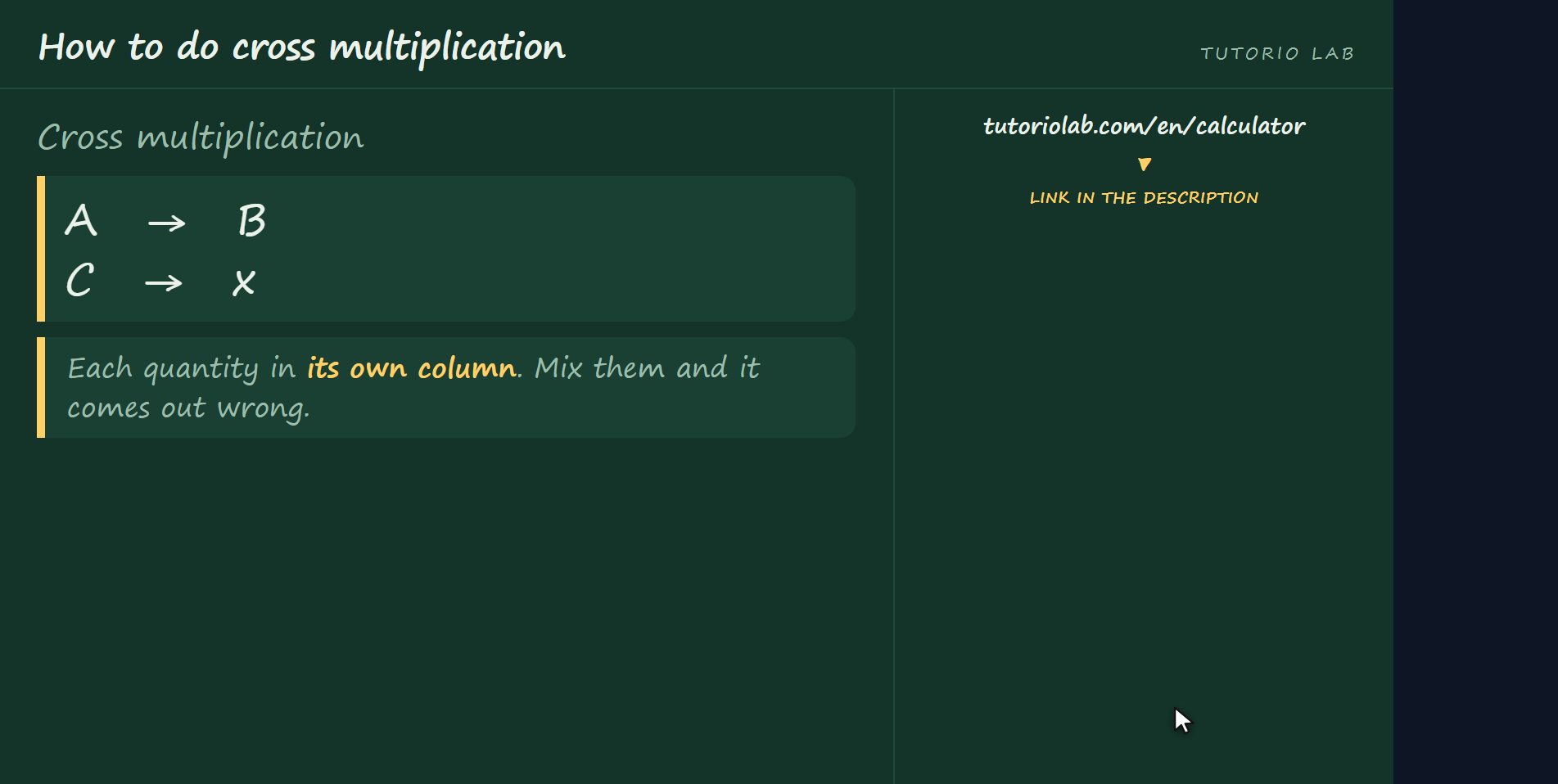
You set them out in a cross, and here is the important part: each quantity in its own column. One quantity on the left, the other on the right. What you already know on top, what you are asking underneath. If you mix the columns up, the answer comes out wrong even when the arithmetic is perfect.
A direct example
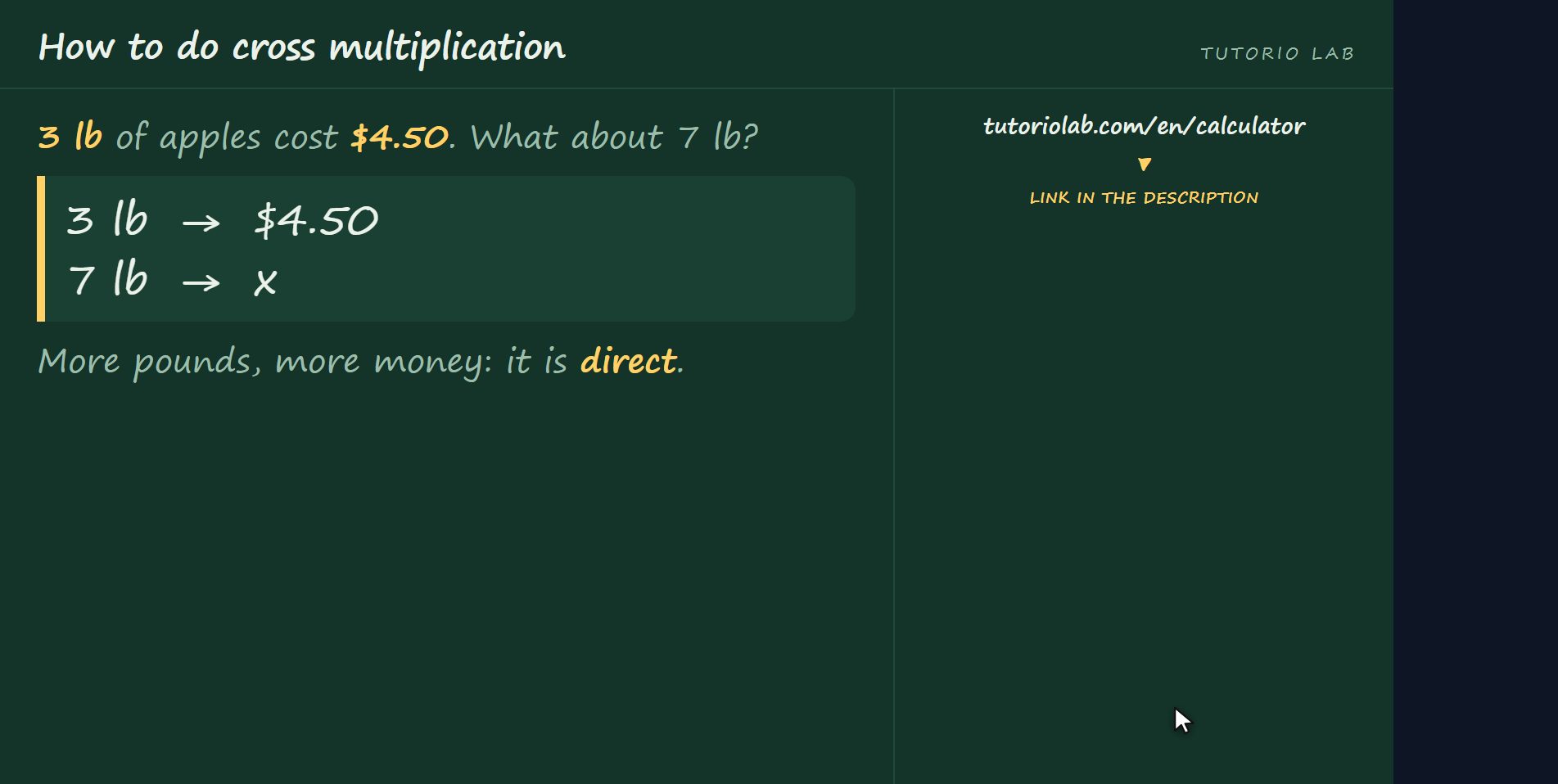
Three pounds of apples cost four dollars fifty. What do seven pounds cost? On top: three pounds, four fifty. Underneath: seven pounds, x. And since more pounds cost more money, the two go up together: this is a direct one.
The sum
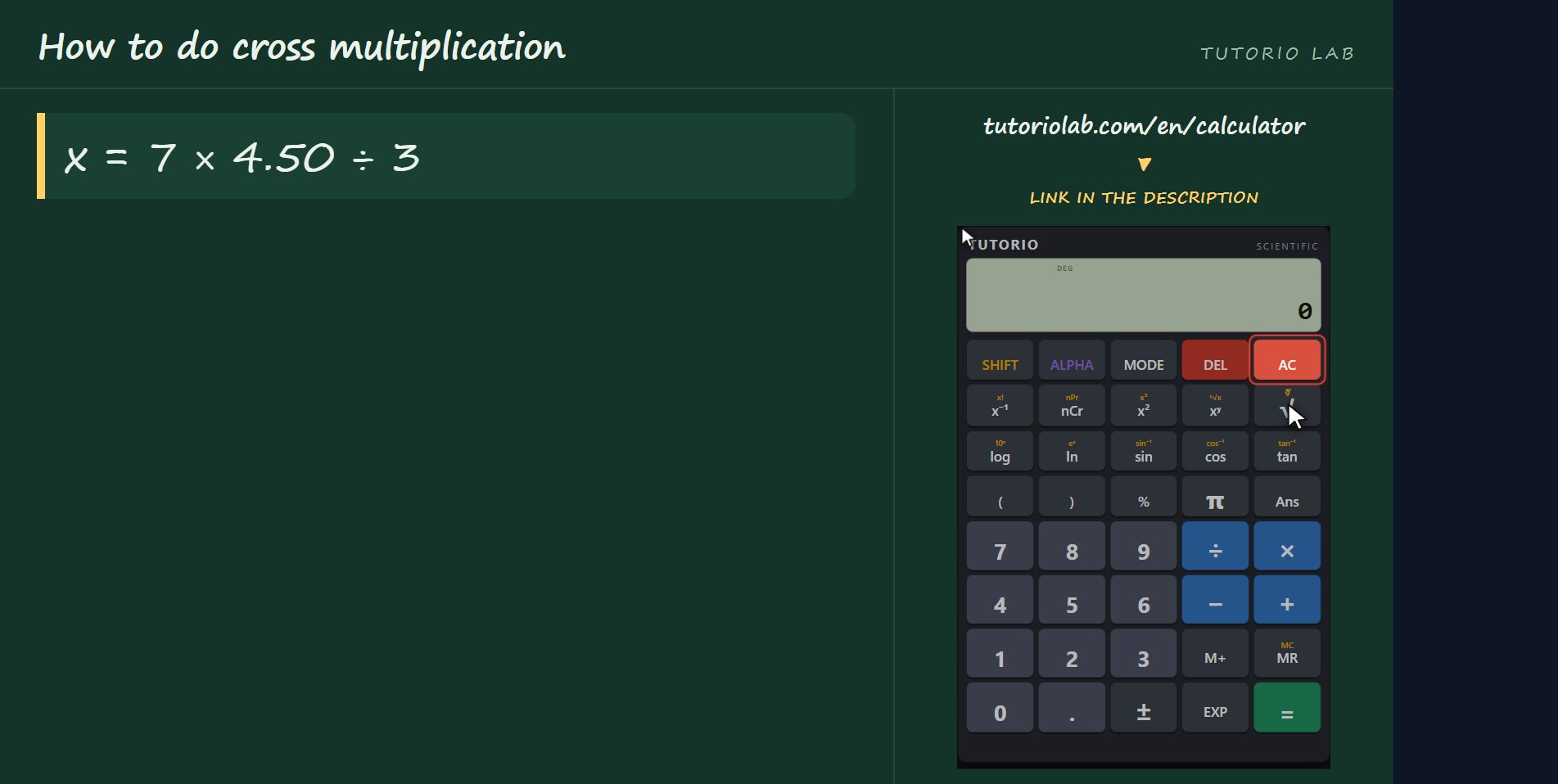
For a direct one you cross multiply and then divide by the one left over. Seven times four fifty, divided by three. Seven times four fifty is thirty-one fifty, and over three that is ten fifty. Ten dollars fifty for the seven pounds.
When it is inverse
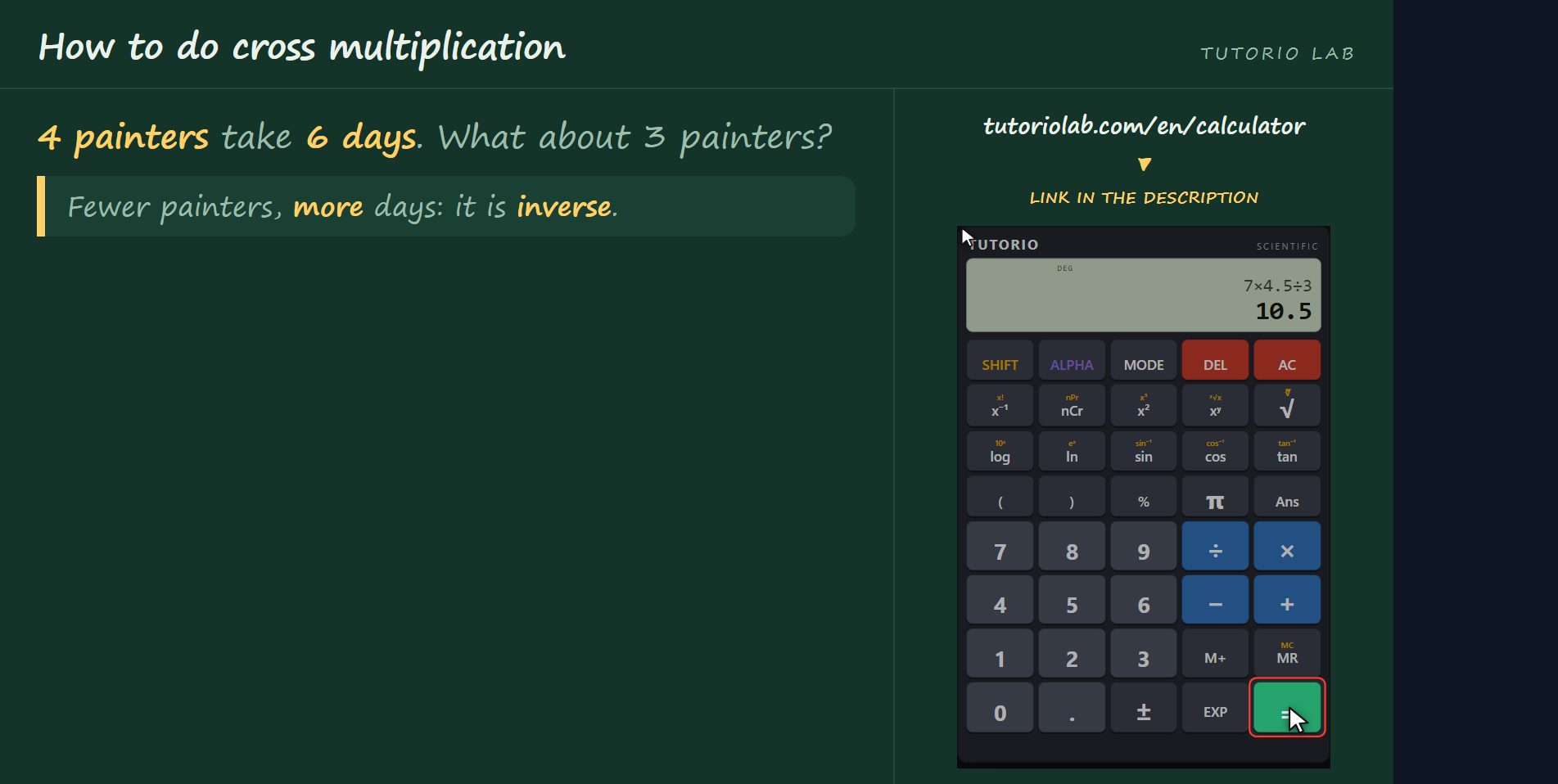
Now the other kind. There are pairs where if one goes up, the other goes down. Four painters take six days to paint a building. How long do three painters take? Fewer painters are not going to be quicker: they are going to take longer. When one goes up and the other goes down, it is an inverse one, and you solve it the other way round.
The inverse one, with numbers
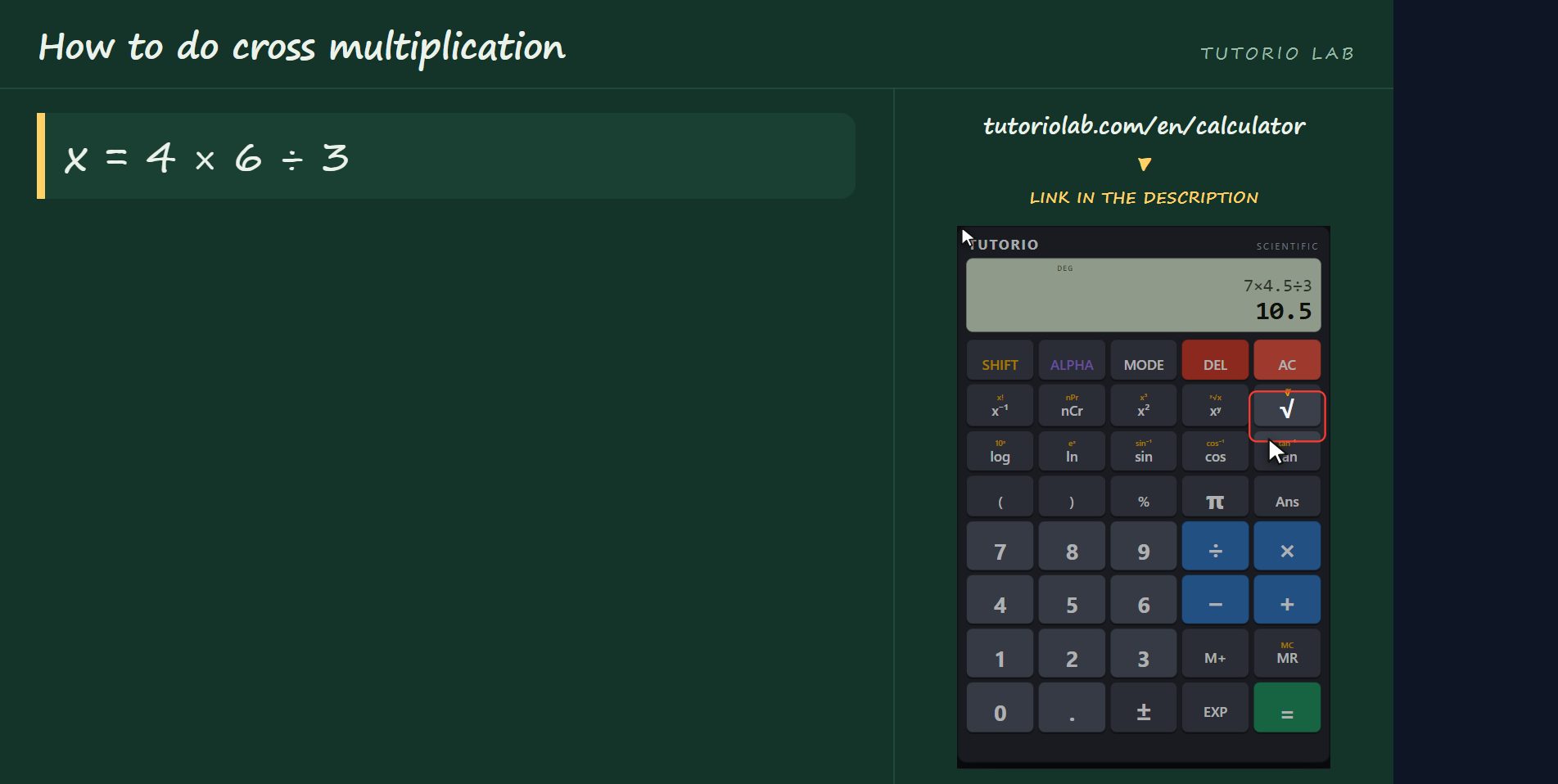
In an inverse one you multiply the two on top and divide by the one underneath. Four times six, divided by three. Twenty-four over three: eight days. And notice the answer makes sense: three painters take longer than four. If you had got less than six, it was wrong.
Finding a percentage
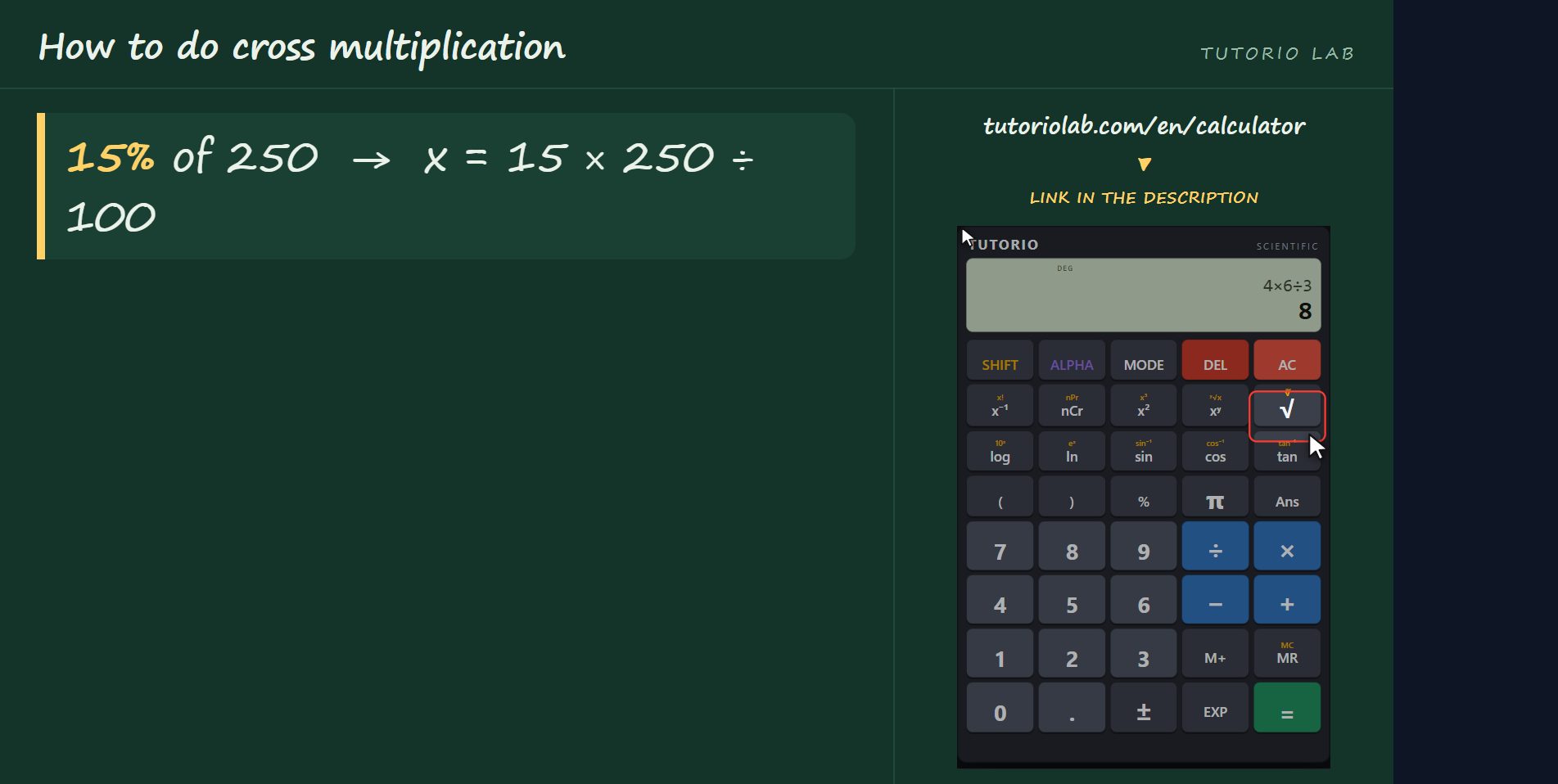
And one use that will serve you a lot: finding a percentage is cross multiplication. Fifteen per cent of two hundred and fifty. On top: a hundred is the whole, and two hundred and fifty. Underneath: fifteen, and x. Fifteen times two hundred and fifty, divided by a hundred: thirty-seven point five. Per cent means exactly that, out of a hundred.
How to tell which
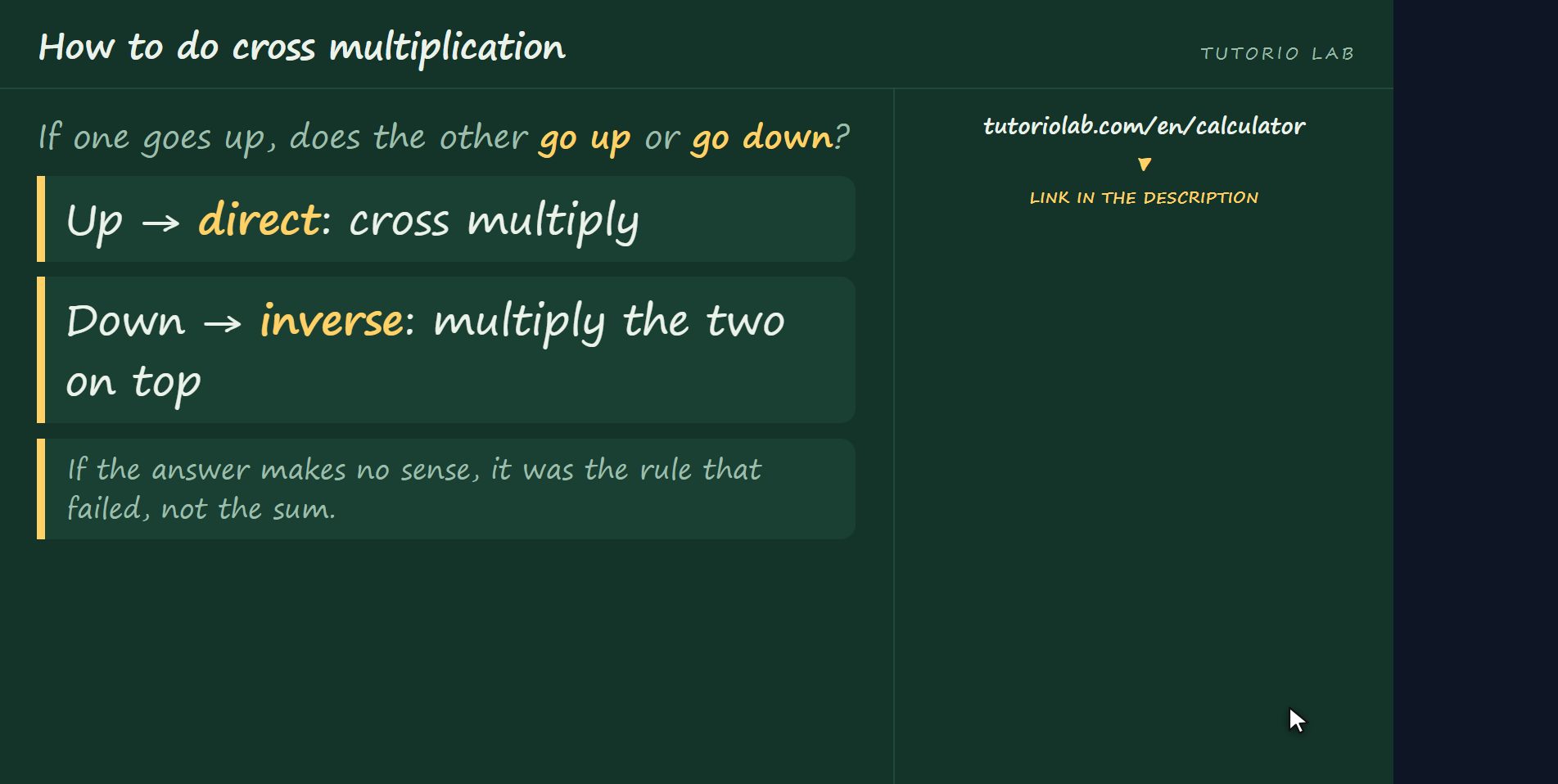
So keep hold of this, because it is the only thing you have to decide. Ask yourself: if the first number goes up, does the other one go up or down? If it goes up, it is direct: you cross multiply. If it goes down, it is inverse: you multiply the two on top. And always check the answer makes sense: if you end up with three painters being quicker than four, it was not the arithmetic that failed, it was choosing the rule.
The website does it for you
And if you have to do it over and over, we will do it for you. At tutoriolab.com, slash e-n, slash rule of three, you put in the three numbers, you pick whether one going up sends the other up or down, and it gives you x with the working shown so you can check it. Free, no sign-up, and it downloads as a PDF.
And that is it. Put each quantity in its own column, decide whether it is direct or inverse, and multiply. The links are in the description. If this helped, do subscribe.
Common questions
How do I know if it is direct or inverse?
Ask whether the second quantity goes up or down when the first one goes up. Up means direct (cross multiply). Down means inverse (multiply the two on top). More pounds, more money: direct. Fewer workers, more days: inverse.
My answer looks odd. What did I do wrong?
Nearly always it is using the direct method where the inverse one was needed. Check the answer makes sense: if three painters come out quicker than four, the mistake is the rule, not the arithmetic.
Can I use it for percentages?
Yes, and it is the safest way not to slip up. Put the whole against 100 and the percentage against the unknown: 15% of 250 is 15 × 250 ÷ 100 = 37.5.
What is cross multiplication actually doing?
It is solving a proportion. Two fractions are equal, so the top of one times the bottom of the other is the same both ways round — and that leaves x on its own.