
How to work out an average
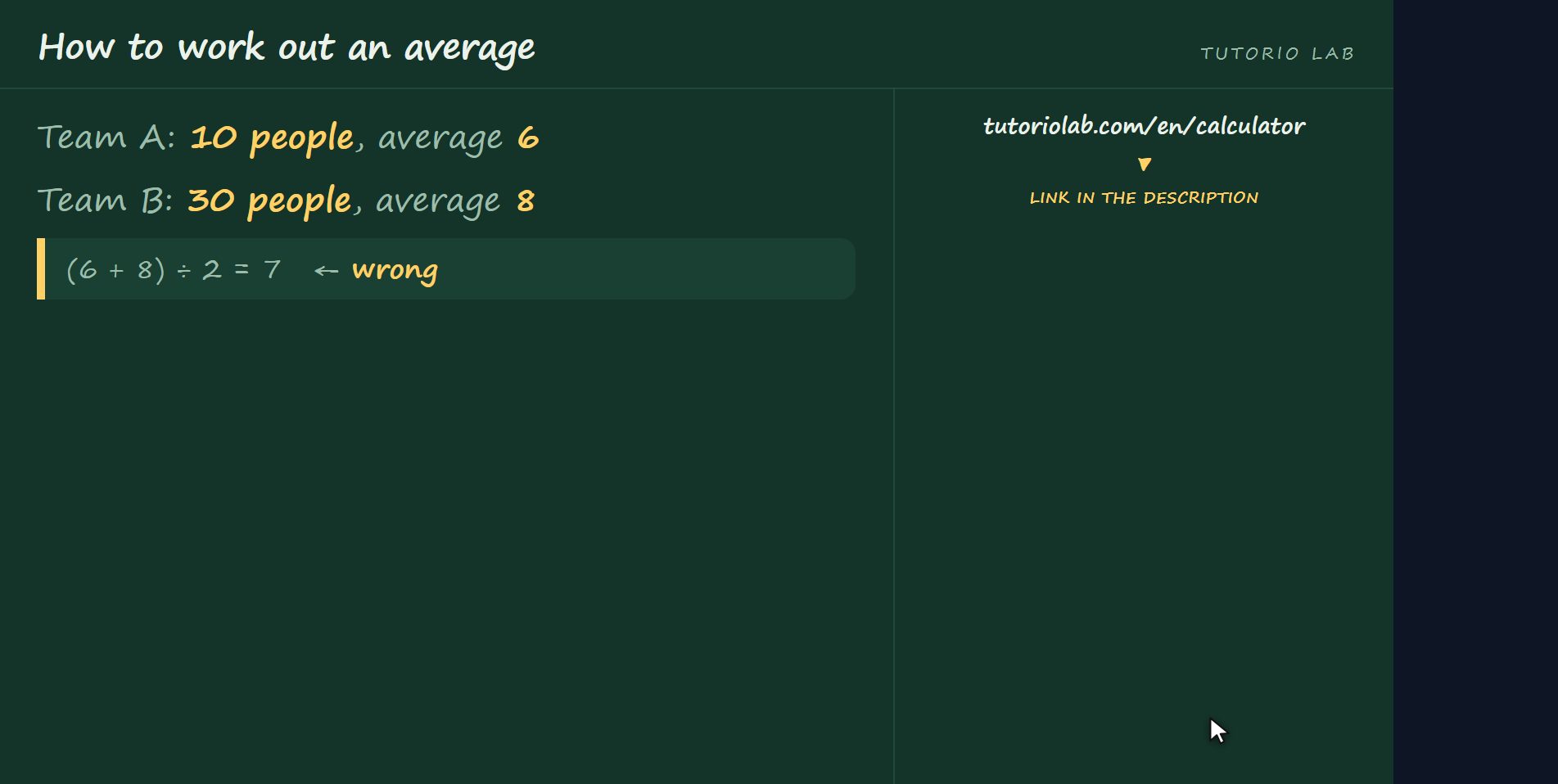
An average is the sum divided by how many values there are: 7, 8, 6 and 9 give 30 ÷ 4 = 7.5. Averages of groups of different sizes are NOT averaged together: they are weighted. Two teams of 10 and 30 people with averages of 6 and 8 give 7.5, not 7.
Working out an average is adding and dividing, and everybody knows that. So in this video we go straight to what actually goes wrong: how to do it with the statistics keys on a calculator, and why averaging averages hardly ever gives you the real average. That second mistake turns up in exams and in work reports alike.
What an average is
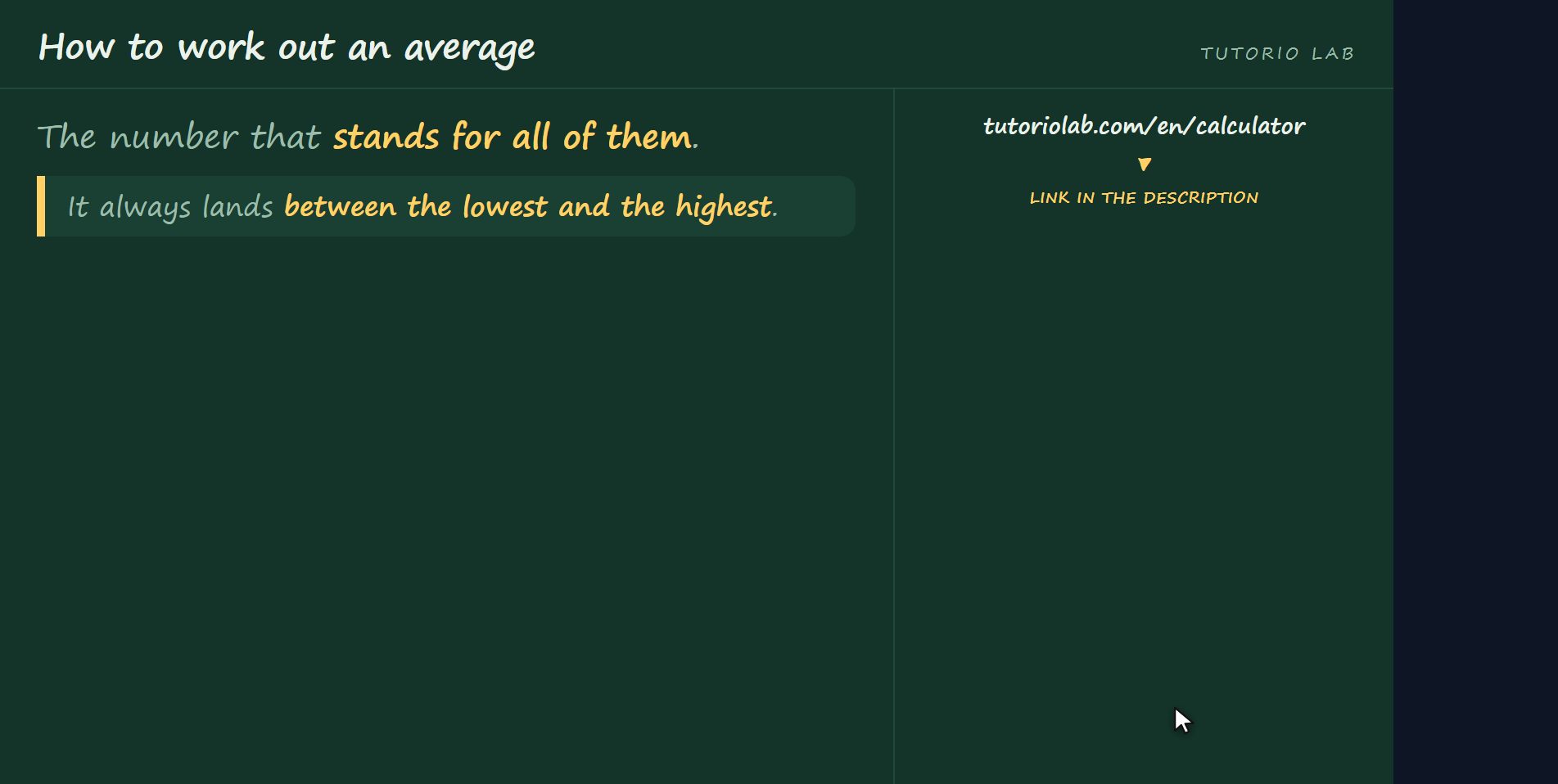
The average, or mean, is the number that stands for all of them. If you shared everything out equally between the people there, each one would get the average. That is why it always lands between the smallest and the biggest: if your answer falls outside that range, the sum is wrong.
The formula
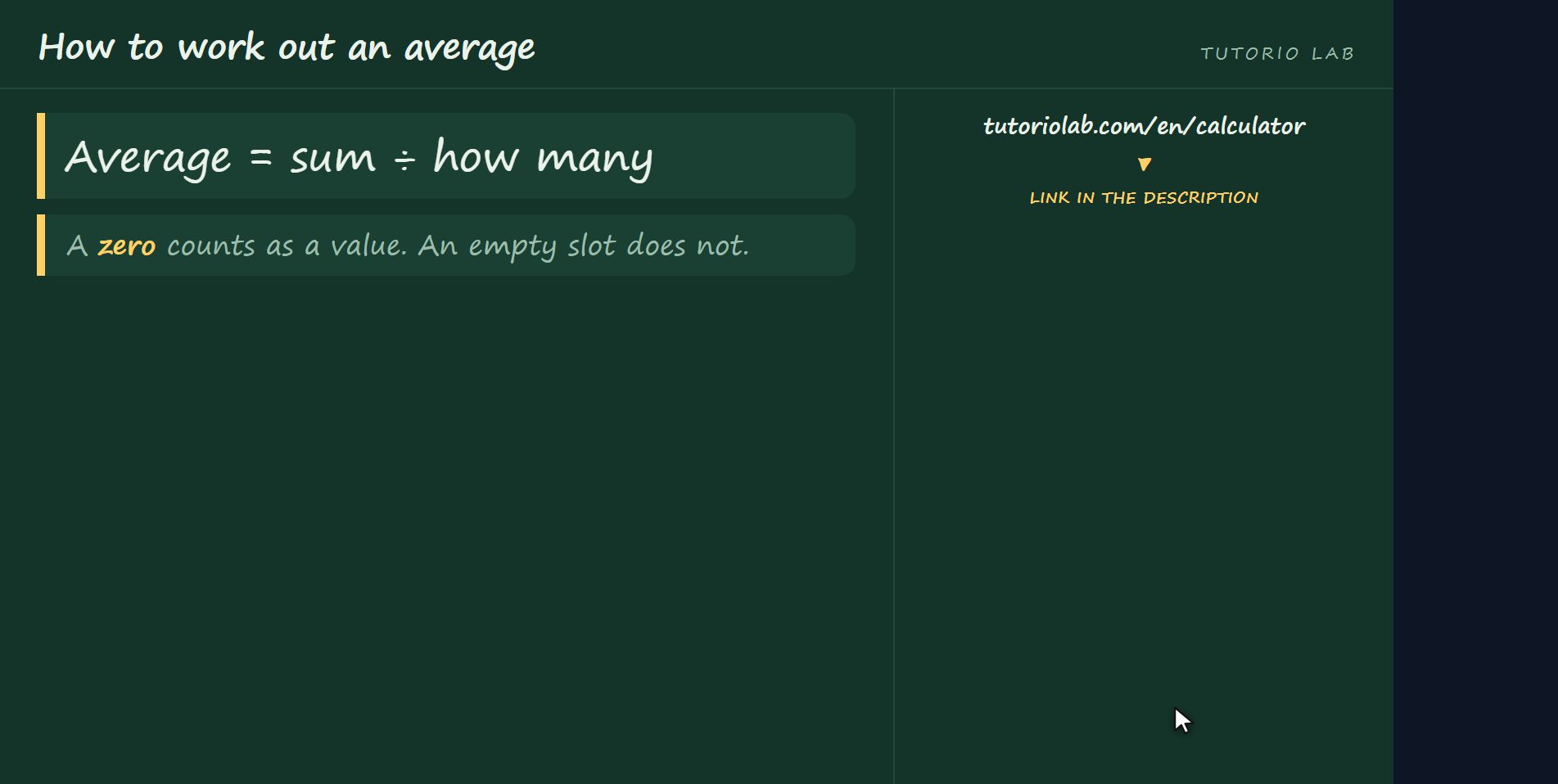
The formula: you add all the values and divide by how many there are. Sum over count. The only thing to watch is the bottom one: how many there really are. A zero counts as a value; an empty slot does not.
With school marks
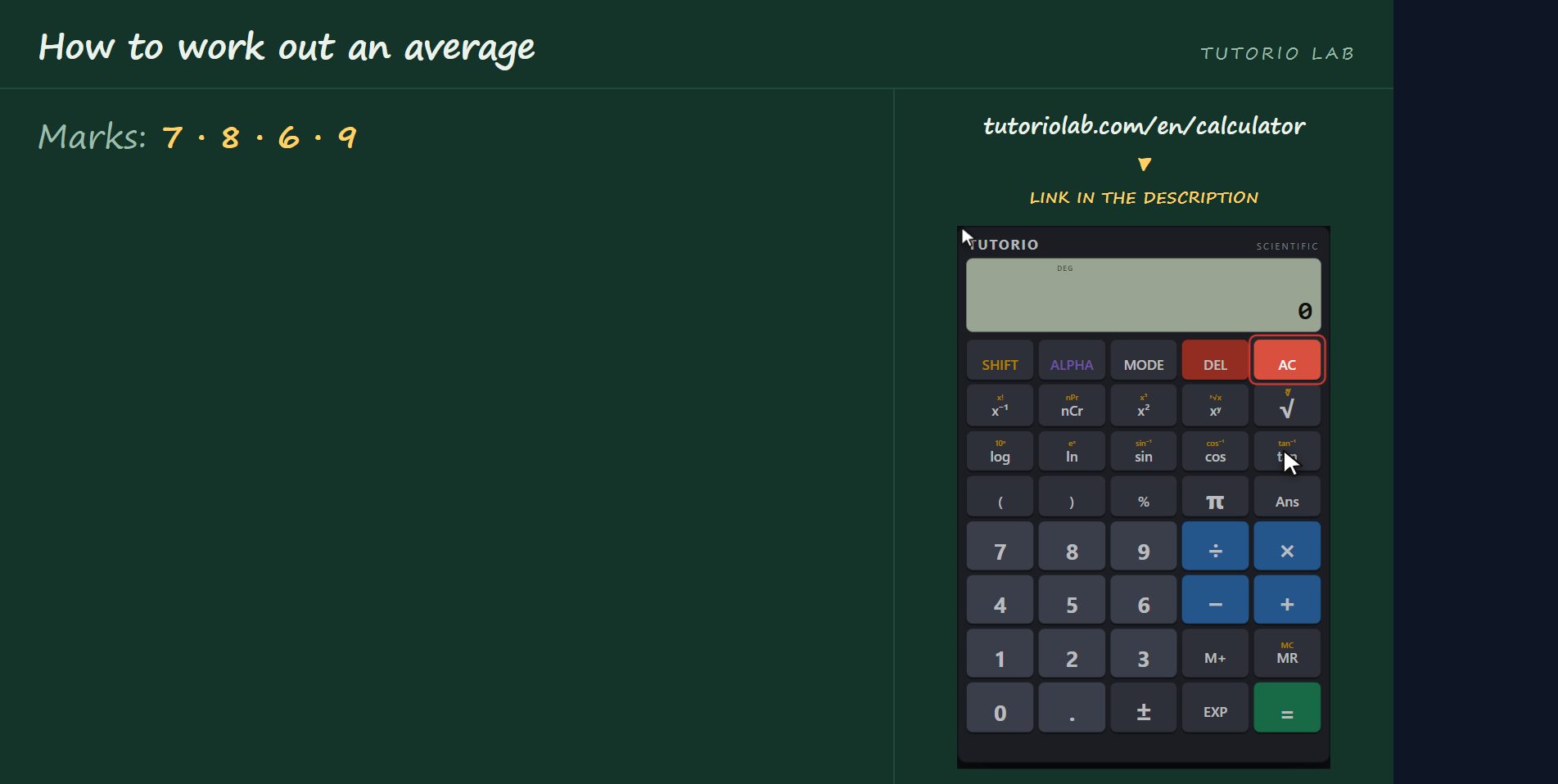
With school marks. A seven, an eight, a six and a nine. We add them: thirty. And we divide by four, which is how many marks there are. Seven point five. And check what we just said: seven point five is between six and nine, so it looks right. If it had come out above nine or below six, the sum would be wrong.
With the statistics keys
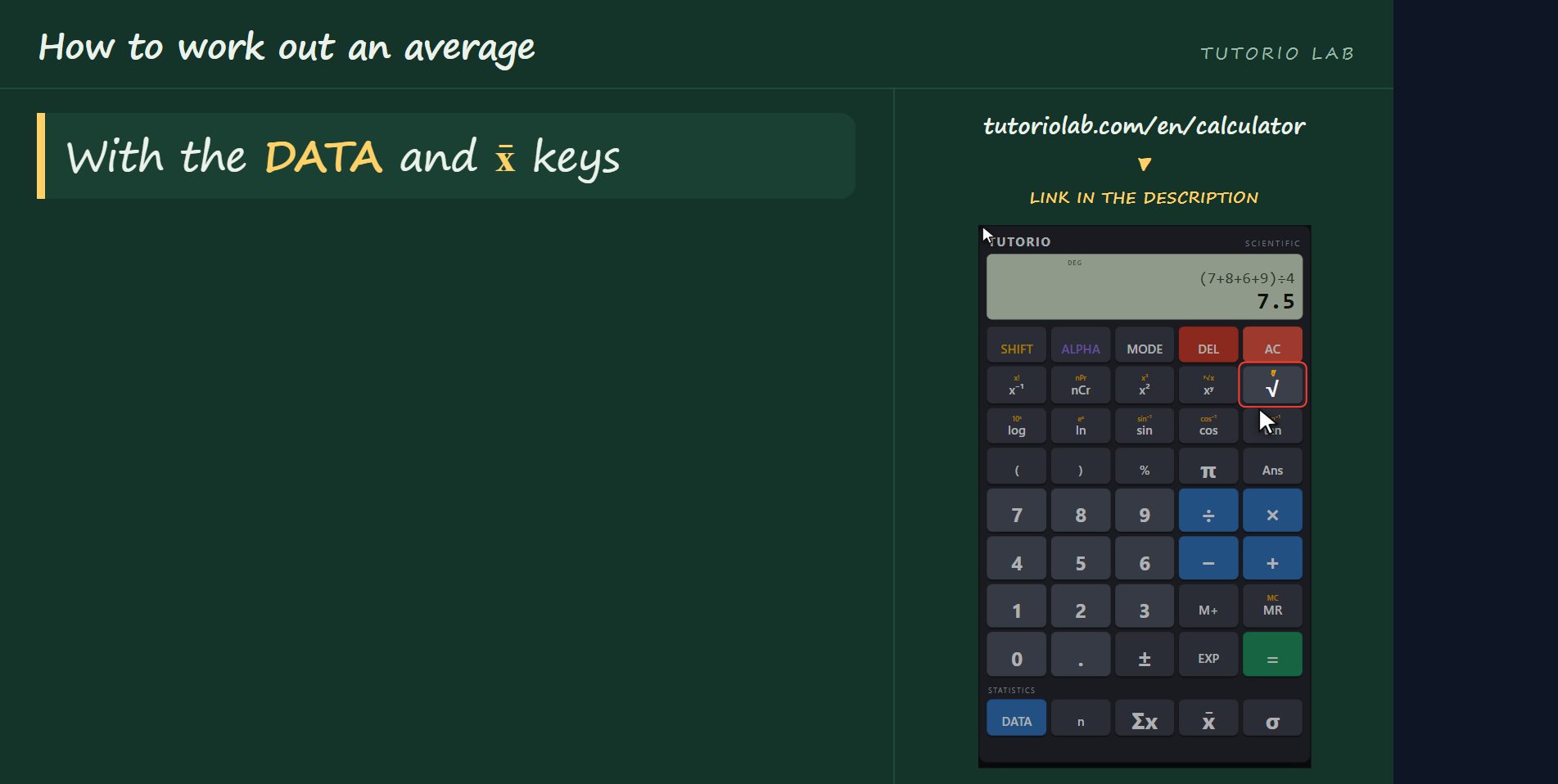
Now with the statistics keys, which for a lot of numbers is much quicker. You type each value and press the data key. Seven, data. Eight, data. Six, data. Nine, data. The list shows underneath. And now you can ask for whatever you want: how many there are, the sum, and the mean. Seven point five, the same as by hand, but without you adding anything.
The averaging-averages mistake
And now the mistake I mentioned. In a company, a team of ten people sells an average of six; another of thirty people, an average of eight. What is the average for the whole company? Almost everybody adds six plus eight and divides by two: seven. And that is wrong.
Why it goes wrong
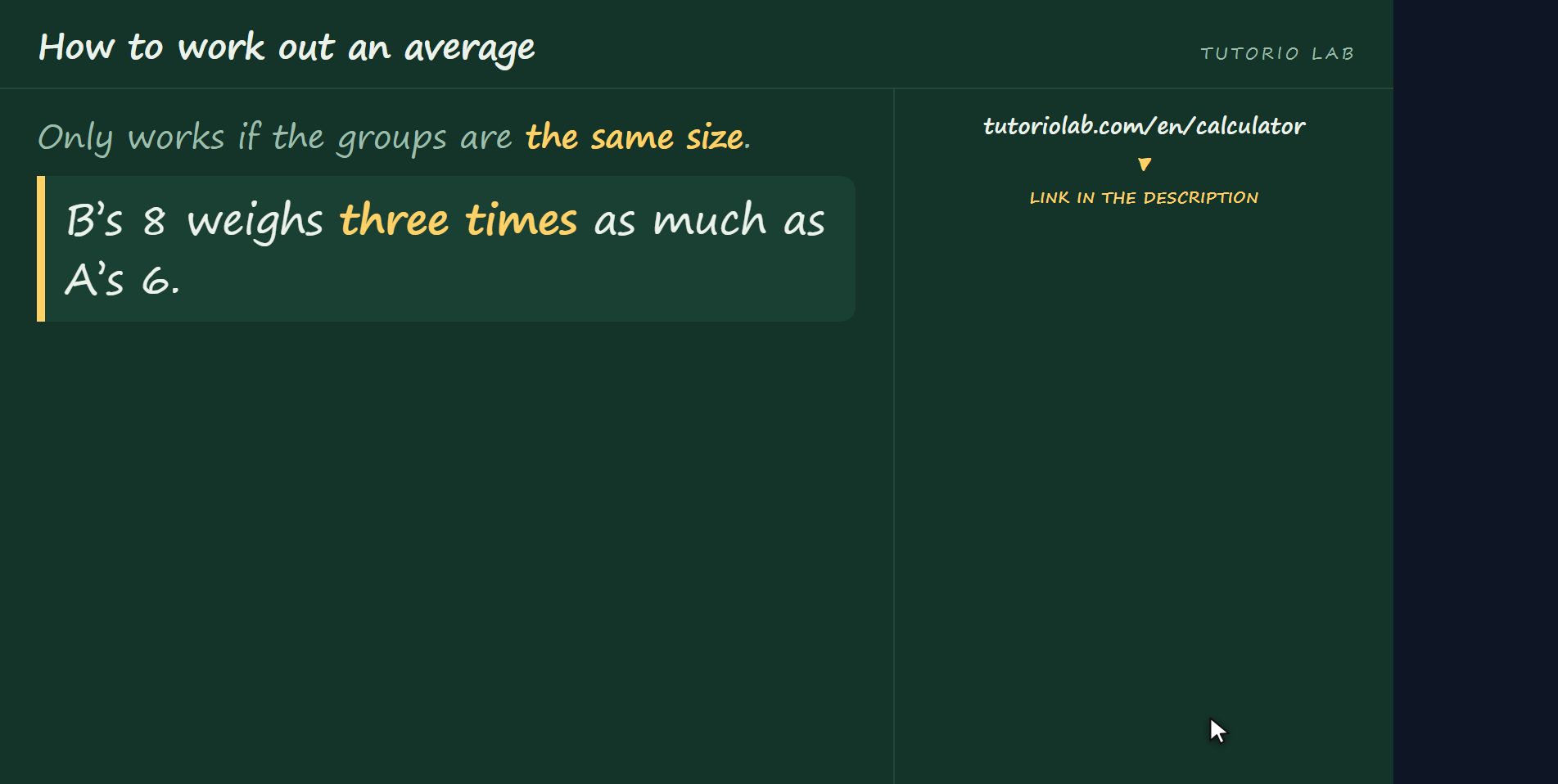
It is wrong because the groups are not the same size. Averaging averages only works if the groups have exactly the same number of people in them. Here the second group has three times as many, so its eight weighs three times as much as the first one’s six. Taking the simple average gives both of them the same importance, and they do not have it.
The weighted average
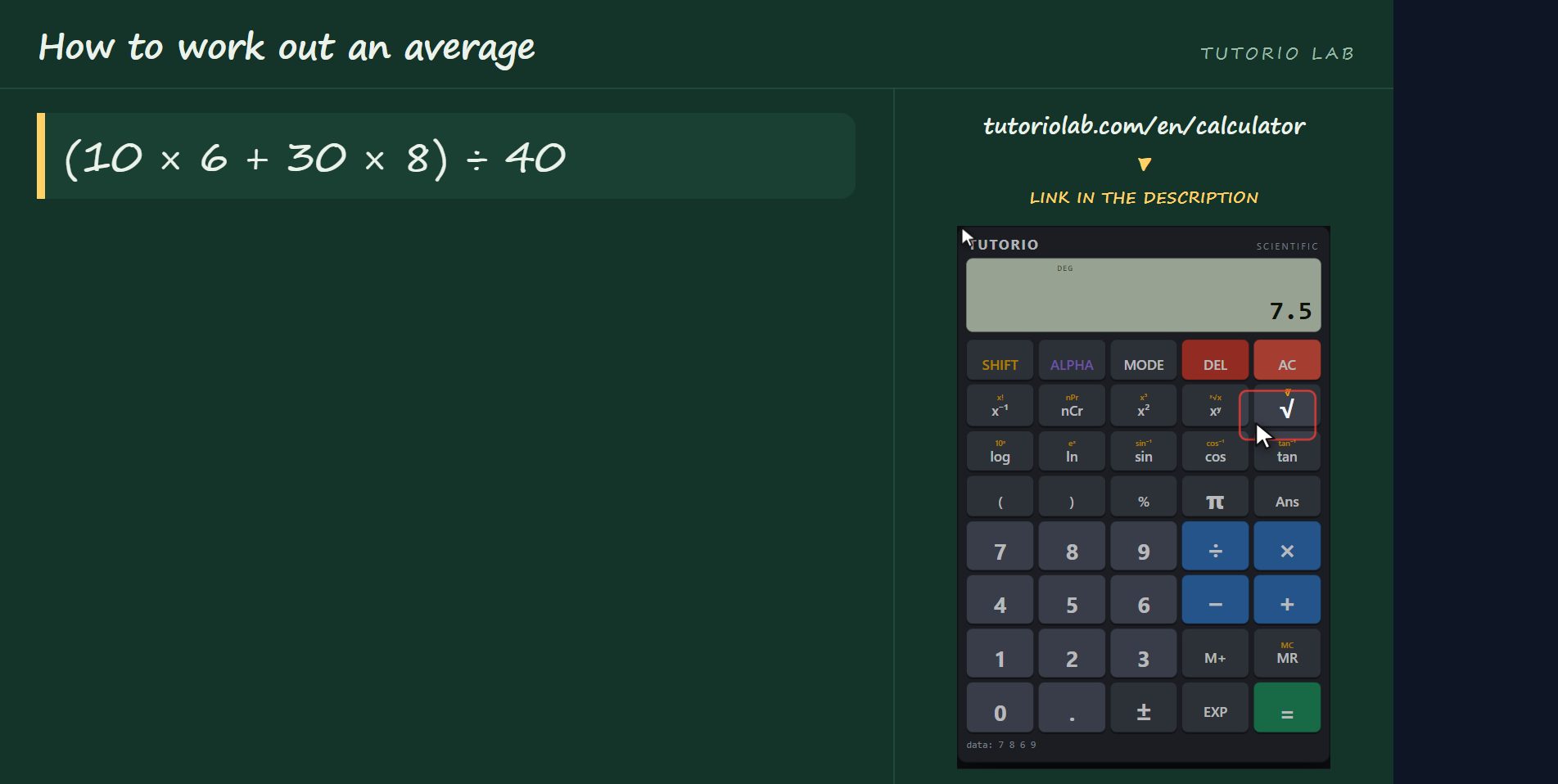
The right way is the weighted average: you multiply each average by its size, add it all up, and divide by the total number of people. Ten times six, plus thirty times eight, over forty. Sixty plus two hundred and forty is three hundred, over forty: seven point five. Not seven. Half a tenth of difference which, in a company, is a lot of sales.
When the average lies
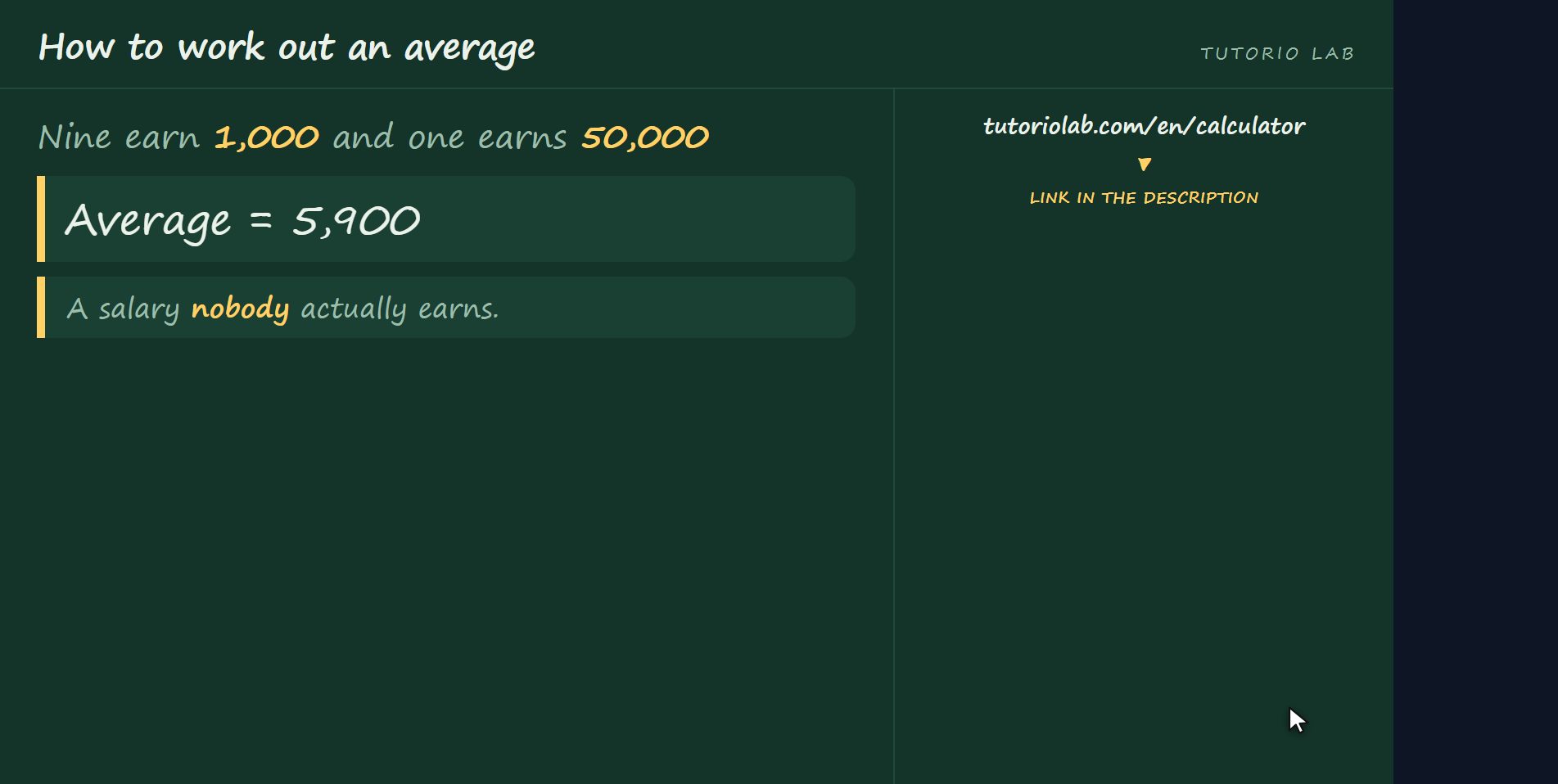
And one last thing worth knowing. The average gets dragged along by extreme values. If in a group of ten people nine earn a thousand and one earns fifty thousand, the average is five thousand nine hundred: a salary that absolutely nobody takes home. When there are very odd values, the median describes the group better than the mean.
The website does it
And if you would rather not do the sums, we will do them for you. At tutoriolab.com, slash e-n, slash average calculator, you put in your marks and it gives you the average, the median, and the weighted average if each mark counts differently. And it has the one you really want the night before the final: you tell it what mark you are after and how much the rest is worth, and it tells you what you need to get. Free, no sign-up, and it downloads as a PDF.
So: sum over count; averages of different-sized groups are not averaged, they are weighted; and if there are extreme values, be suspicious of the average. The links are in the description. If this helped, do subscribe.
Common questions
How do I work out an average?
Add all the values and divide by how many there are. With 7, 8, 6 and 9: 30 ÷ 4 = 7.5. Careful with the bottom number — a zero is a value, an empty slot is not.
Can I average two averages together?
Only if the groups are exactly the same size. If they are not, you have to weight them: multiply each average by its size, add, and divide by the total. Two teams of 10 and 30 with averages of 6 and 8 give 7.5, not 7.
What is a weighted average?
The same sum, but giving each value the importance it has. (10 × 6 + 30 × 8) ÷ 40 = 7.5. It is what you use when the marks or the groups do not all count the same.
Why does my average look wrong?
Check it falls between the lowest and the highest value: if it does not, the sum is wrong. And watch out for extreme values — one very large number drags the average away from the group.
Is there a calculator that does it?
Yes, and it is free: tutoriolab.com/en/average-calculator. Average, median and weighted average, plus what mark you still need to reach the one you want. Downloads as a PDF.