
How to add fractions
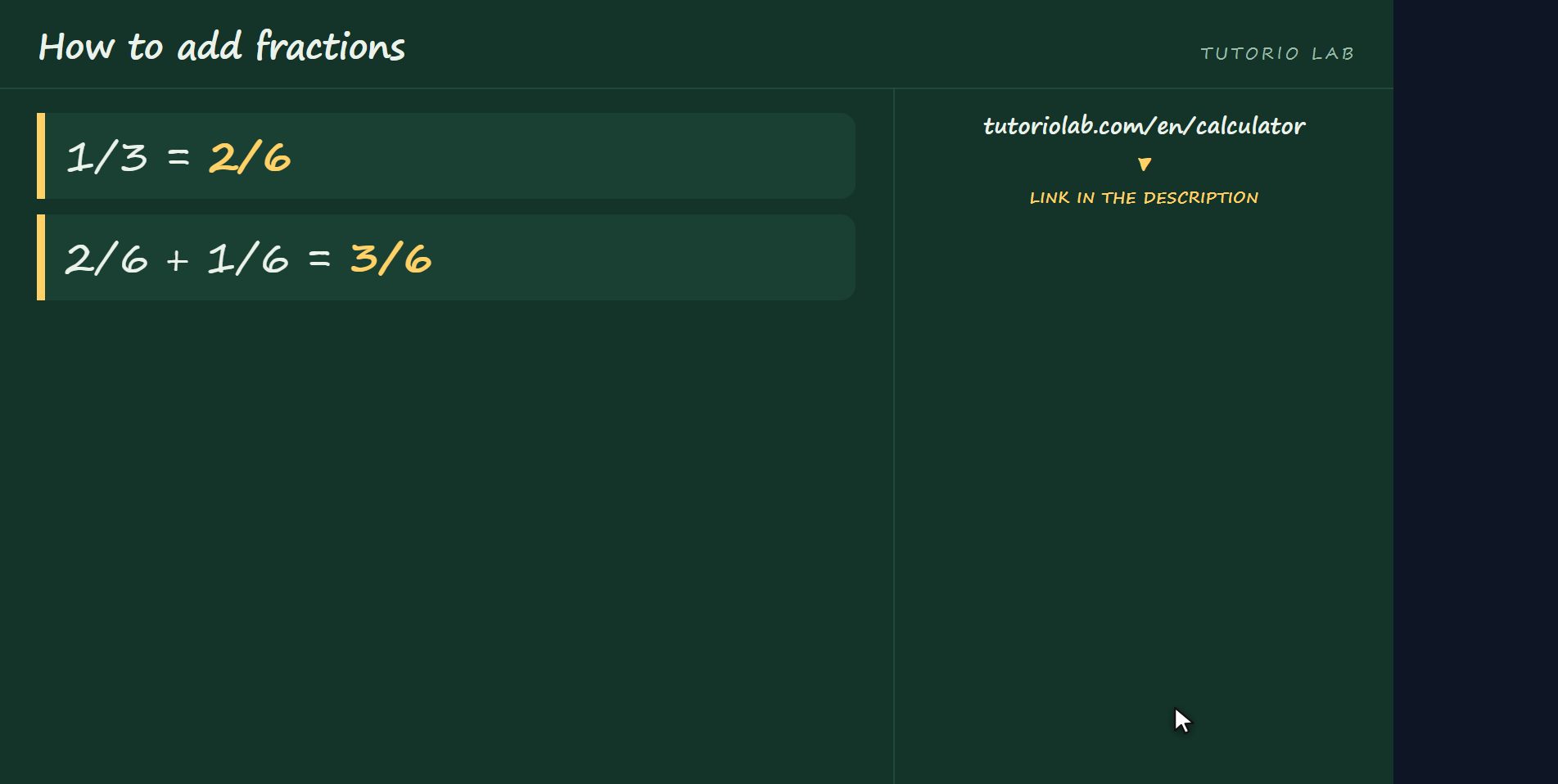
To add fractions with different denominators you first give them the same denominator: 1/3 + 1/6 becomes 2/6 + 1/6 = 3/6, which simplifies to 1/2. The denominators are never added. Multiplying is easier: top times top and bottom times bottom. Dividing is flipping the second one over and multiplying.
Adding fractions has only one mistake in it, but everybody makes it once: adding the bottom numbers too. In three minutes I will show you why that is wrong, how it is done properly, and one thing hardly anybody mentions: multiplying and dividing fractions is easier than adding them.
What a fraction is
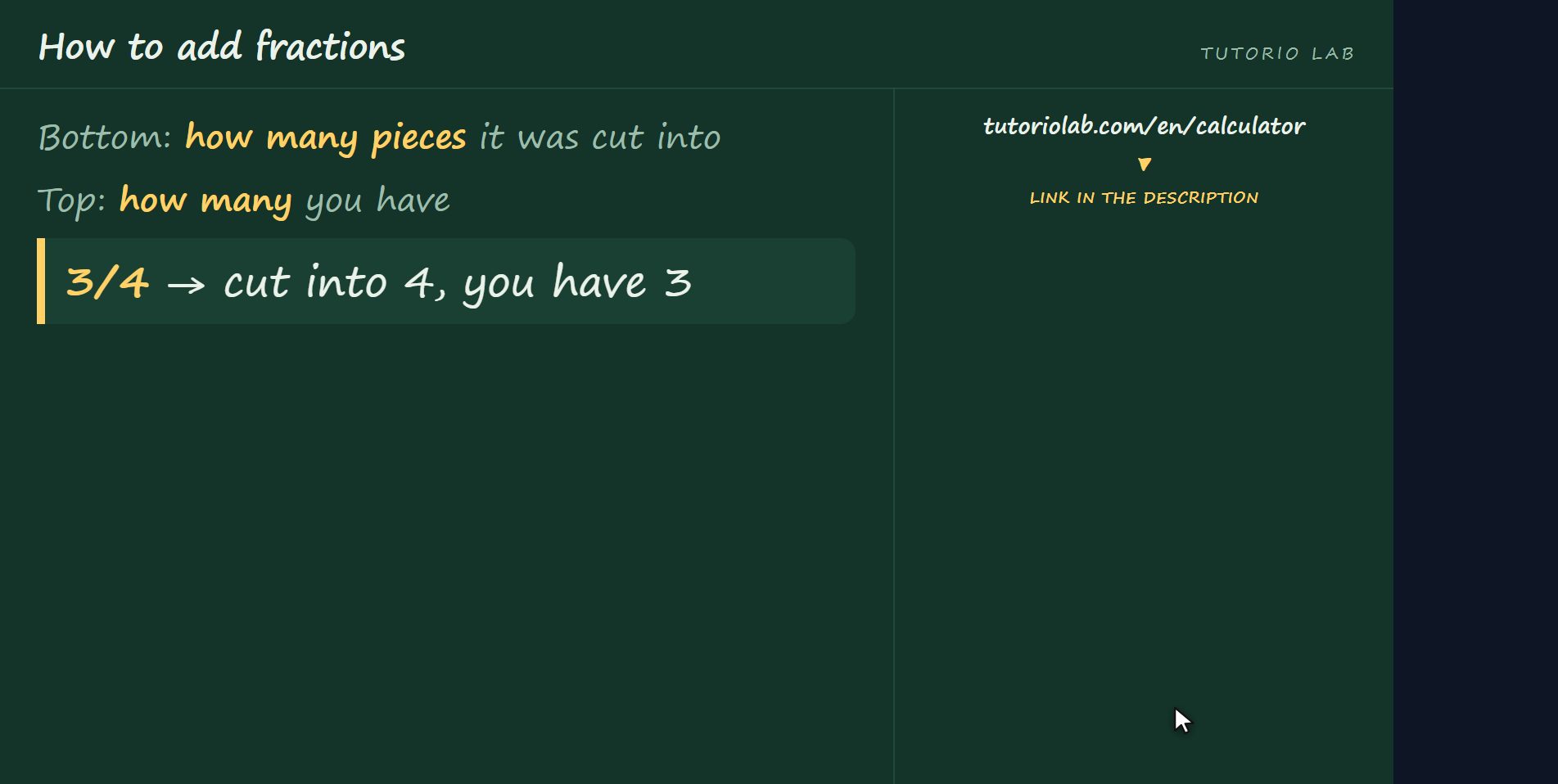
First, what each number is. The one on the bottom says how many pieces you cut the thing into; the one on top says how many of those pieces you have. In three quarters, you cut it into four and you have three. So the bottom is the size of the piece and the top is how many pieces.
The adding-the-bottoms mistake
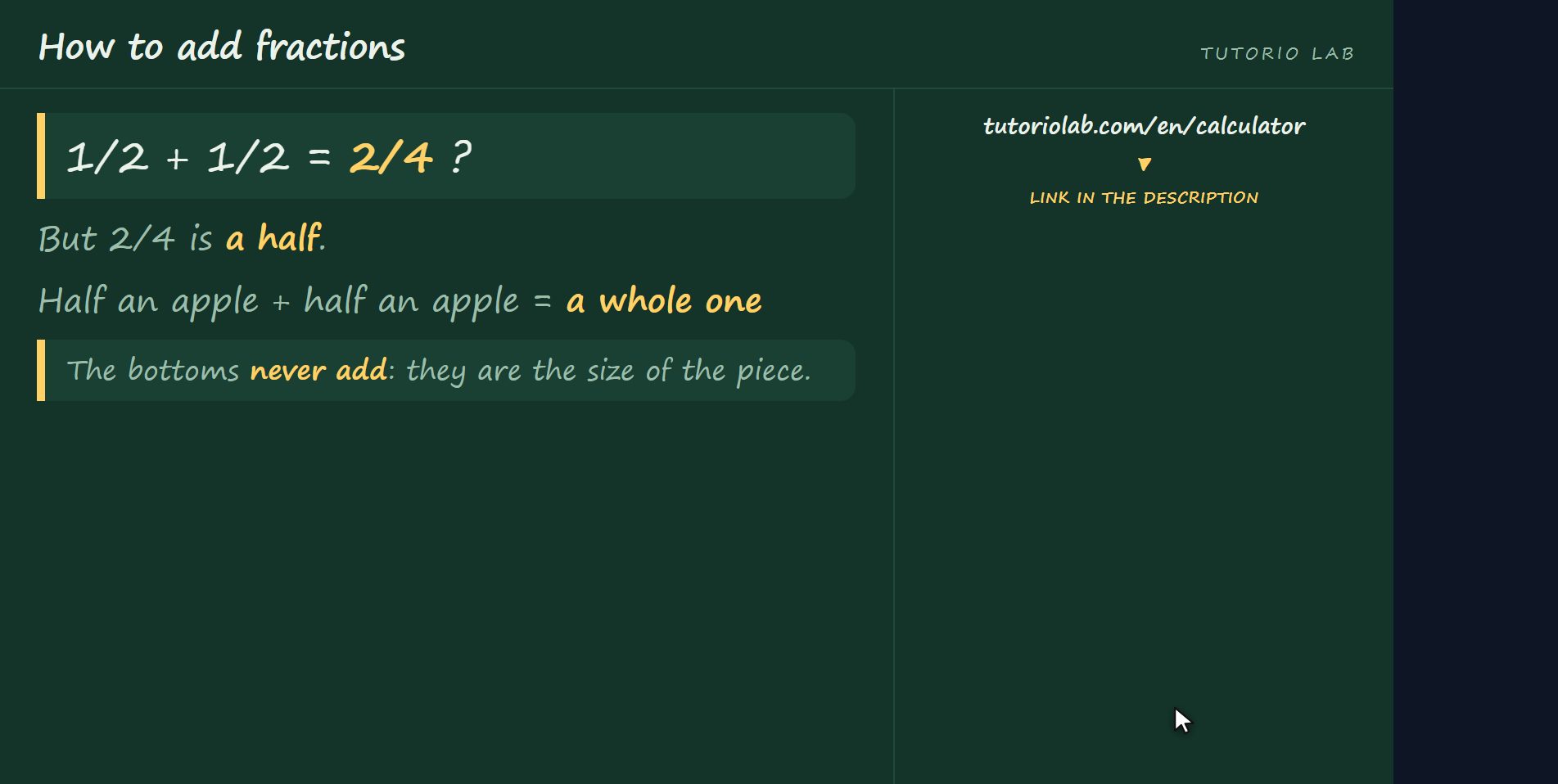
And that is where the mistake comes from. A half plus a half: if you add the tops and the bottoms you get two quarters. But two quarters is a half, and half an apple plus half an apple is a whole apple, not half of one. The sum says one thing and reality says another, so the sum is wrong. The bottoms are not added, because the bottom is not an amount: it is the size of the piece.
With the same bottom
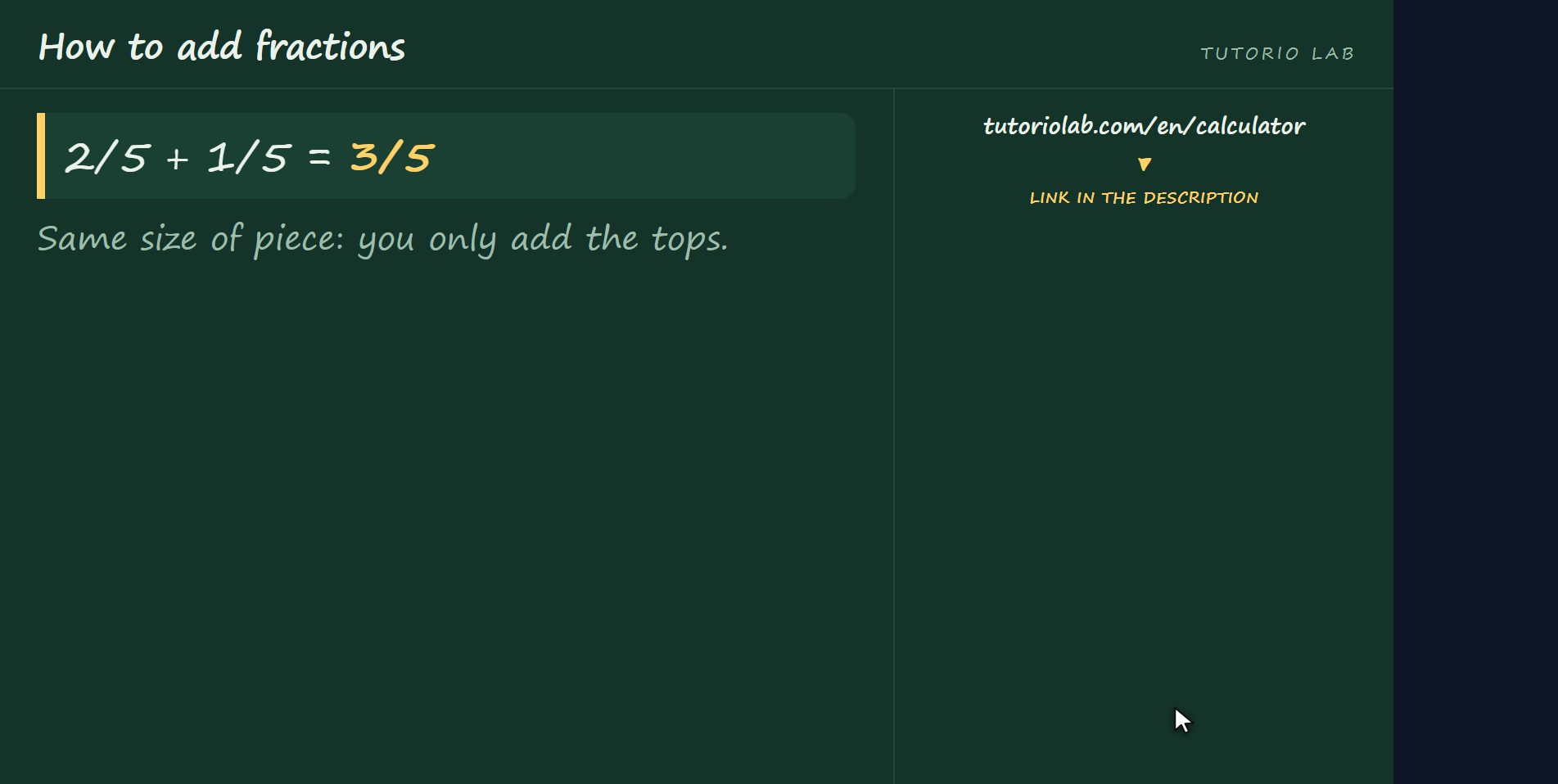
When both fractions have the same number on the bottom it is easy, because the pieces are the same size. Two fifths plus one fifth: two pieces plus one piece, three pieces. Three fifths. The bottom stays as it was and you only add the tops.
The common denominator
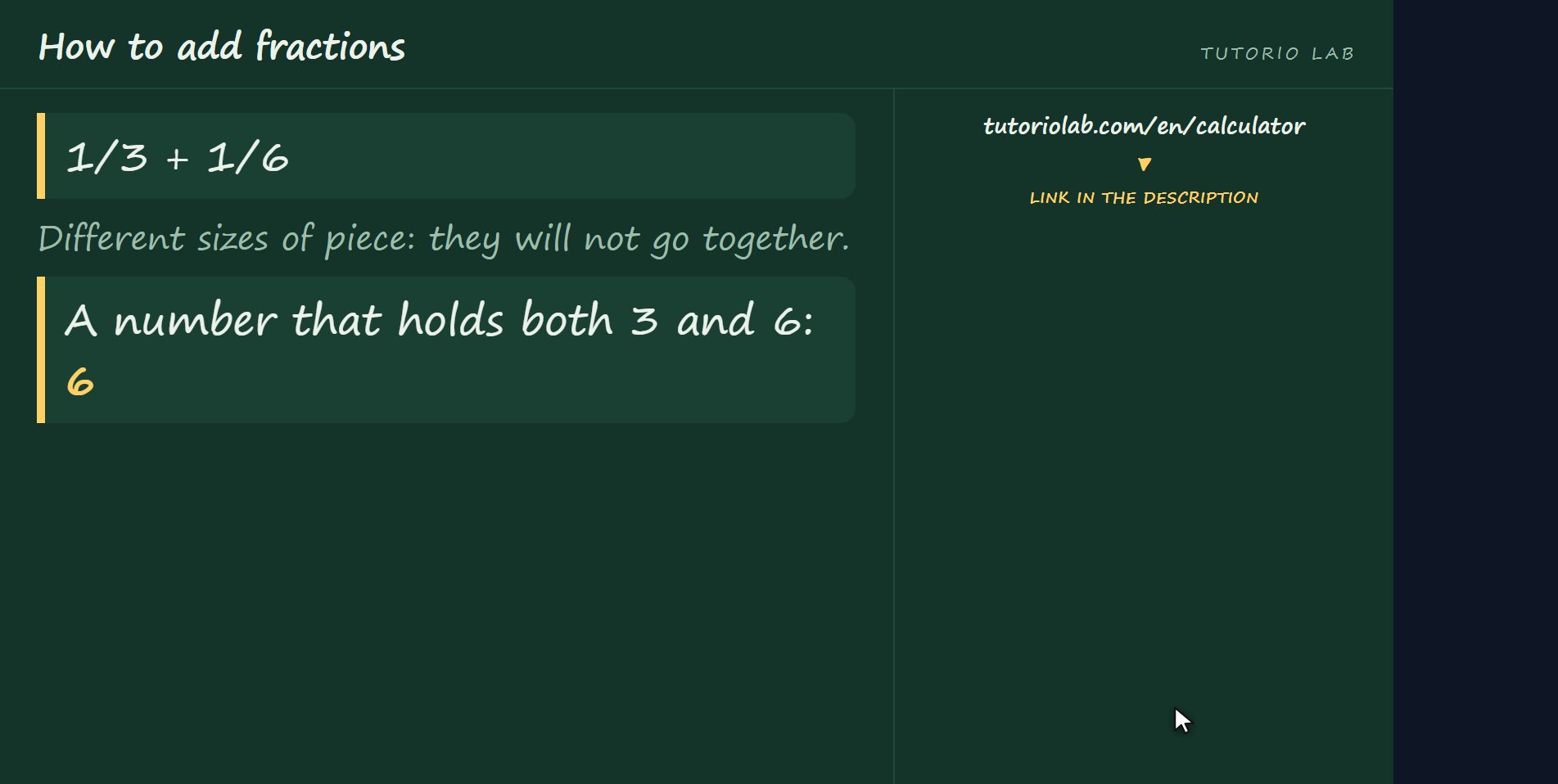
The trouble is when they are different, because the pieces are not the same size and they will not go together. One third plus one sixth. What you do is cut them both into pieces of the same size: you look for a number that both bottoms fit into. With three and six, that number is six. The proper name for it is the common denominator.
The sum, done
One third is two sixths, because the piece is half as big and so you need twice as many. And the other one was already a sixth. So two sixths plus one sixth, which now really are the same size: three sixths.
Simplify at the end
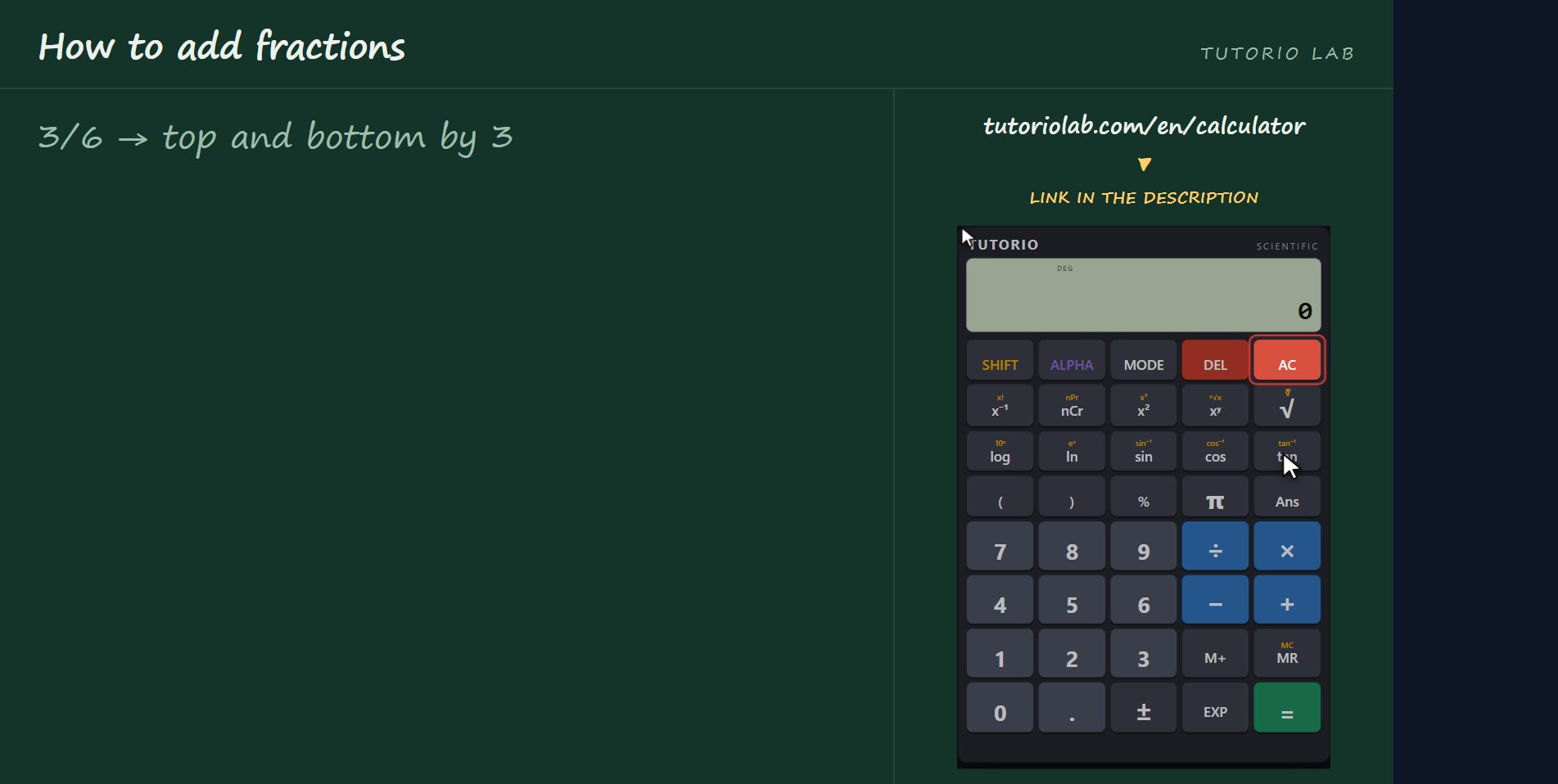
And there is one step left that the teacher always asks for: simplifying. Three sixths can be reduced, because the top and the bottom both divide by three. Three over three is one, six over three is two. A half. And it makes sense: one third plus one sixth is exactly half.
Multiplying is easier
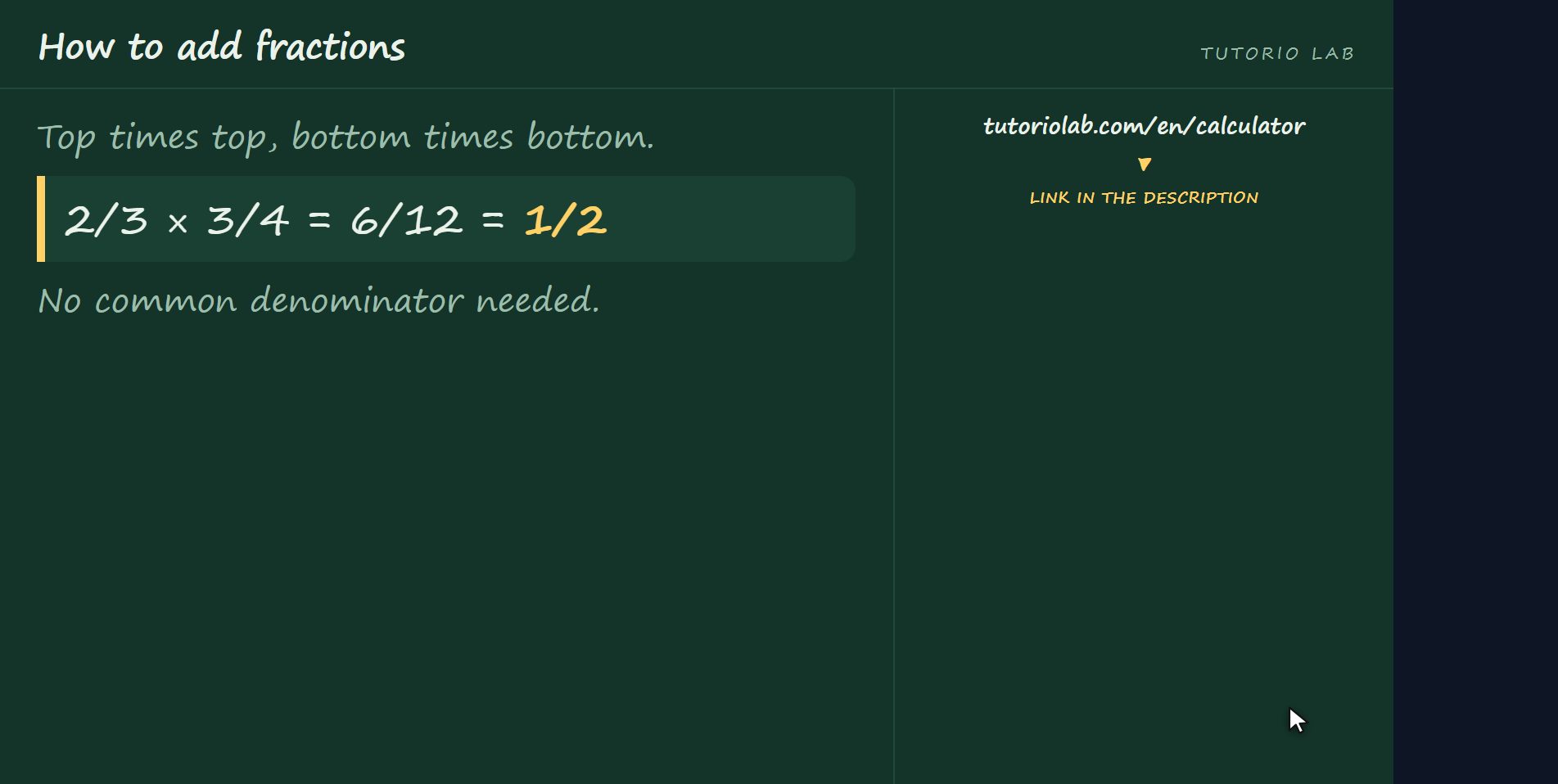
Now the good news. Multiplying fractions is easier than adding them, and nobody tells you. You do not need a common denominator or anything: top times top, bottom times bottom. Two thirds times three quarters: two times three is six on top, three times four is twelve underneath. Six twelfths, which simplified is a half.
Dividing: flip it over
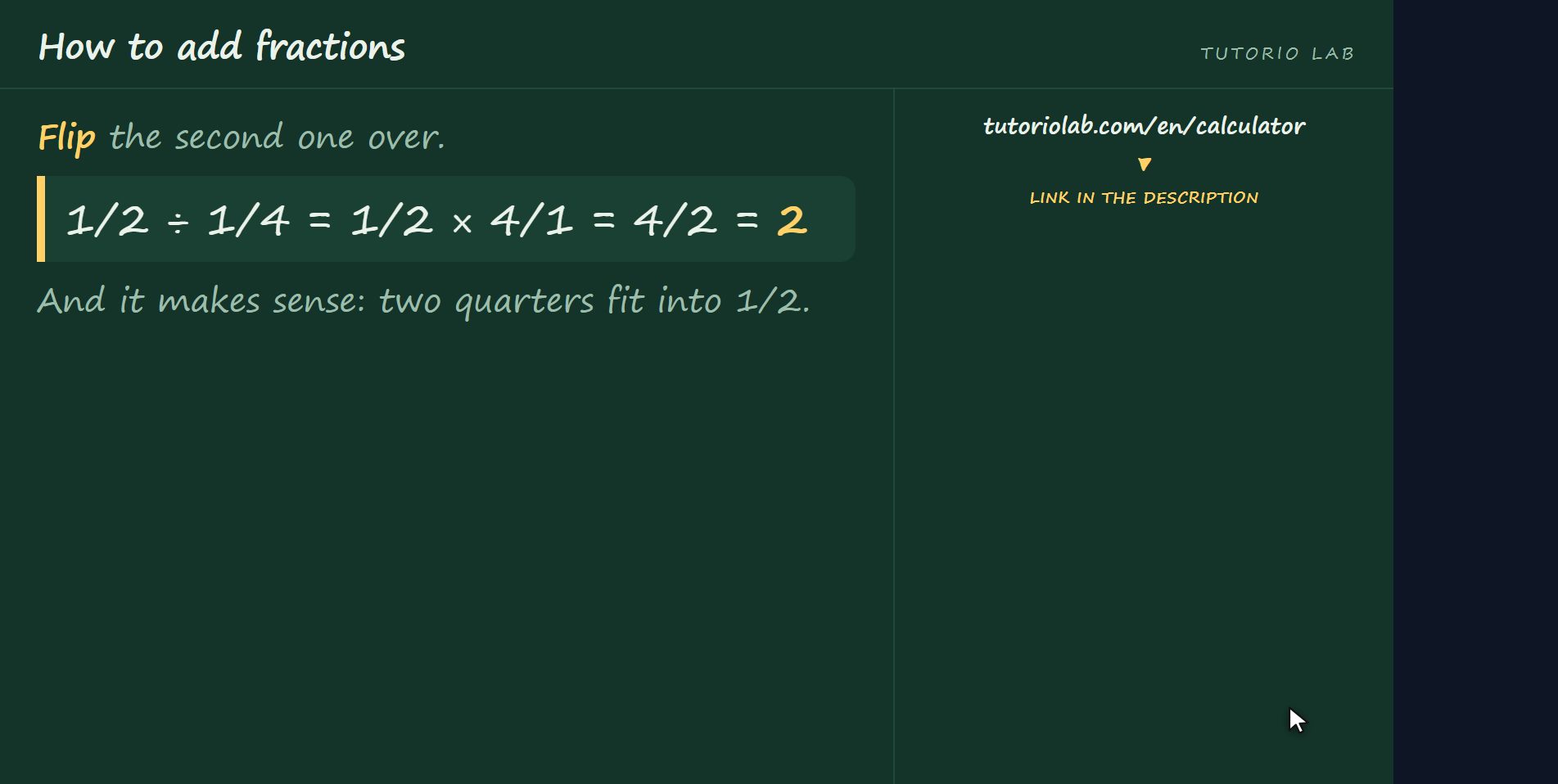
And dividing is multiplying with a trick: you flip the second fraction over and multiply. A half divided by a quarter: we flip the quarter, which becomes four over one, and we multiply. One times four, four on top; two times one, two underneath. Four halves, which is two. And it makes sense: two quarters fit into a half.
The website does it for you
And to check your homework, we have made one for you. At tutoriolab.com, slash e-n, slash fraction calculator, you put in the two fractions and the operation, and it does not just give you the answer: it shows you the working step by step, so you can copy it into your book and see where you went wrong. Free, no sign-up, and it downloads as a PDF.
Keep hold of this: the bottoms are never added; to add, you need pieces of the same size; multiplying goes straight across; and dividing is flip and multiply. The links are in the description. If this helped, do subscribe.
Common questions
Why are the denominators not added?
Because the denominator is not an amount, it is the size of the piece. Half plus half is one whole, and if you added the bottoms you would get 2/4, which is a half. The sum would contradict reality.
How do I find the common denominator?
It is the least common multiple of the two denominators: the smallest number both of them fit into. With 3 and 6 it is 6; with 4 and 6 it is 12.
Do I always have to simplify?
If it can be done, yes: that is what is asked for in class. You simplify by dividing the top and the bottom by the same number until no number works for both any more.
Do I need a common denominator to multiply?
No, and that is the good news: multiplying is top times top and bottom times bottom, nothing else. Dividing is flipping the second fraction over and multiplying.
Is there a calculator that shows the steps?
Yes, and it is free: tutoriolab.com/en/fraction-calculator. It does not just give the answer, it shows the working step by step so you can copy it and see where you slipped.